At bedtime
Choose one calm video and one doha line. Keep the question small: "Where did you see this today?" Then let the story rest.
धीरे-धीरे रे मना, धीरे सब कुछ होय।
माली सींचे सौ घड़ा, ऋतु आए फल होय।
Short Hindi stories, Little Kabir Songs, and doha meanings for children aged 5–9. Start with one video, one Kabir line, and one gentle question your child can carry into daily life.
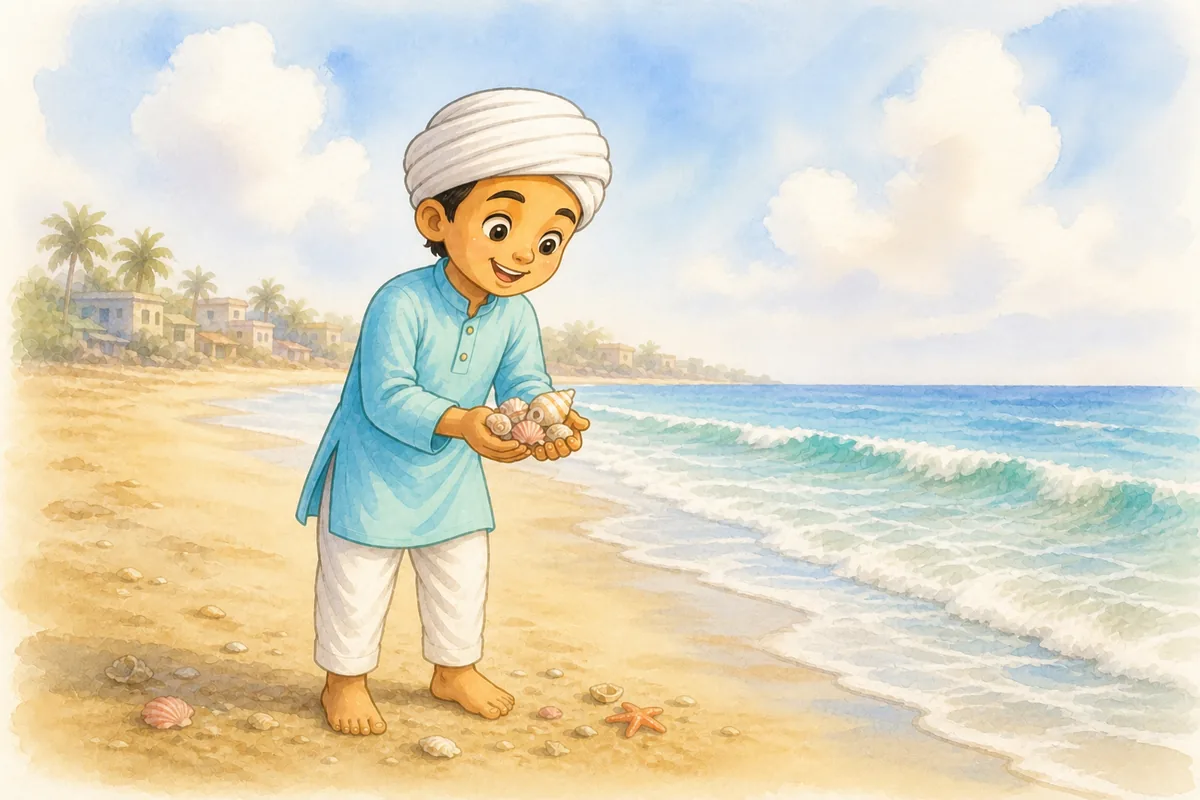
A good Hindi moral story for children should be short, rooted, and easy to talk about. It should not feel like a lecture. It should give a child one image, one line, and one small thing to try.
Kabir for Kids uses Saint Kabir's dohas as that root. The videos keep the language gentle, the pace calm, and the meaning close to daily life: homework, friendship, words, sharing, patience, and courage.
Use this page as a starting guide. Pick one story, watch it together, then ask one question. The learning happens in the conversation after the video.
Kaal Kare So Aaj Kar is a Hindi animated story about not leaving the right thing for tomorrow. Ask: "What can we do today?"
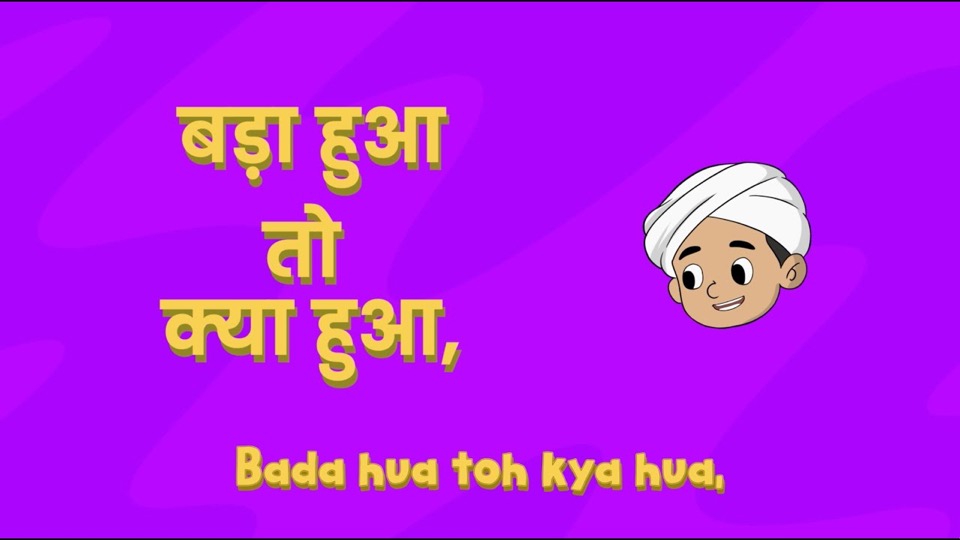
Watch Kaal Kare So Aaj Kar meaning for children →Bada Hua To Kya Hua uses the date palm to ask whether being tall, famous, or powerful matters if we are not useful to others.
Watch Bada Hua To Kya Hua story for kids →Boli Ek Anmol Hai is a short Little Kabir Song about weighing words in the heart before speaking.
Sing Boli Ek Anmol Hai with meaning →Little Kabir is a calm, curious 6-year-old who notices the world differently. Each story follows a small moment — a sharing dispute, a hasty decision, a moment of patience — and a doha arrives naturally at the end.
No loud sounds. No fast cuts. No screen fatigue. These stories are designed to slow children down, not speed them up.
Watch all stories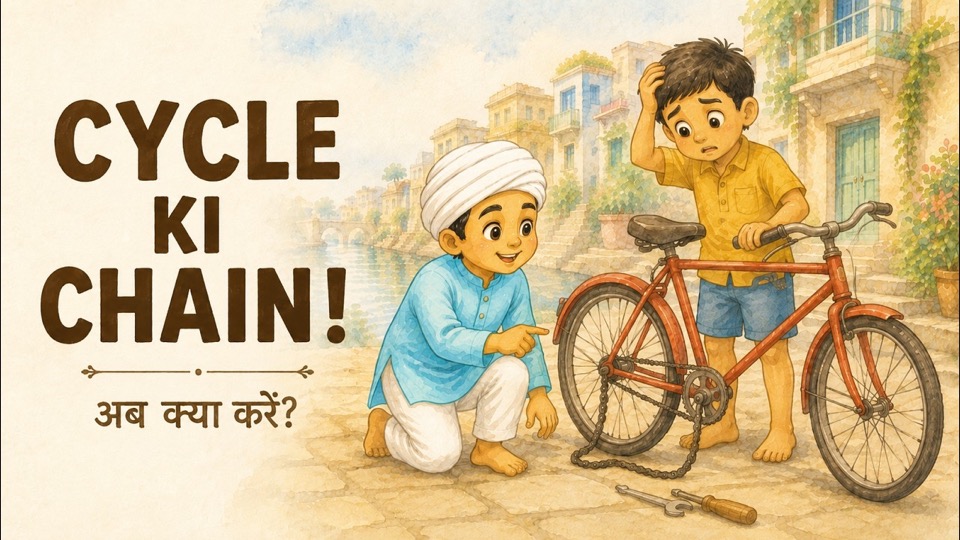
Little Kabir Songs turn Kabir-inspired ideas into simple, singable melodies. The aim is not forced memorisation; it is letting Hindi feel warm, musical, and usable.
When wisdom lives in a melody, children can return to it gently — in the car, at bedtime, or during a school circle.
Watch Dheere Dheere Re ManaBodies learn differently from minds. The Dance Along series turns dohas into physical routines — movement, rhythm, and repetition that embed wisdom in muscle memory, not just memory.
Clear a little floor space and put it on the TV. Parents who join in find the dohas stick for them too.
See all dance-alongs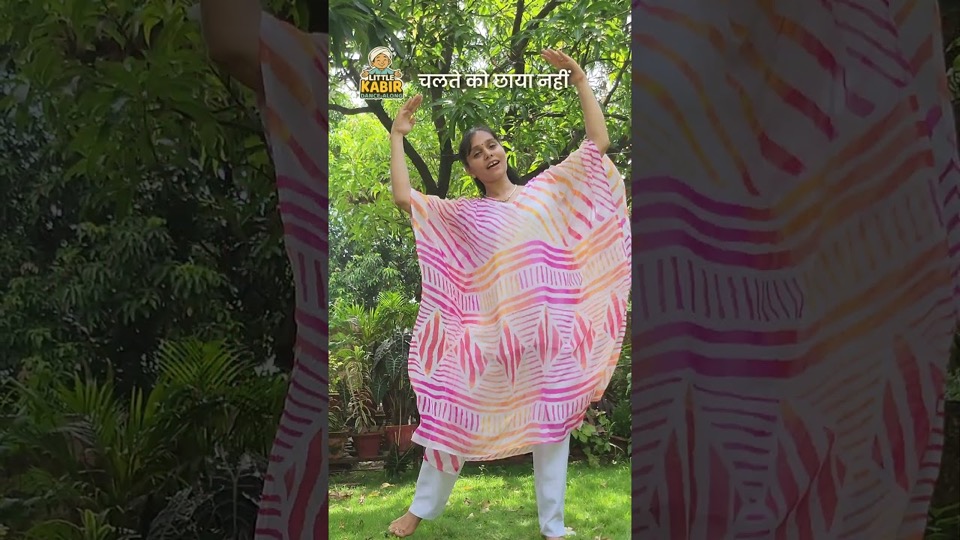
These videos work best when an adult watches along, asks lightly, and lets the child connect Kabir's line to something real.
Choose one calm video and one doha line. Keep the question small: "Where did you see this today?" Then let the story rest.
Use the story as a five-minute opening. Ask children to draw the doha image: a date palm, a heart scale, or a task done today.
Let elders say the Hindi line slowly, then let the child explain it back in their own words. The bridge matters more than perfect translation.
Whether your child grows up in Delhi or Dubai, Mumbai or Manchester — Kabir for Kids gives them a thread back to Indian culture that doesn't feel forced or academic.
It's not Hindi teaching. It's Hindi living. Stories that make children feel at home in the language and the wisdom — naturally, through watching and singing.
For parents, teachers, and grandparents looking for rooted Hindi content that still feels light enough for young children.
Good Hindi moral stories for children are short, rooted, and easy to discuss. They should give a child one clear image or line they can use in daily life, rather than a heavy lesson.
Kabir for Kids is made for children aged 5–9, with parents, teachers, and grandparents watching along when possible.
Watch one video, repeat one doha line, and ask one real-life question. For example: "What is one thing we can do today instead of tomorrow?"
Yes. The stories and Little Kabir Songs are suitable for value education, Hindi language sessions, morning circles, and cultural programmes for young children.
Pick one Kabir story, watch it alongside your child, and ask one gentle question. That is enough for the first night.