Speak with care
Kabir asks children to weigh words in the heart before speaking. Kindness begins by noticing whether a sentence may help or wound.
बोली एक अनमोल है →
Kabir for Kids presents
Sant Kabir was a 15th-century weaver-poet from Varanasi whose short dohas taught courage, kindness, truth, and equality. This child-friendly story follows his birth legends, simple life, bold questions, and the wisdom that still helps children notice what matters.
↓ Scroll to begin ↓
Saint Kabir's teachings show children how to look past labels and notice what actions reveal. His dohas help them speak thoughtfully, begin without delay, practise patiently, stay humble, question pretence and treat every person with dignity. Each idea arrives through a memorable image rather than a lecture, making it easier to discuss at home or in school.
These child-friendly summaries stay close to five specific Kabir dohas, so every teaching leads back to a poetic image.
Kabir asks children to weigh words in the heart before speaking. Kindness begins by noticing whether a sentence may help or wound.
बोली एक अनमोल है →A task becomes lighter when the first step happens now. Kabir turns delay into one clear, child-sized nudge: begin.
काल करे सो आज कर →Learning is like fruit on a tree. Care and practice matter, but rushing cannot replace patience or the time that growth needs.
धीरे-धीरे रे मना →A tall date palm offers little shade. Kabir's sharp question for children is simple: did being bigger help anyone?
बड़ा हुआ तो क्या हुआ →A straw underfoot can still reach the eye. Kabir asks children not to look down on anyone because of size, confidence, caste or status.
तिनके की निंदा न करो →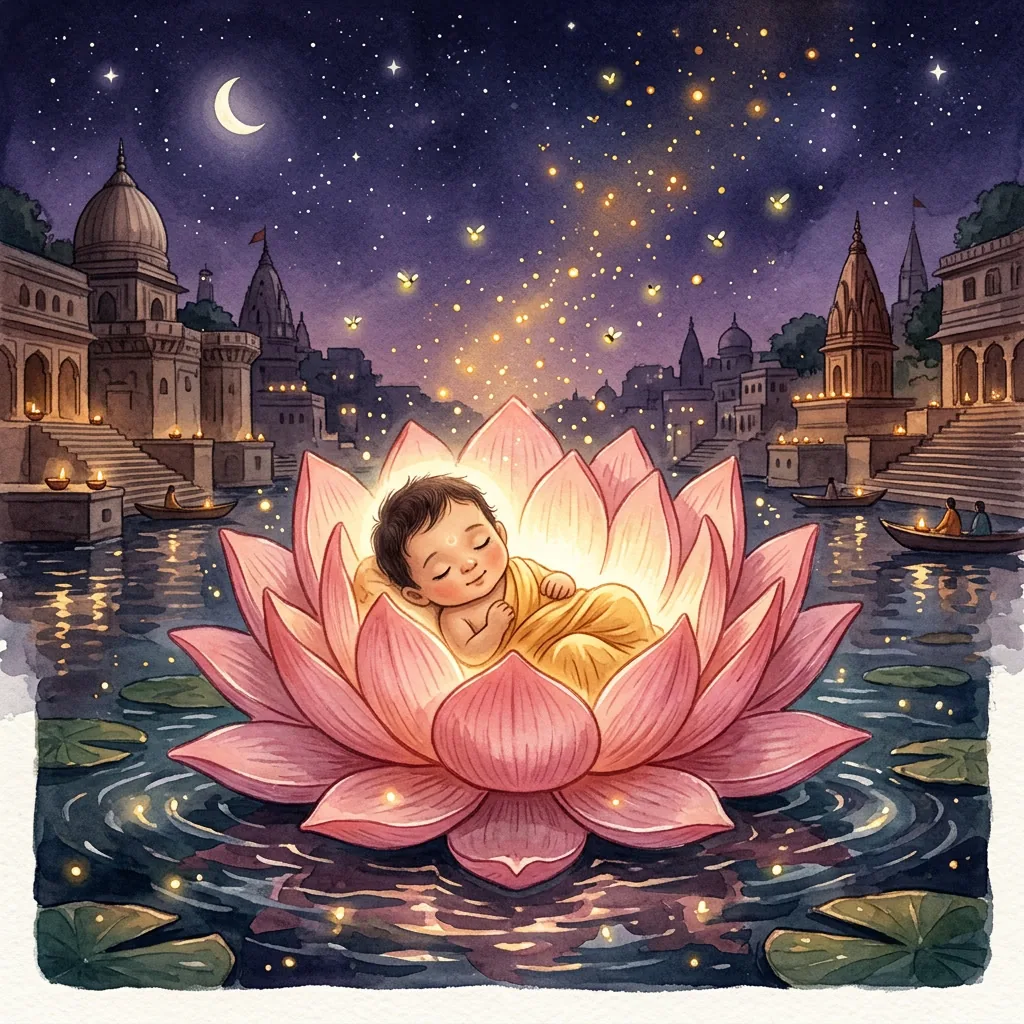
Over 600 years ago, in the holy city of Varanasi, something extraordinary happened at Lahartara Pond. Just before sunrise, a ball of golden light drifted down from the heavens and settled on a big, blooming lotus flower. When the glow faded, there sat a tiny, crying baby!
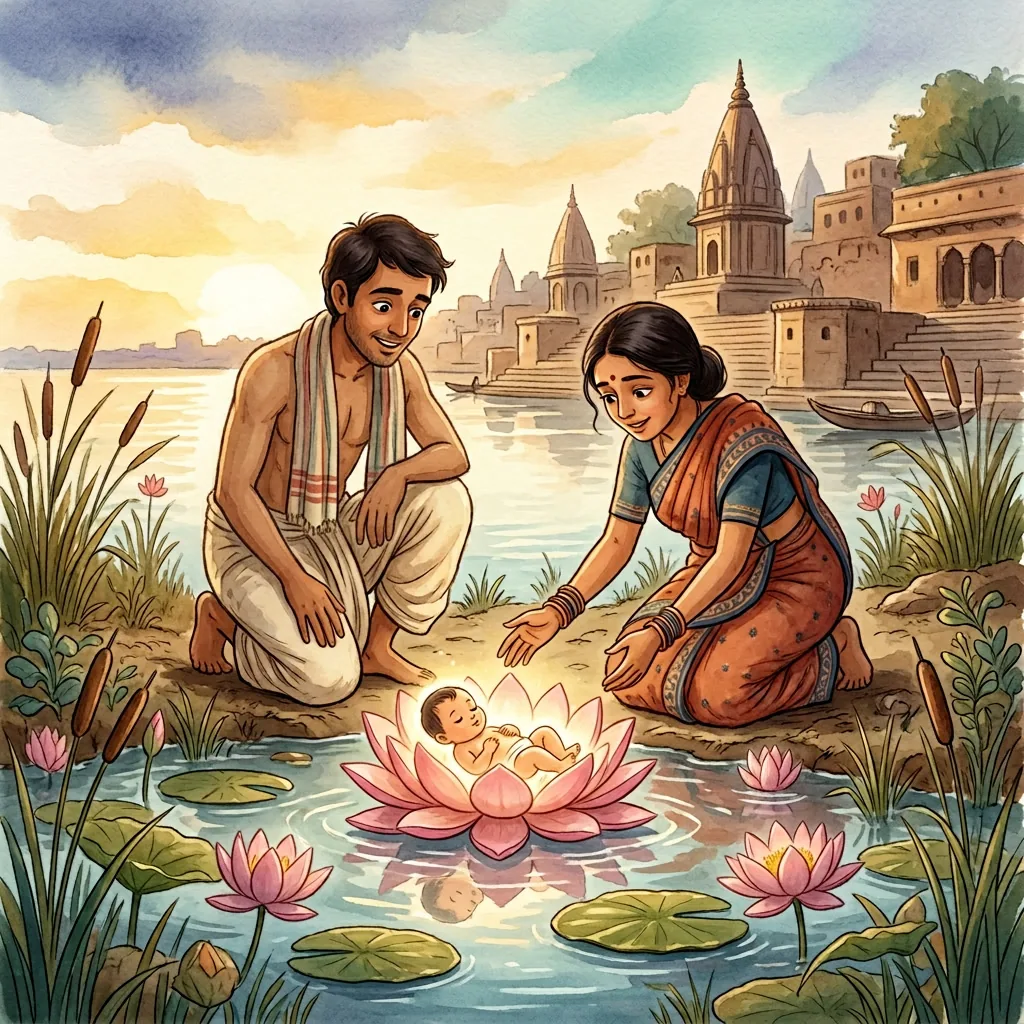
A kind couple named Niru and Nima — weavers who made cloth for a living — heard the cries during their morning walk. They rushed to the pond and found the miraculous child. They had always wished for a baby, and here was one — delivered by the sky itself!
When they took the baby to a Qazi (a Muslim cleric) for his naming ceremony, something funny happened. Every time the Qazi opened the holy book to find a name, it fell open to the same word: Kabir — which means "The Great One." After several tries, they gave up and named him exactly that!
माता मेरी नाहिं, पिता मेरे नाहिं।
हाड न चाम न लोहू, ना मैं जाया माहिं॥
"I was not born of a woman. I have neither bones, nor blood, nor skin." — according to legend, the baby spoke these very words.
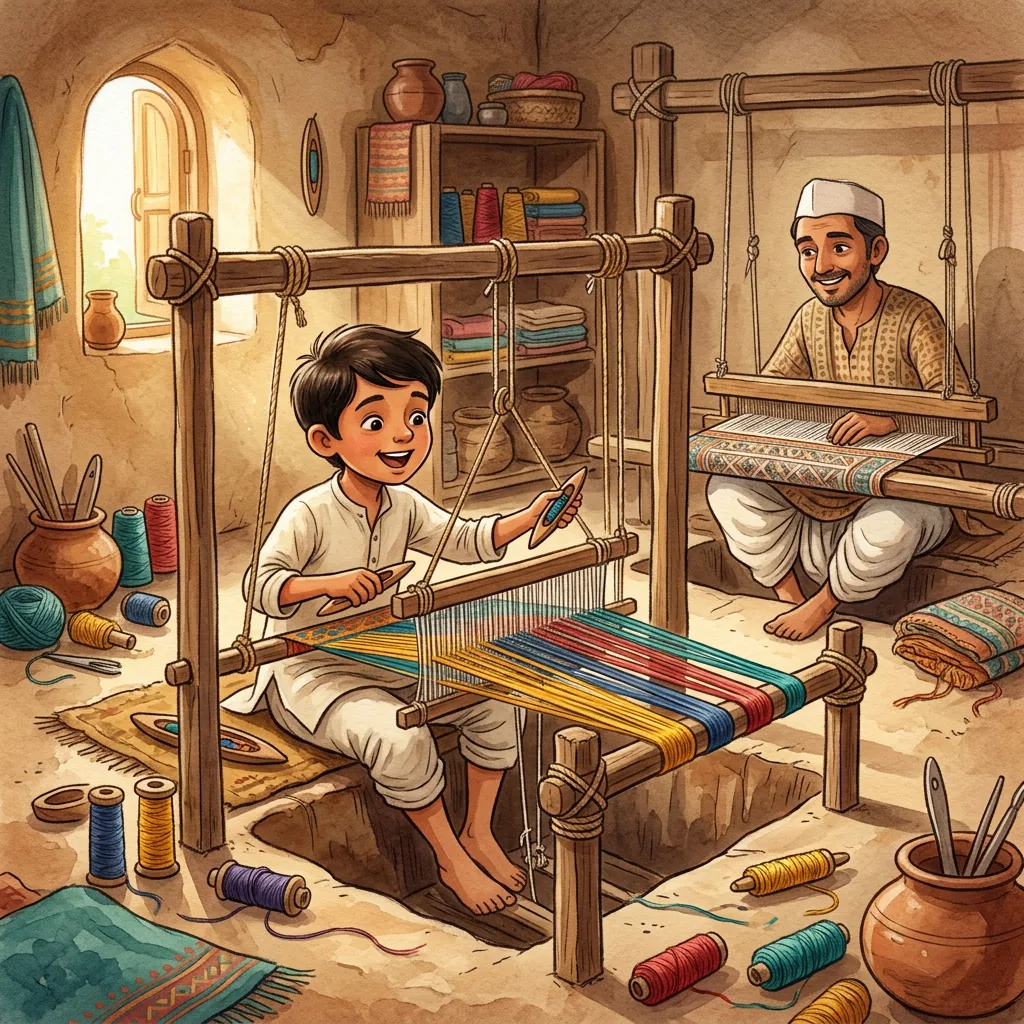
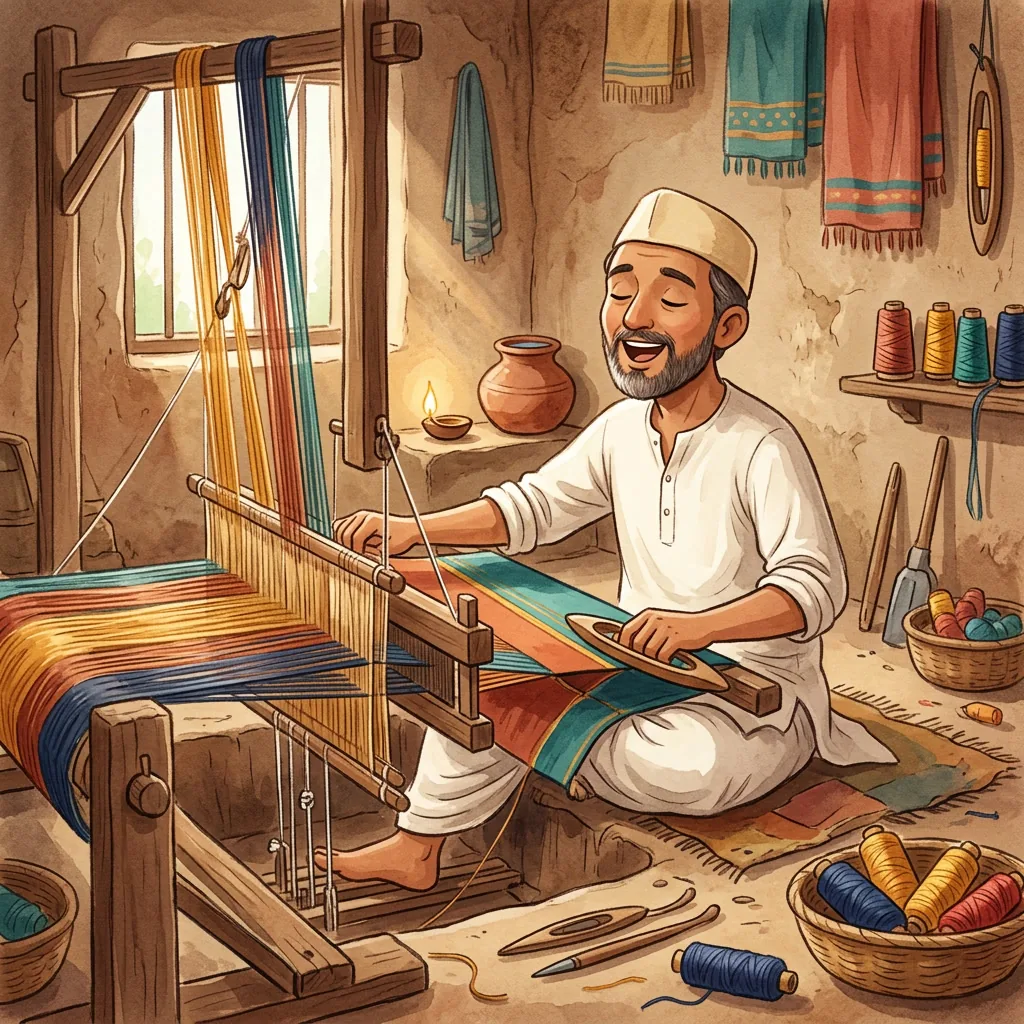
Young Kabir grew up in a tiny house in the Kabir Chaura neighbourhood of Varanasi. The house was filled with the clack-clack-clack of his father's wooden loom — making cloth from morning to night.
But Kabir was different from the other children. While playing in the streets, he would suddenly cry out "Ram Ram!" and "Hari Hari!" — Hindu names for God. This got him into double trouble:
Hindu children were cross: "How dare a Muslim weaver's son chant OUR gods' names!" And Muslim children tried to silence him: "Stop saying those Hindu words!"
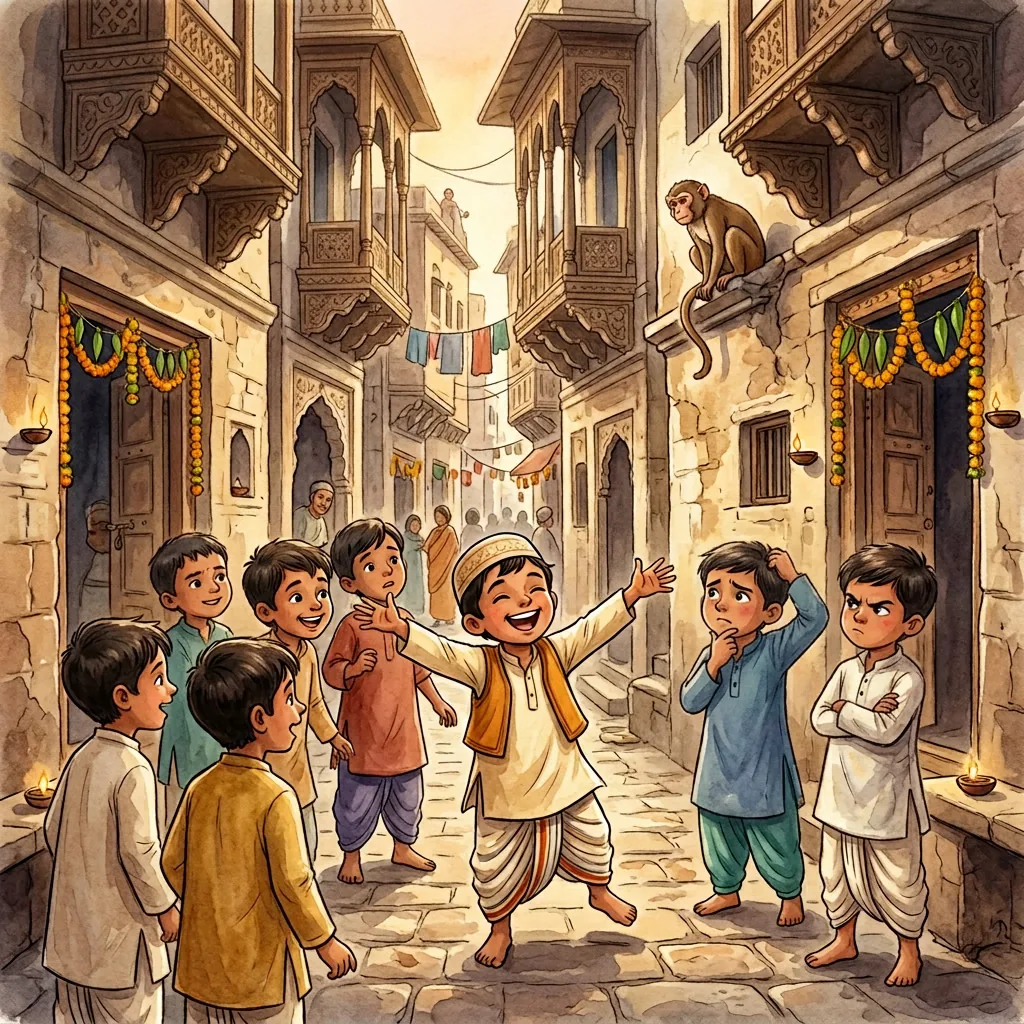
Young Kabir looked at them all and said: "Infidels are those who kill the innocent and steal — not those who say God's name." Even as a small boy, he refused to accept that God belonged to any one group.
His mother Nima worried terribly. "From the day Kabir has taken up prayer beads, our peace is gone. He has left weaving. Why has death not befallen those wandering holy men who have ruined our house!"
But Kabir just smiled and kept singing.
Young Kabir desperately wanted to learn from Swami Ramananda — the most famous teacher in all of Varanasi. But there was a problem. A huge problem.
Kabir was Muslim. He was a weaver — almost the lowest rung in society. No great Hindu teacher would accept a poor Muslim boy as a student. Kabir asked Ramananda directly. He was refused.
Without a guru, people mocked him as "Nigura" — one without a teacher. Worthless.
So Kabir made a plan.
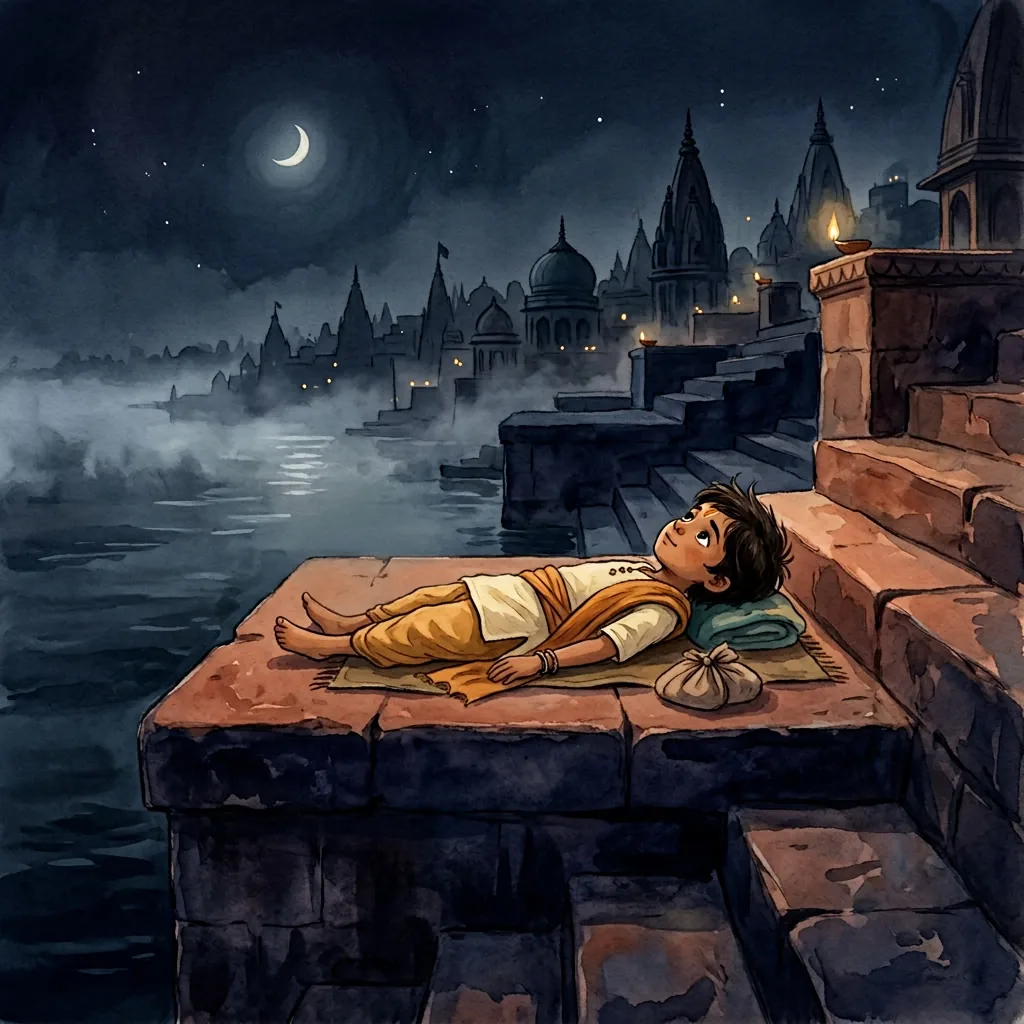
One cold, moonless night, when the entire city was asleep and the steps were shrouded in mist, young Kabir crept to the ghat. He lay down flat across the stone steps — right in Ramananda's path — and waited.
In the pre-dawn blackness, the old saint came walking down, mind deep in prayer. He could see nothing. His foot struck Kabir's body.
Shocked, the startled saint cried out the sacred name that was always on his lips:
"Ram! Ram!"
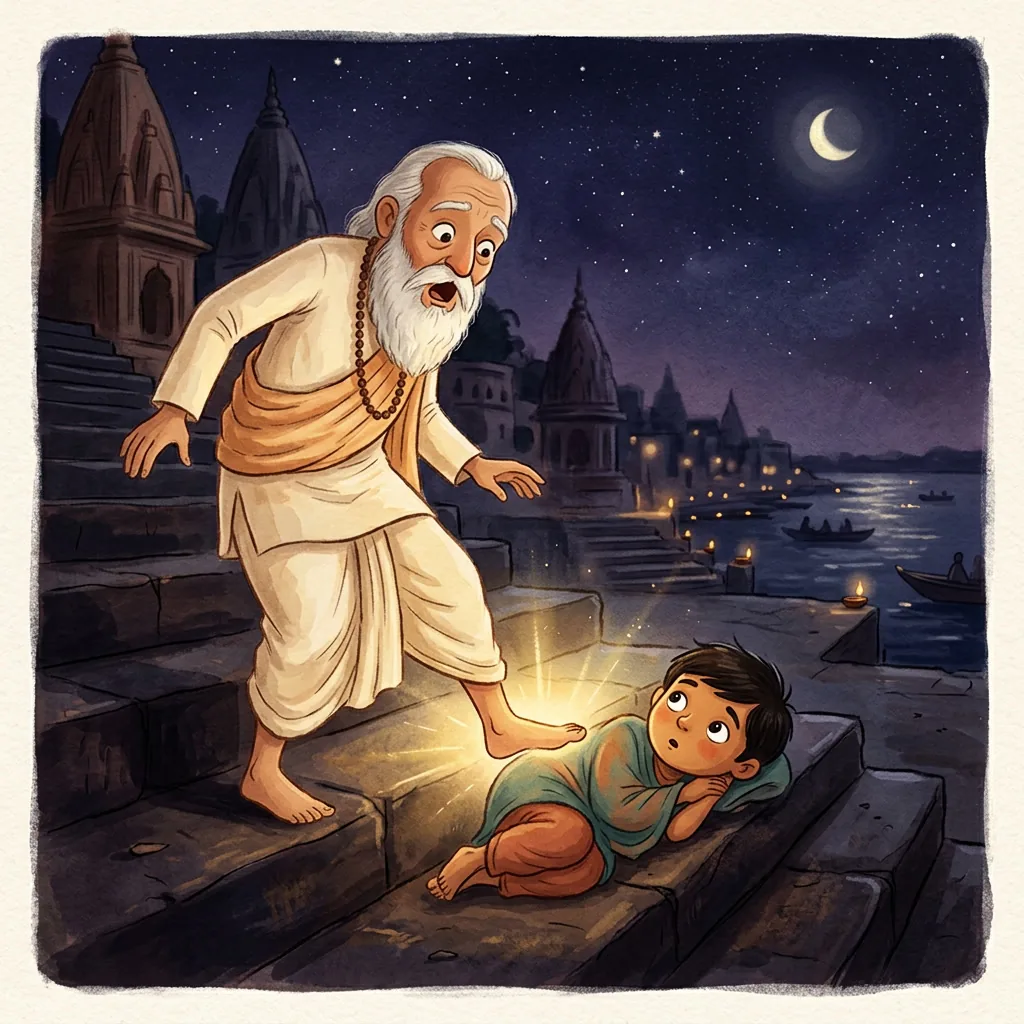
Kabir jumped up, threw himself at Ramananda's feet, and declared: "I have found him at last! You have given me the sacred word — I am your student now!"
His logic was devastatingly clever. To become a student, a teacher must whisper a sacred word to you while touching you. Ramananda had just said "Ram" while his foot was on Kabir. Both the sacred word AND the teacher's touch — the two things needed for initiation — had been given.
The truthful Ramananda could not deny it. He accepted Kabir.
News of Kabir's wisdom spread far beyond Varanasi. Even the Sultan, Sikandar Lodi — the ruler of all of Delhi — heard about this strange weaver who sang about God and challenged priests and teachers.
The Sultan decided to test him. "If this Kabir is truly blessed by God," he said, "then he will survive my tests. If not, he is a fraud."
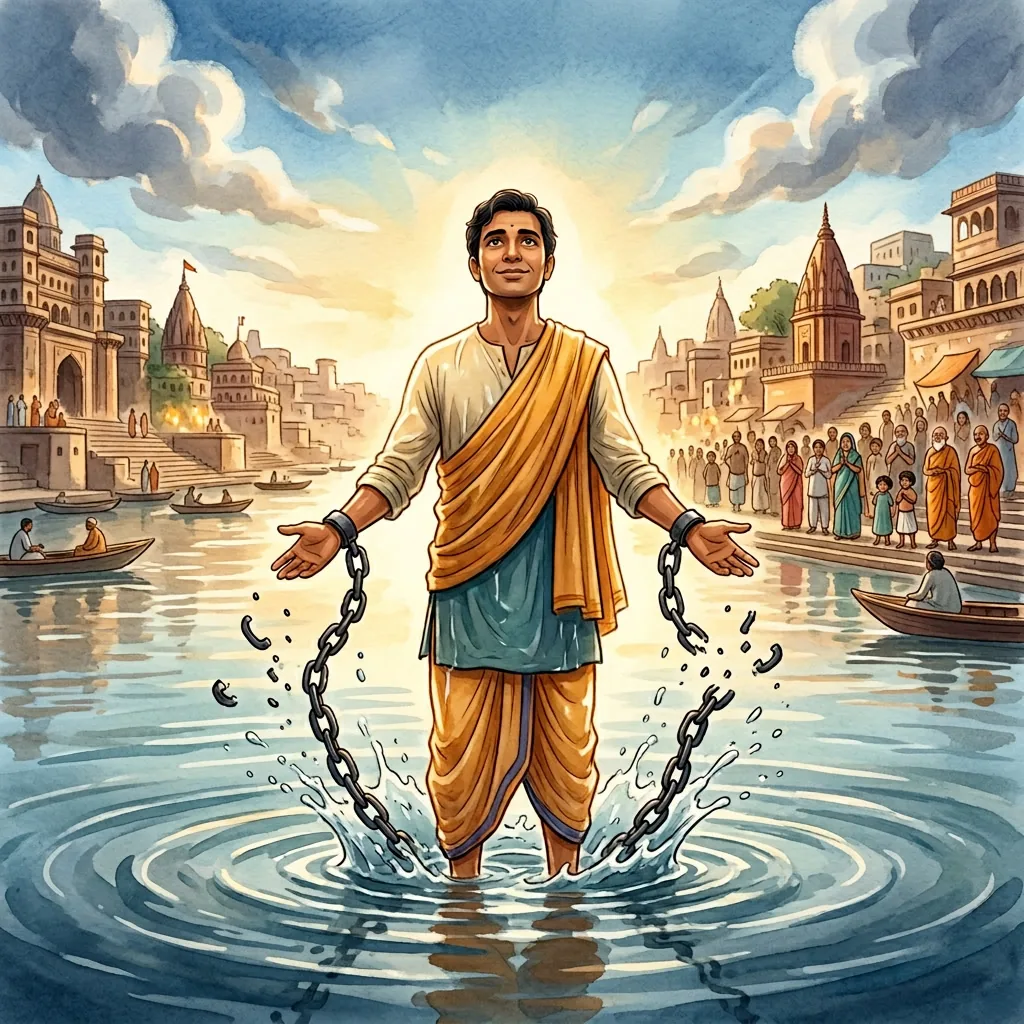
"Throw him in the river with heavy chains," the Sultan commanded. "If your God saves you, you are blessed."
Kabir was chained and thrown into the Ganges River. But the chains fell away. He floated. He was safe. The people watching from the shore gasped. The Sultan watched in silence.
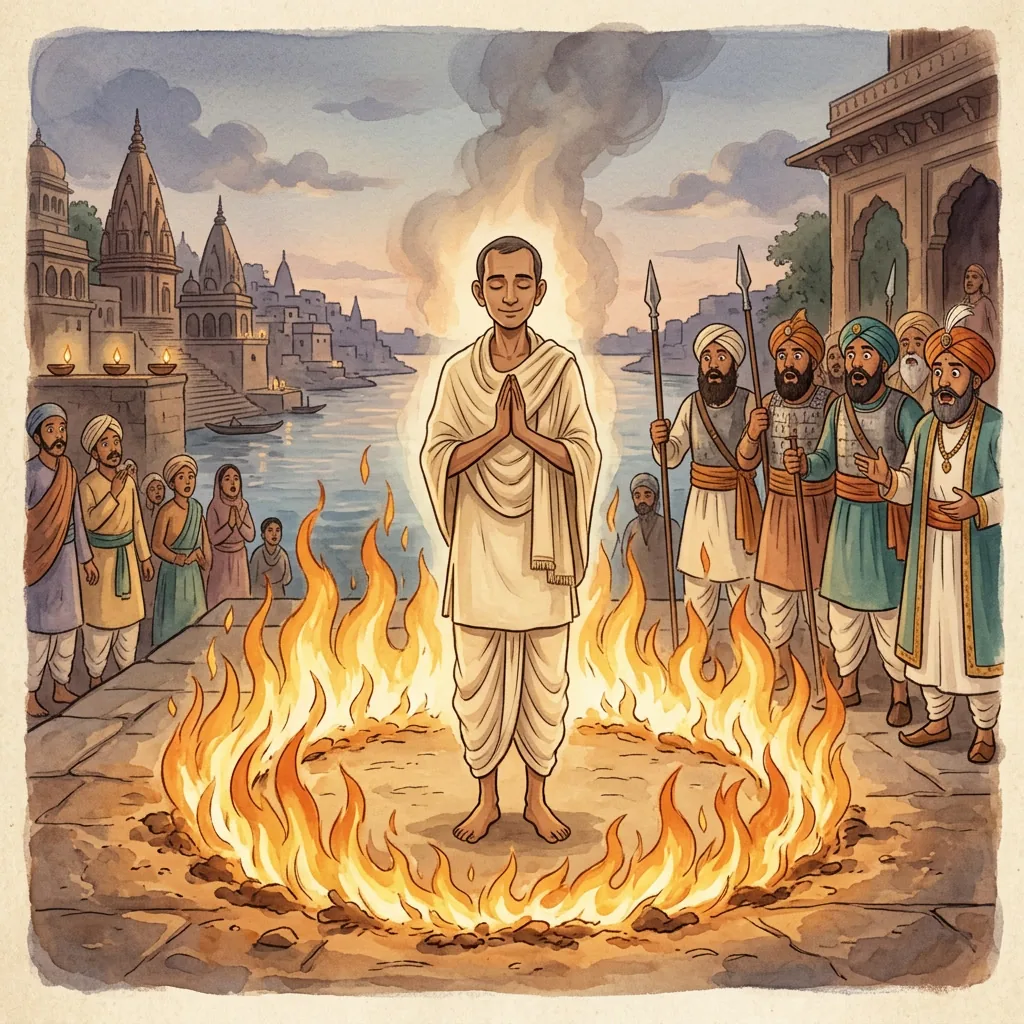
"Build a fire," the Sultan ordered. "Make it burn hot. If your God is real, the flames will not touch you."
Kabir walked into the fire singing. The flames danced around him but did not burn. His clothes were not singed. Not a hair on his head was touched. He walked out, still singing, still smiling.
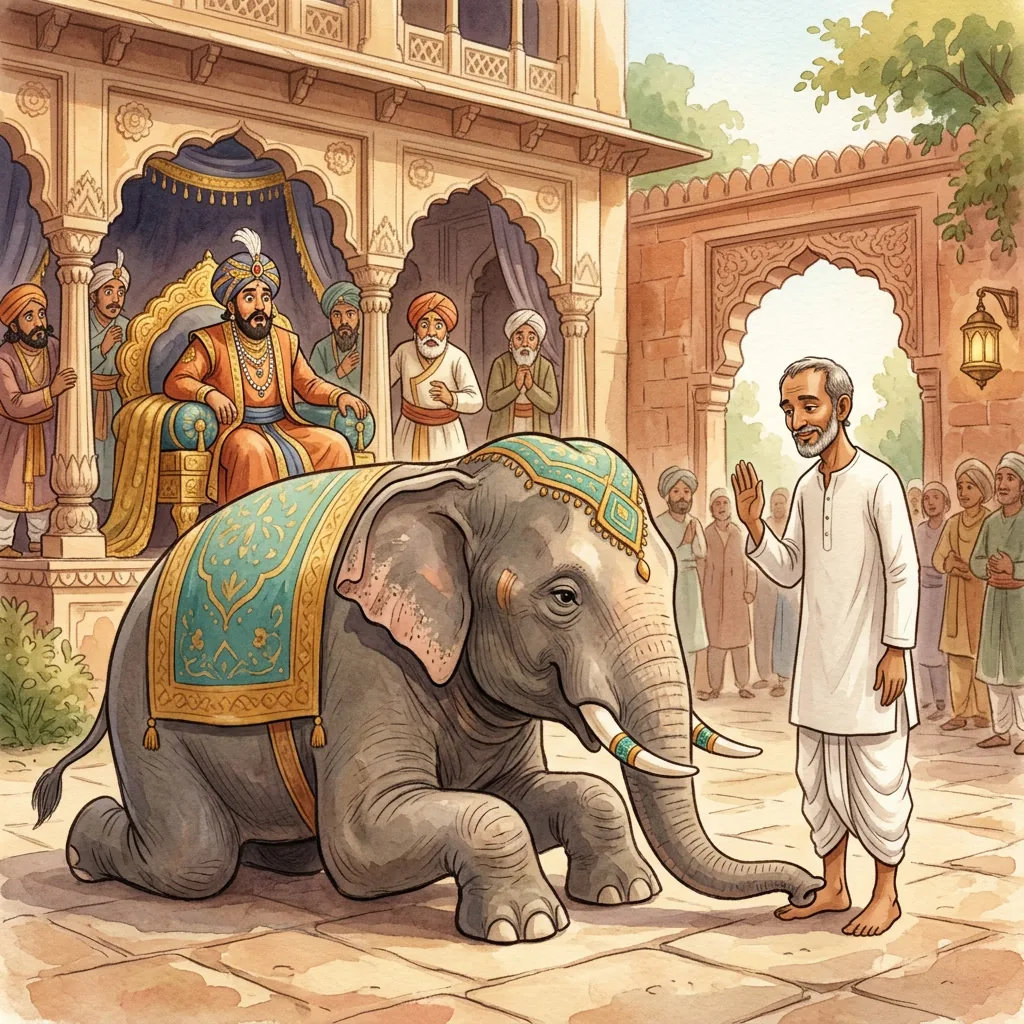
"Bring the fiercest elephant in the kingdom," said the Sultan. "Let it charge. We will see if this man can stop it with his God."
The great elephant came running toward Kabir, angry and wild. But as it reached him, the beast stopped. It bowed down. It touched its head to Kabir's feet like a child greeting its father.
The Sultan sat in silence. He had thrown everything at Kabir — water, fire, even a raging beast — and nothing could touch him. Finally, the Sultan stood and bowed low.
"You are truly blessed," he said. "I will no longer be your enemy."
But Kabir's greatest power was not miracles. It was his words. His wit. His stories that made priests and teachers so uncomfortable that they had to either agree with him or walk away in silence.
Priests bragged that Ganges water could wash away any sin. Kabir offered them water from his own humble wooden bowl — from which a low-caste weaver had drunk. They recoiled in horror.
Kabir's reply: "If this water cannot purify my wooden bowl, how can it wash away the layers of dirt from the human mind?"
A great scholar loaded ALL his books onto a bullock cart and drove to Kabir's hut to defeat him in debate. Kabir's daughter Kamali laughed: "Where even an ant's foot finds no hold, the scholars want to reach with bullock carts of books!"
The scholar sent a pot filled to the brim with water to show his overflowing knowledge. Kabir simply dropped a tiny needle into it — meaning: "My truth is small, but it will sink deep and displace what is false."
A woman brought her son to Kabir: "He eats too much jaggery! Tell him to stop!" Kabir said: "Come back in one week."
She returned. Kabir told the boy to stop. The puzzled mother asked: "Why couldn't you say this last week?"
Kabir's answer: "How could I advise your son when I was eating jaggery myself? These past seven days, I gave it up first." Practice what you preach!
A man begged Kabir to show him God. Kabir arranged a huge feast and promised God would come. Everyone waited hungrily all day.
Then a buffalo crashed into the kitchen and destroyed everything! People beat it mercilessly. The bleeding animal ran toward Kabir, who embraced it and wept.
The crowd fell silent, realising: God was present in every living being — even the buffalo.
What was Kabir like as a person? He was blunt, fearless, and sarcastic — he often began poems with "Fools!" or "Listen, O saints!" He was thin, dressed simply with a round cap, and sat at his loom all day. He sang his poems while weaving — the rhythmic clack of the shuttle becoming the beat of his songs.
Everyone in India believed that if you died in Varanasi, you'd go to heaven. But if you died in a small, dusty town called Maghar, you'd be reborn as a donkey.
Guess where Kabir chose to spend his final days? Maghar.
It was his last act of rebellion against superstition. His famous words: काशी में हम मरें तो, रामहिं कौन निहोर।
हृदय में राम बसत हैं, काशी मगहर एक॥
"If Kabir dies in Kashi, what credit is there to Ram? If Ram resides in one's heart, Kashi is the same as Maghar."
As Kabir lay dying, two armed groups converged on Maghar, ready to fight. The Muslims wanted to bury him. The Hindus wanted to cremate him. They were on the verge of war.
Kabir told them: "Do not fight over my body."
Then came the miracle.
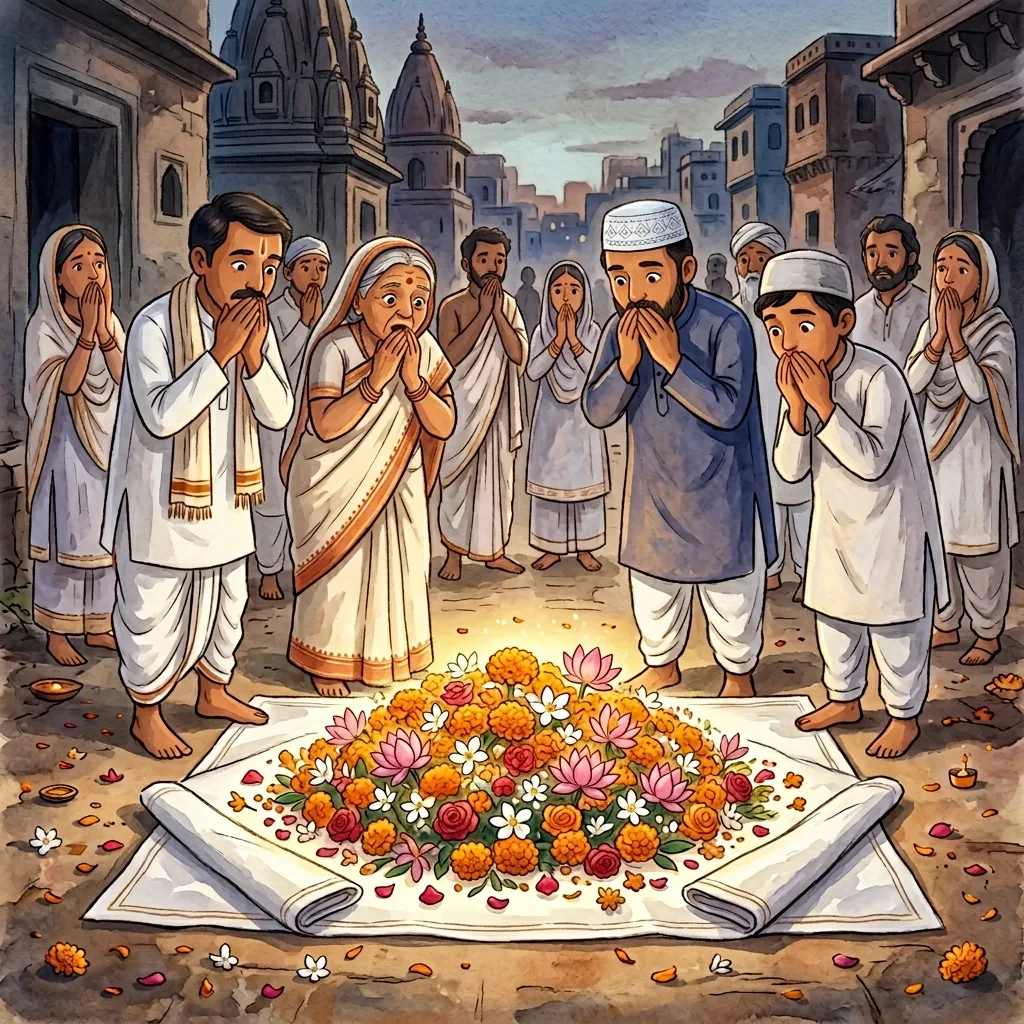
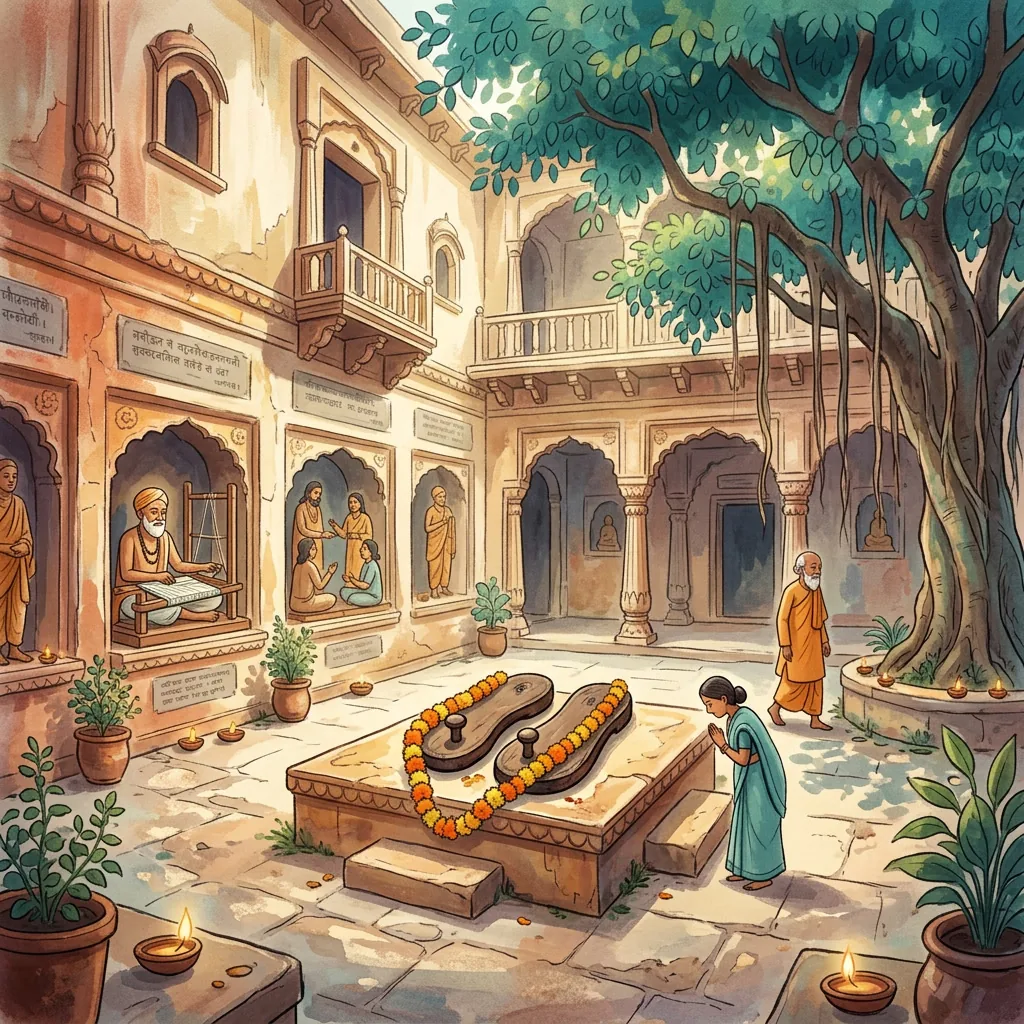
The stunned disciples divided the flowers. The Muslims buried their half and built a tomb. The Hindus cremated their half and built a memorial. To this day, twin shrines stand side by side at Maghar — one Islamic, one Hindu — about 100 metres apart. Together in death, as Kabir wished in life.
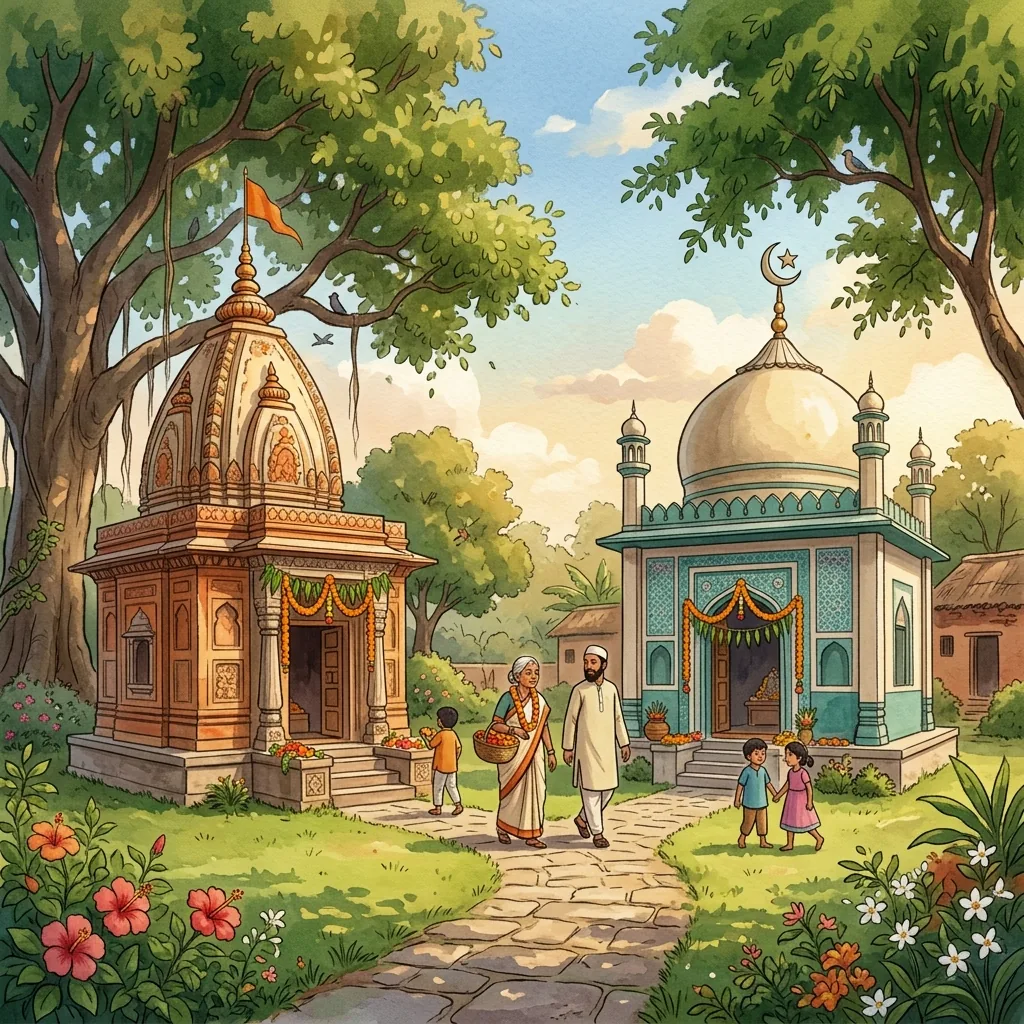
That was more than 600 years ago. And yet Kabir is still here. His words are still sung. His stories are still told. His wisdom is still teaching people how to live with truth and love.
This is what Kabir said near the end of his life:
जब तू आया जगत में, लोग हँसें तू रोय।
ऐसी करनी कर चलो, तू हँसे जग रोय॥
When you were born, you cried and the world rejoiced.
Live your life so that when you die, the world cries and you rejoice.
And Kabir did exactly that. He lived with joy. He died with flowers.
Explore Kabir's Wisdom
Explore dohas with meanings, watch story videos, or bring Kabir to your school.