Interactive sessions for schools

Storytelling workshops for schools.

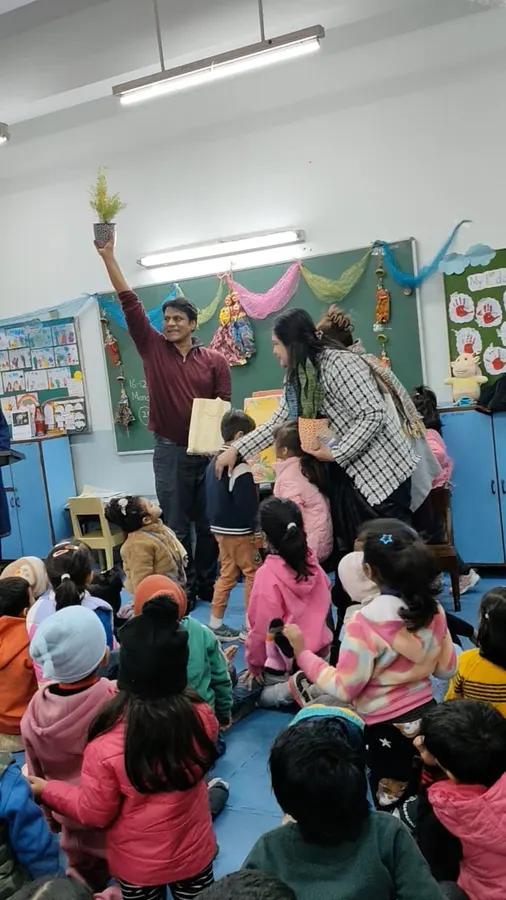
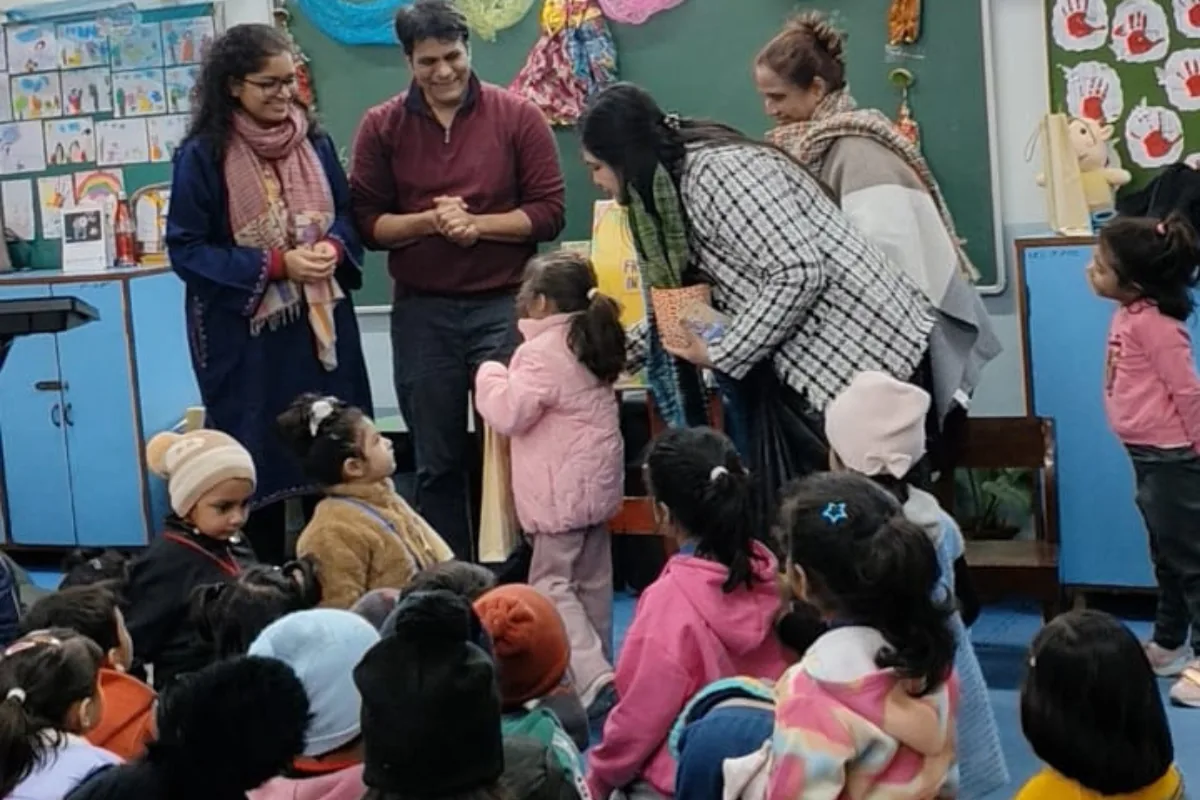
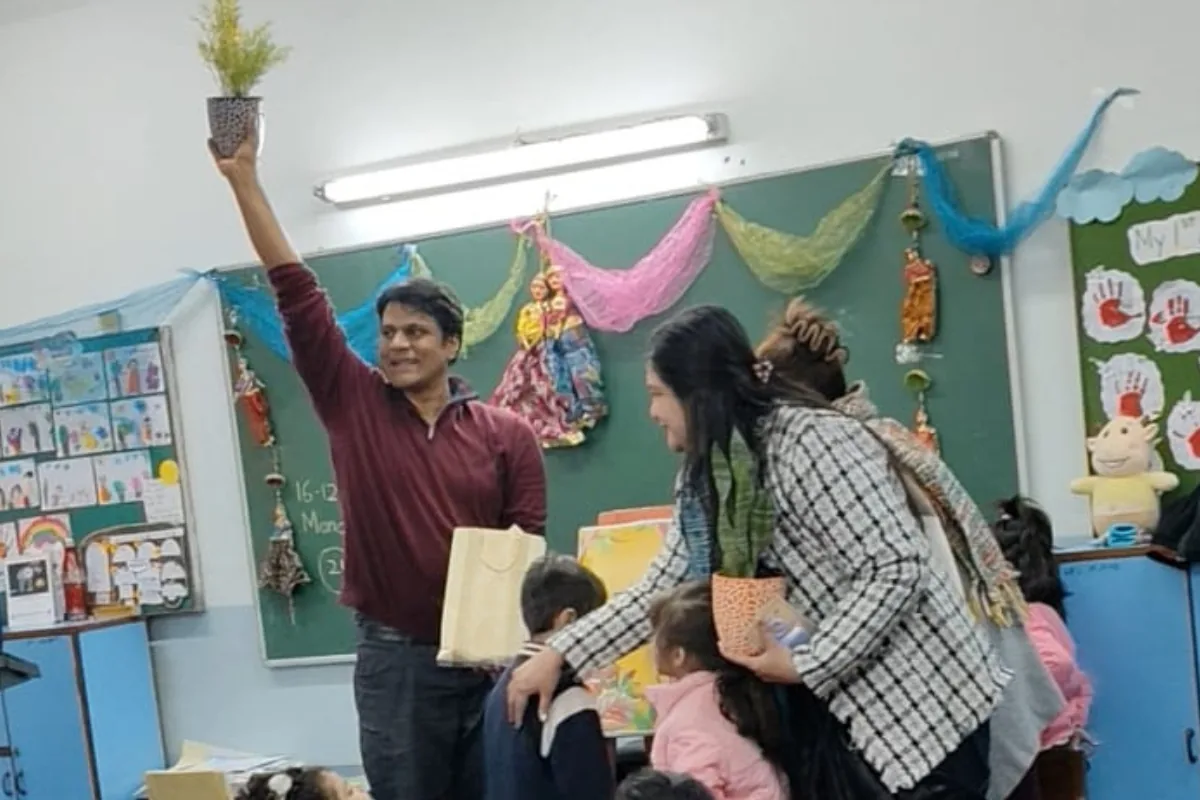
Kabir for Kids workshops are live storytelling sessions for schools where children sing dohas, act out stories, draw, move, and ask big questions. Built for ages 5–9, and adaptable up to Class 8.

सीखो, खेलो, याद रखो।
15Featured Sessions
1,800+Students Reached
35+Teachers Trained
5Cities
Ages 5–9For children
Choose the format

Two ways to bring Kabir into school.

Most schools begin with the student session. If teachers want to carry the work forward, we can add a practical orientation around dohas, songs and classroom prompts.

Student session

Interactive storytelling for children

A live room with story performance, doha singing, movement, drawing, doha-card work and open questions.

  • Ages 5–9
  • 60–90 minutes
  • 30–40 children
  • Best for assemblies or classroom blocks

Teacher orientation

Practical tools for the school day

A quieter working session for teachers who want to use Kabir dohas, songs and reflection prompts after our visit.

  • Teachers and coordinators
  • 45–75 minutes
  • Doha prompts
  • Follow-up classroom ideas
01Story
02Sing or move
03Draw or card work
04Reflect together

What an hour with Kabir looks like.

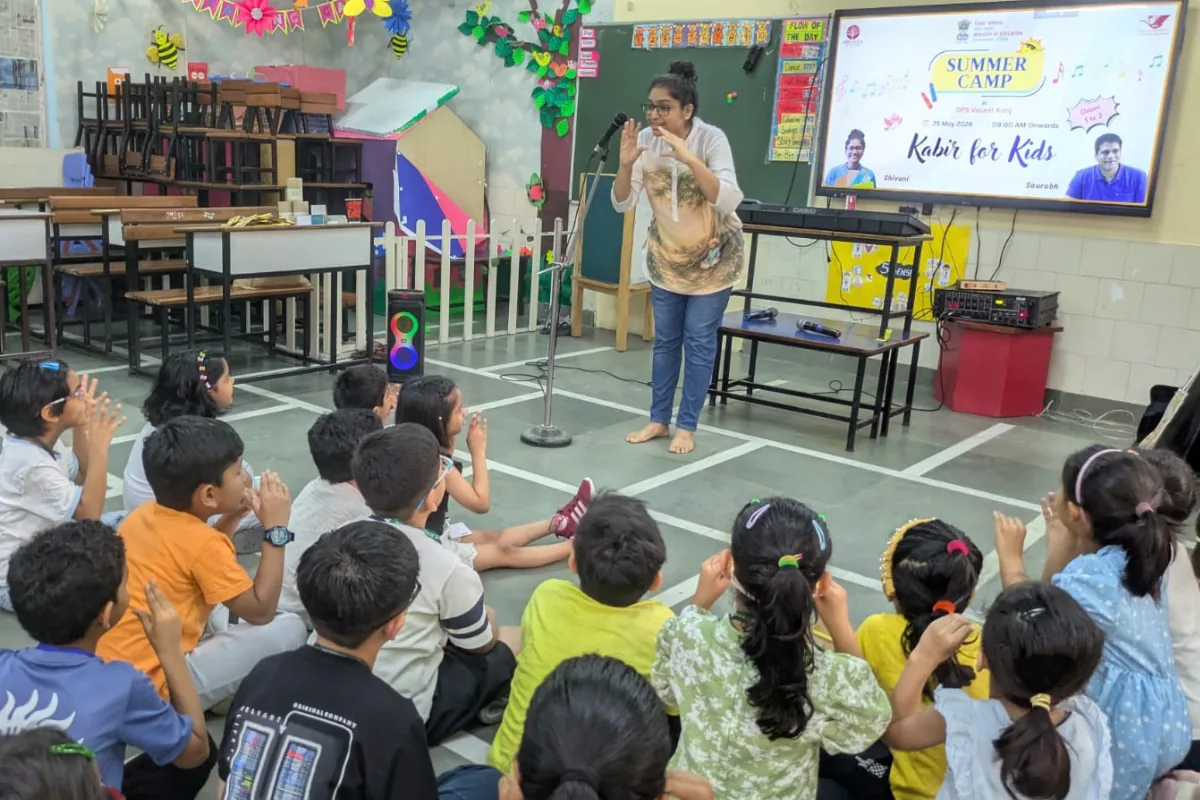
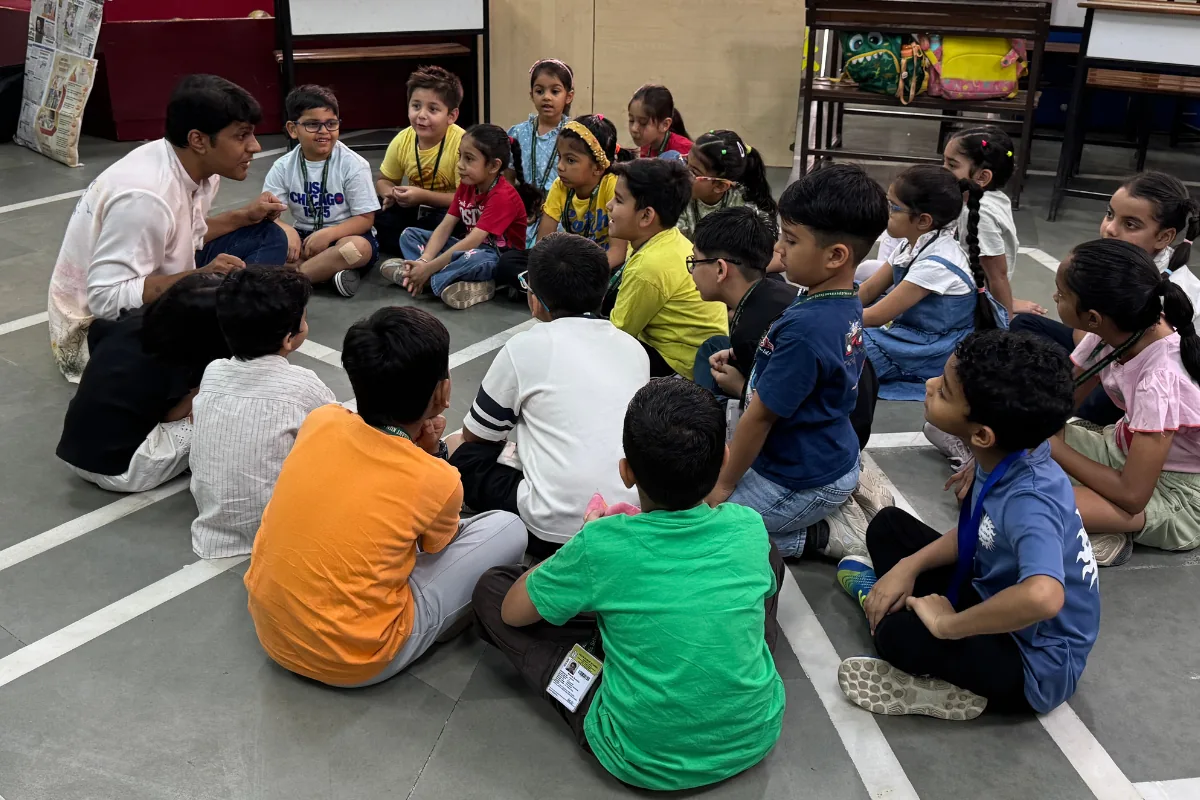
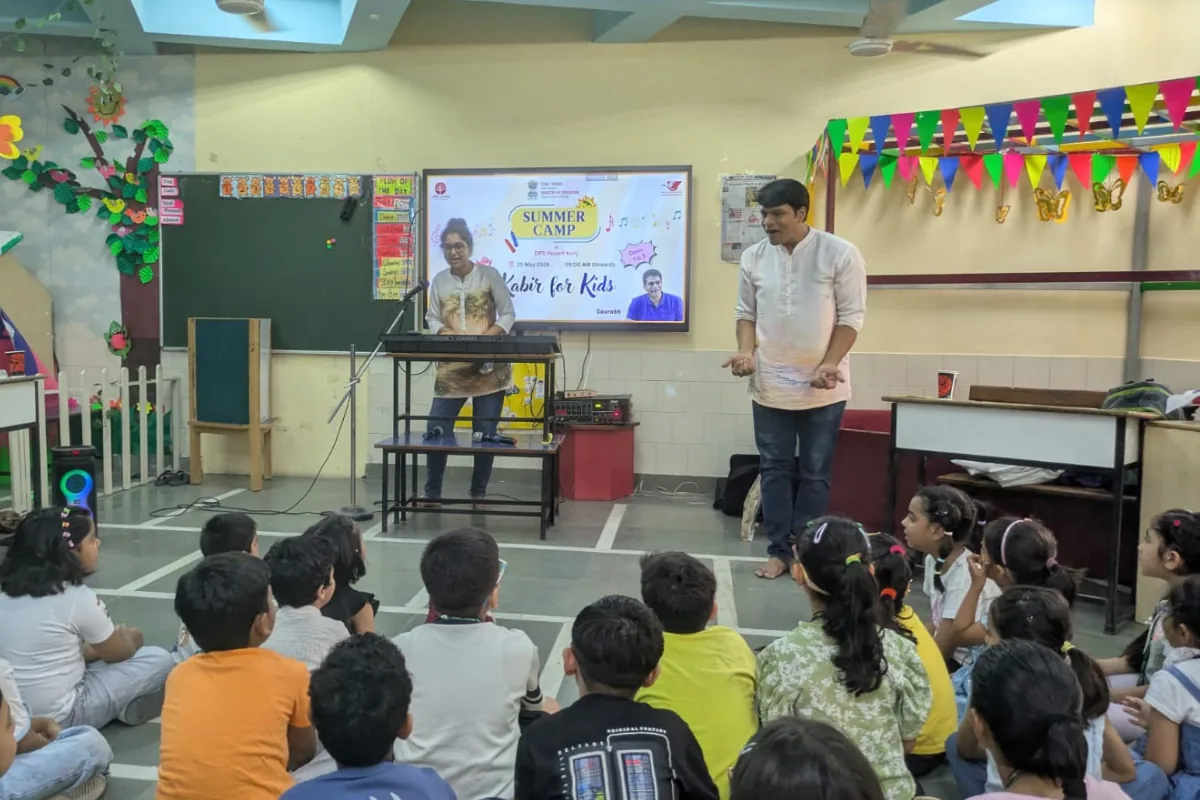
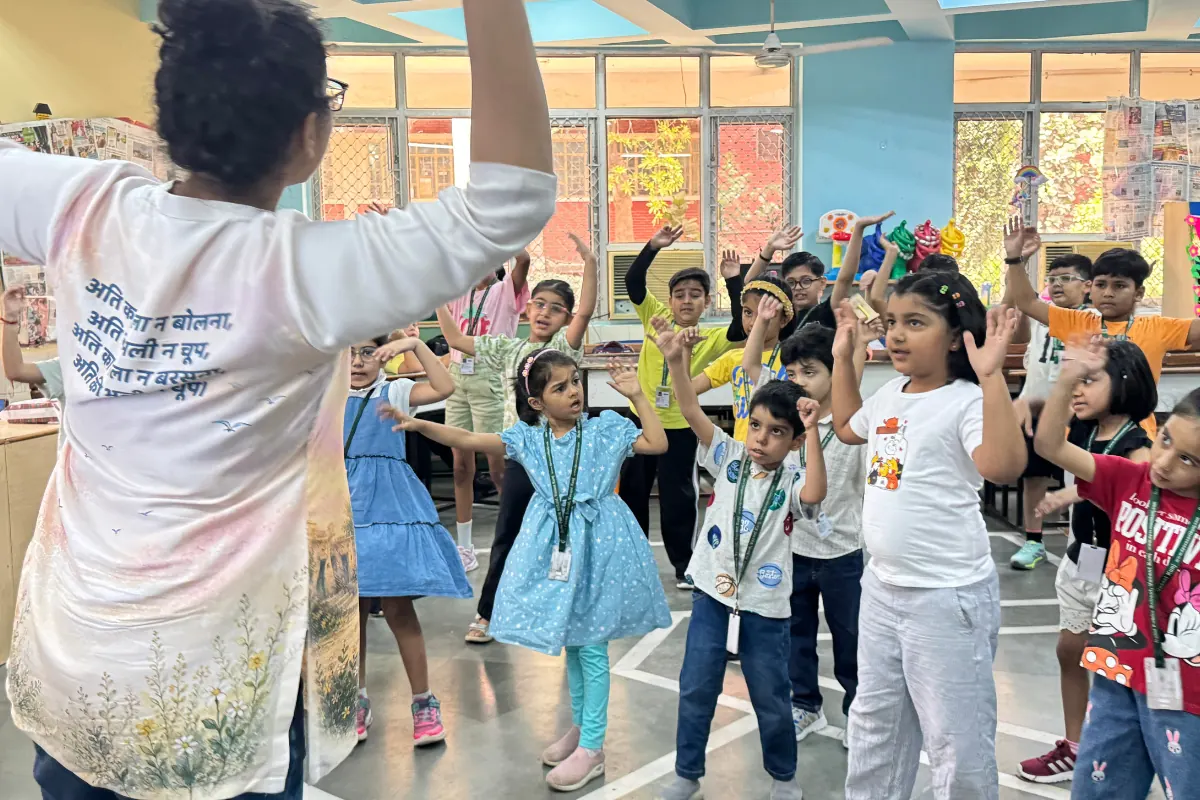
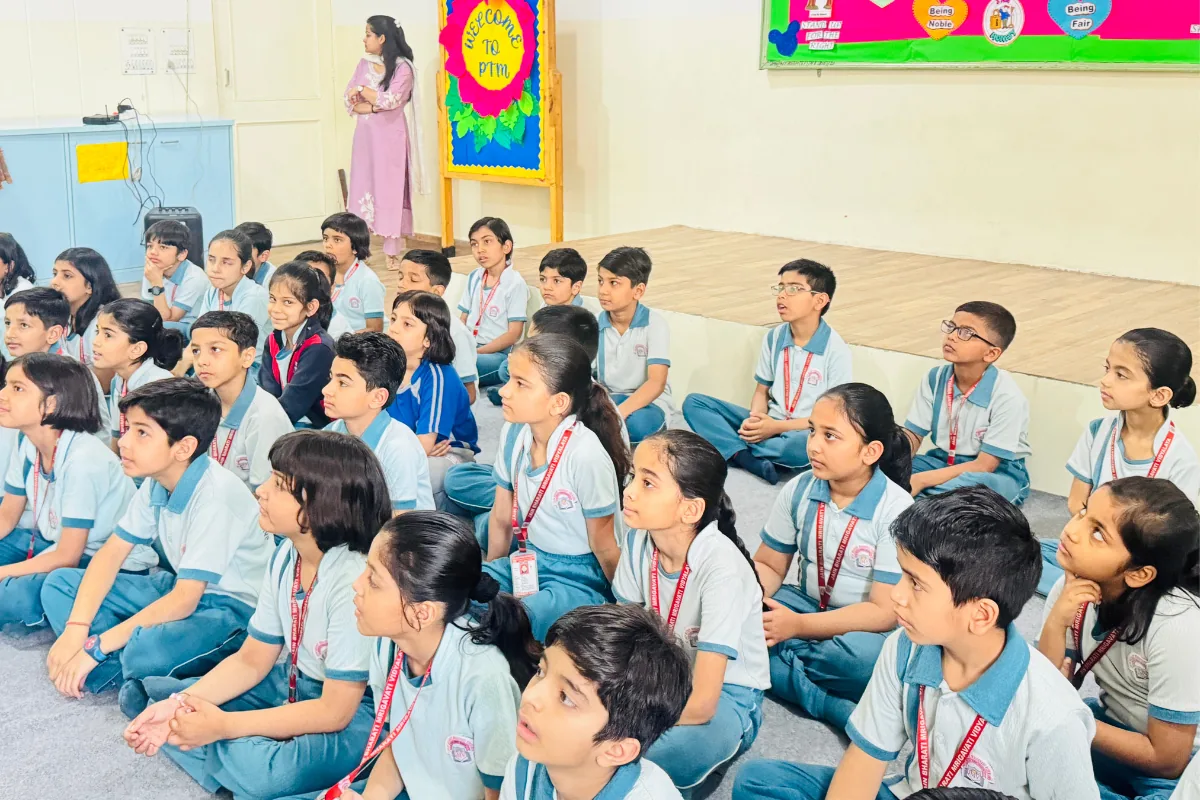
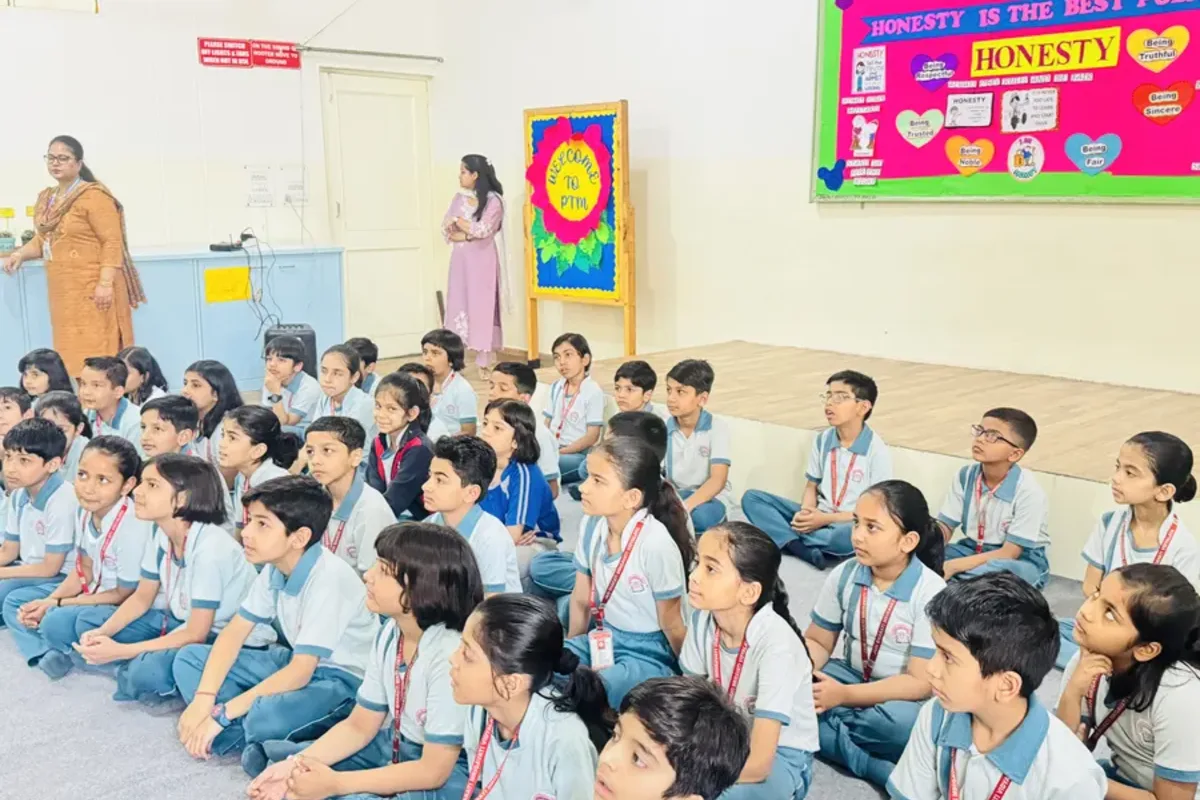
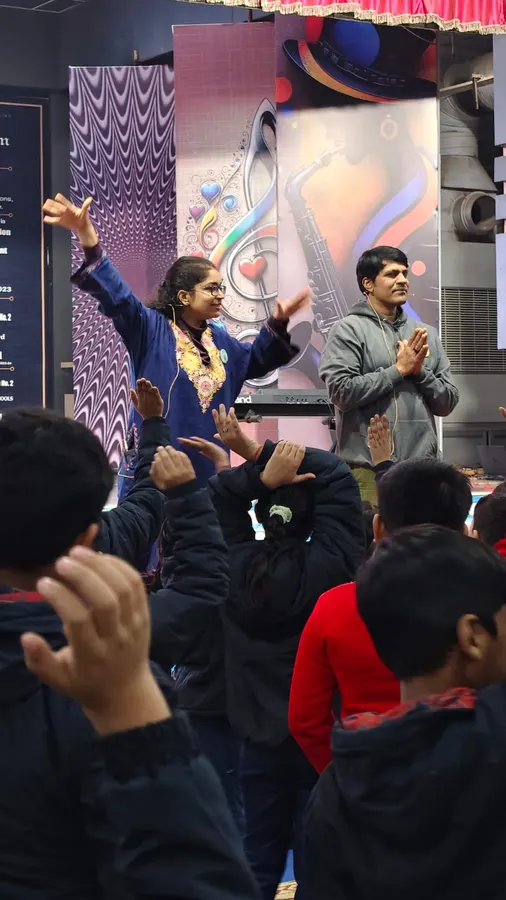
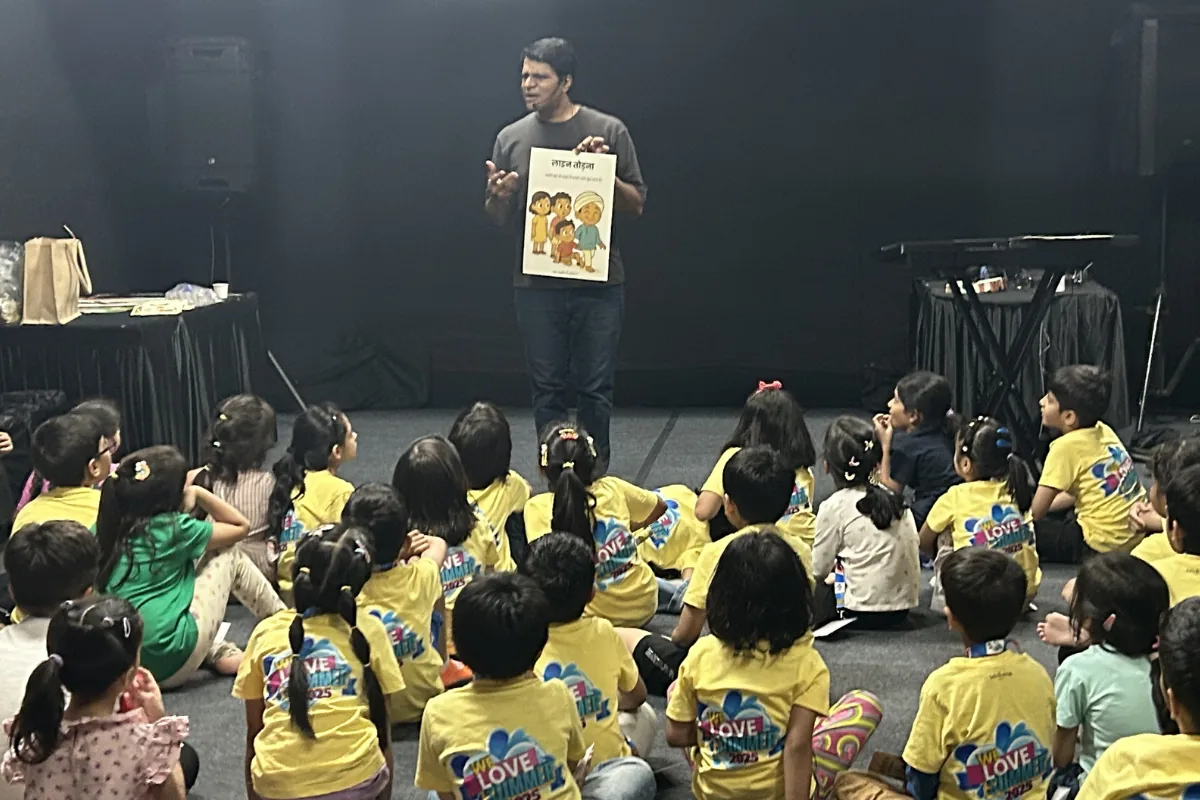
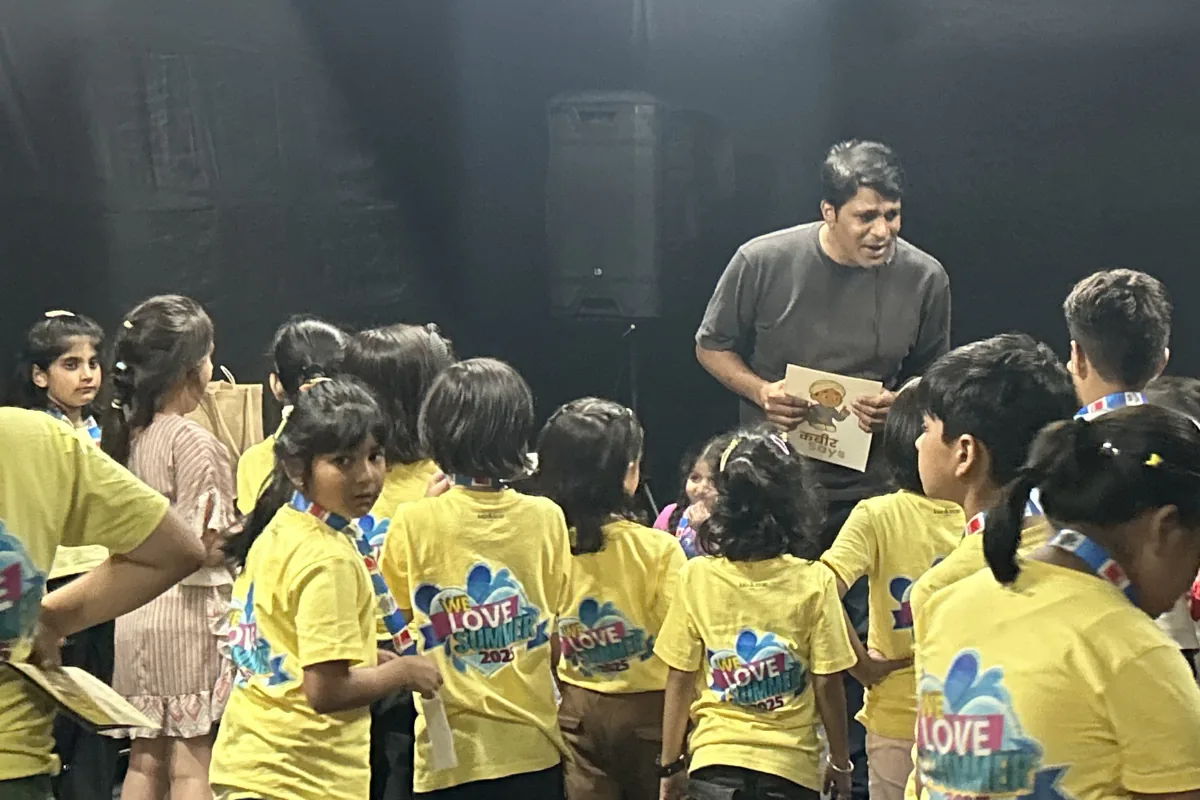
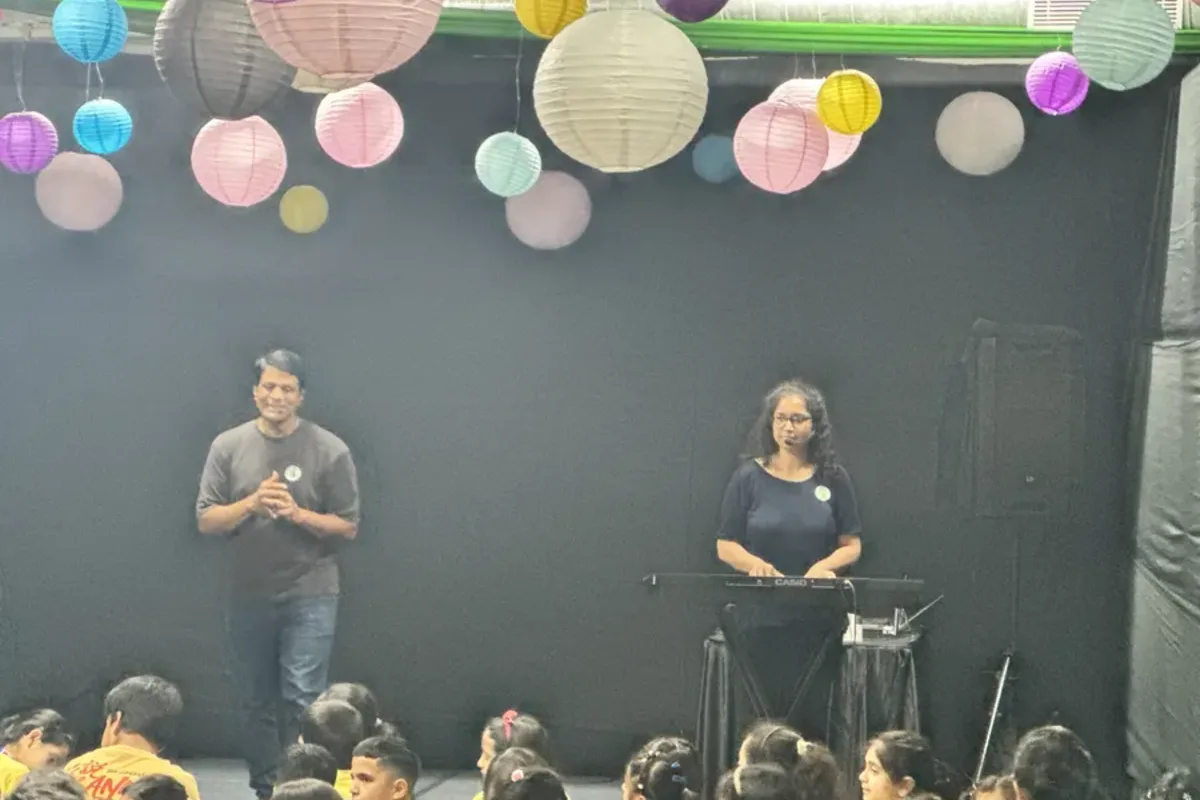
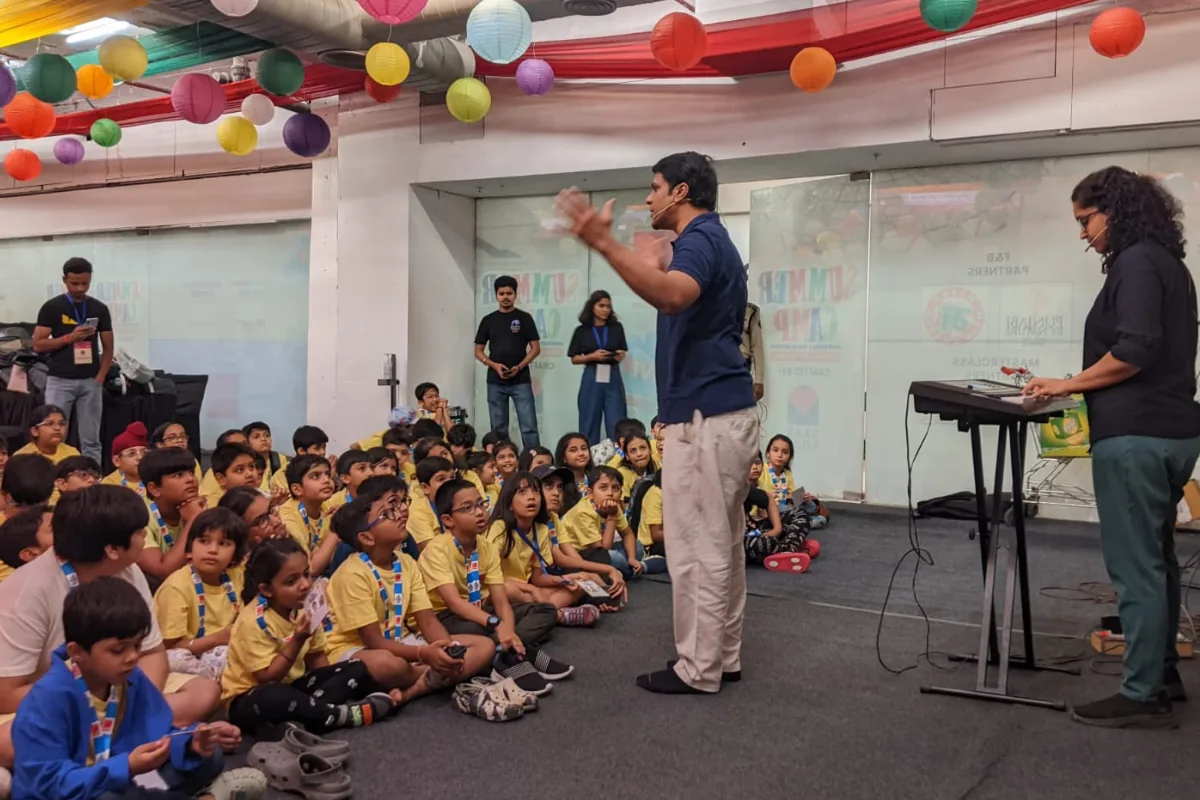
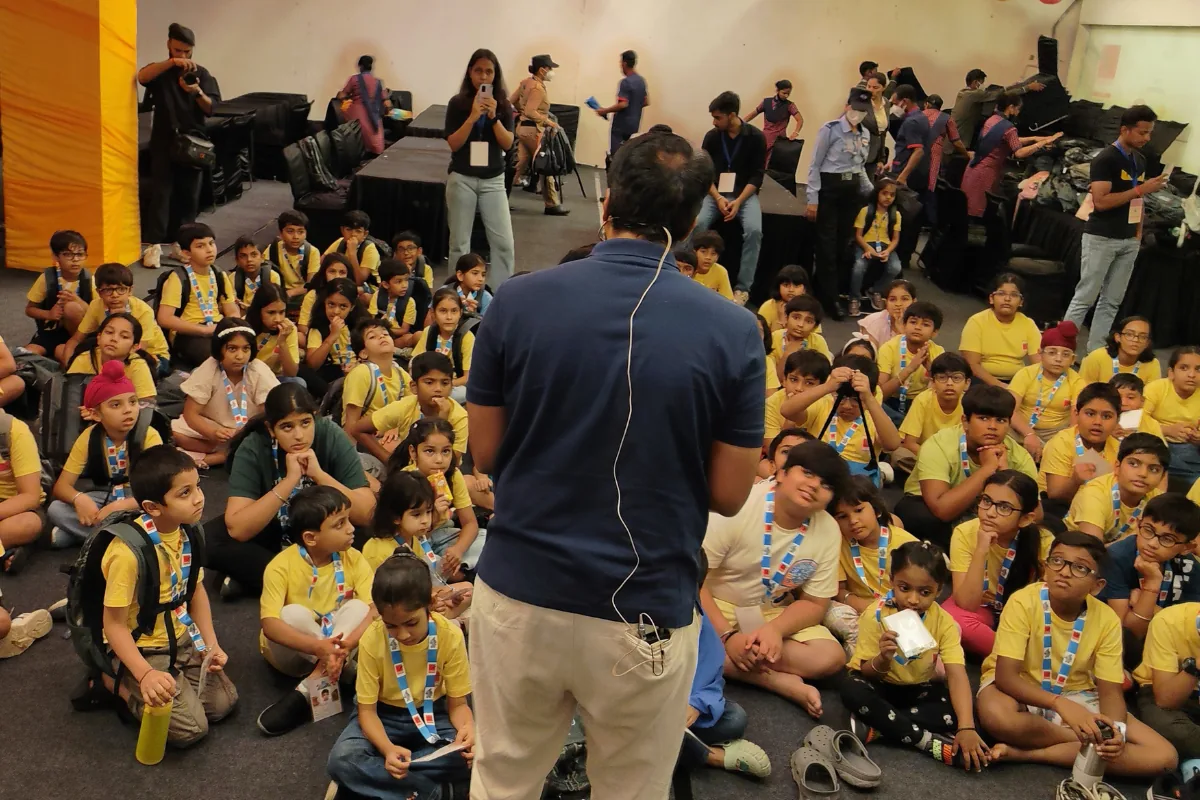
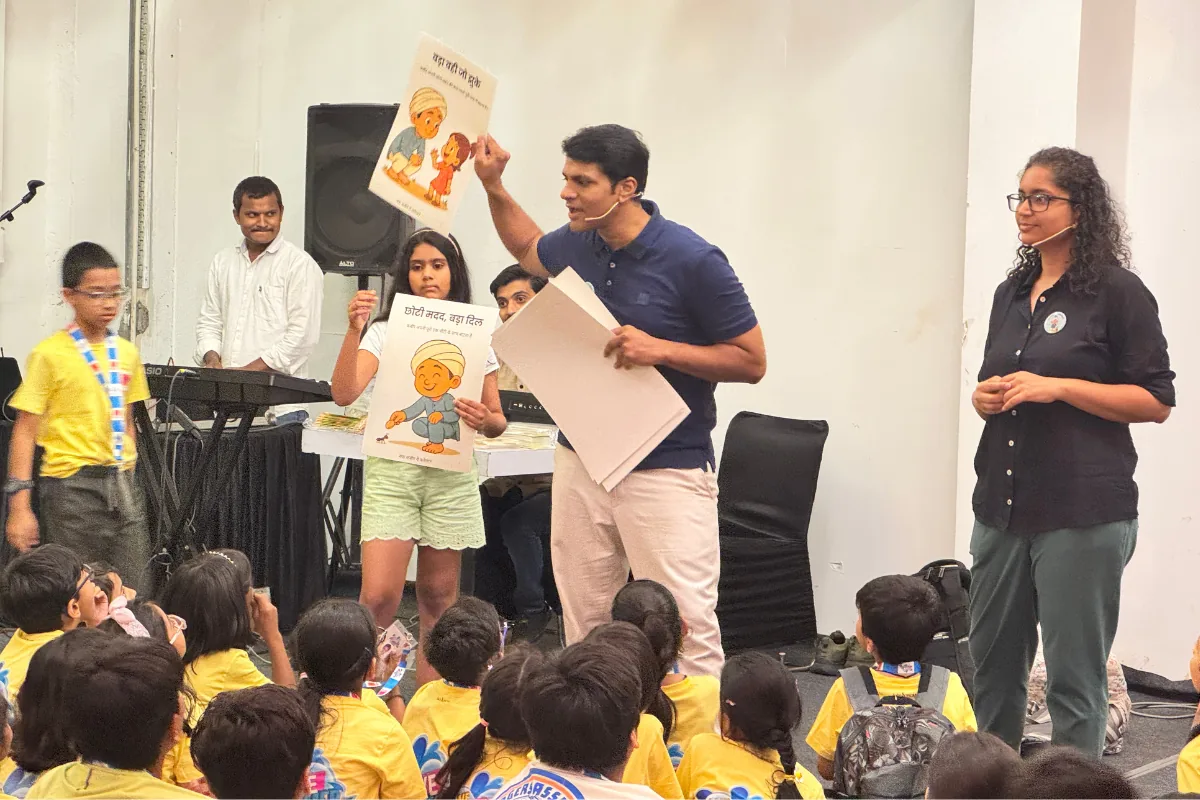
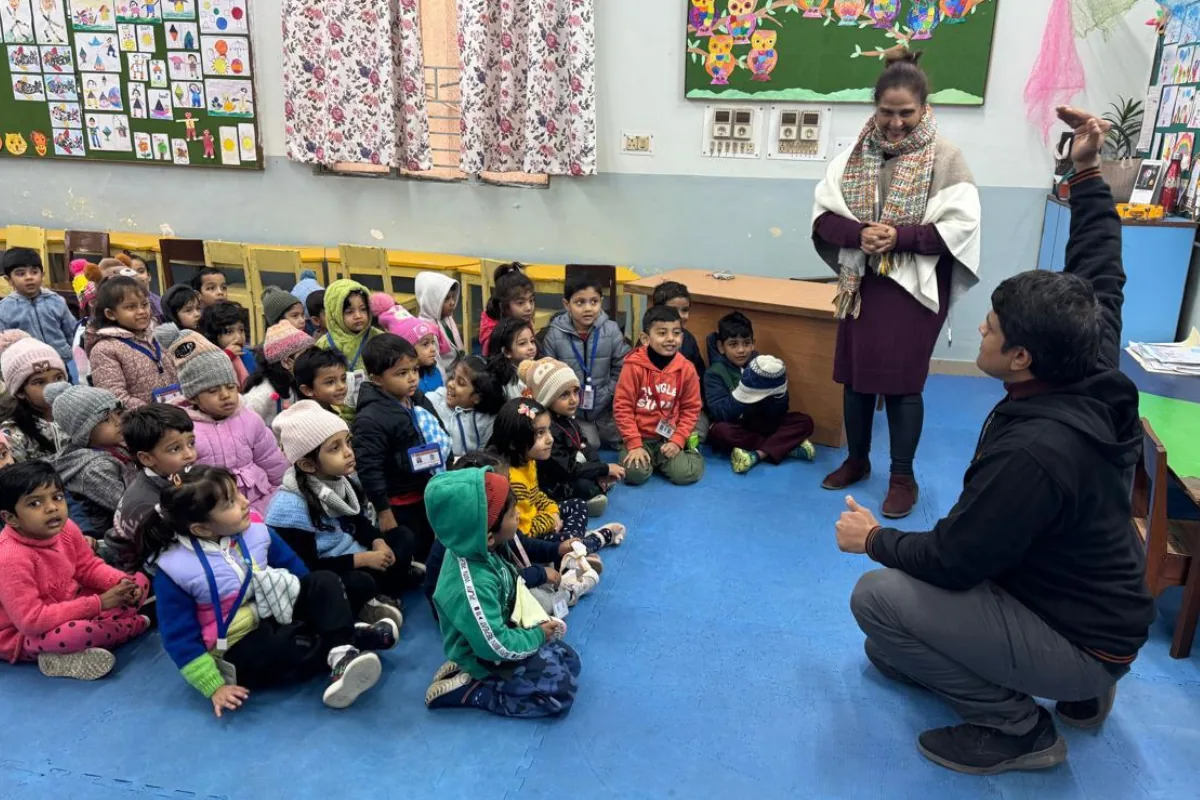
A K4K school session usually runs 60–90 minutes and works best with 30–40 children. The room moves through story, doha singing, drawing, card work, and open questions, so children participate with their bodies, voices, and thoughts.
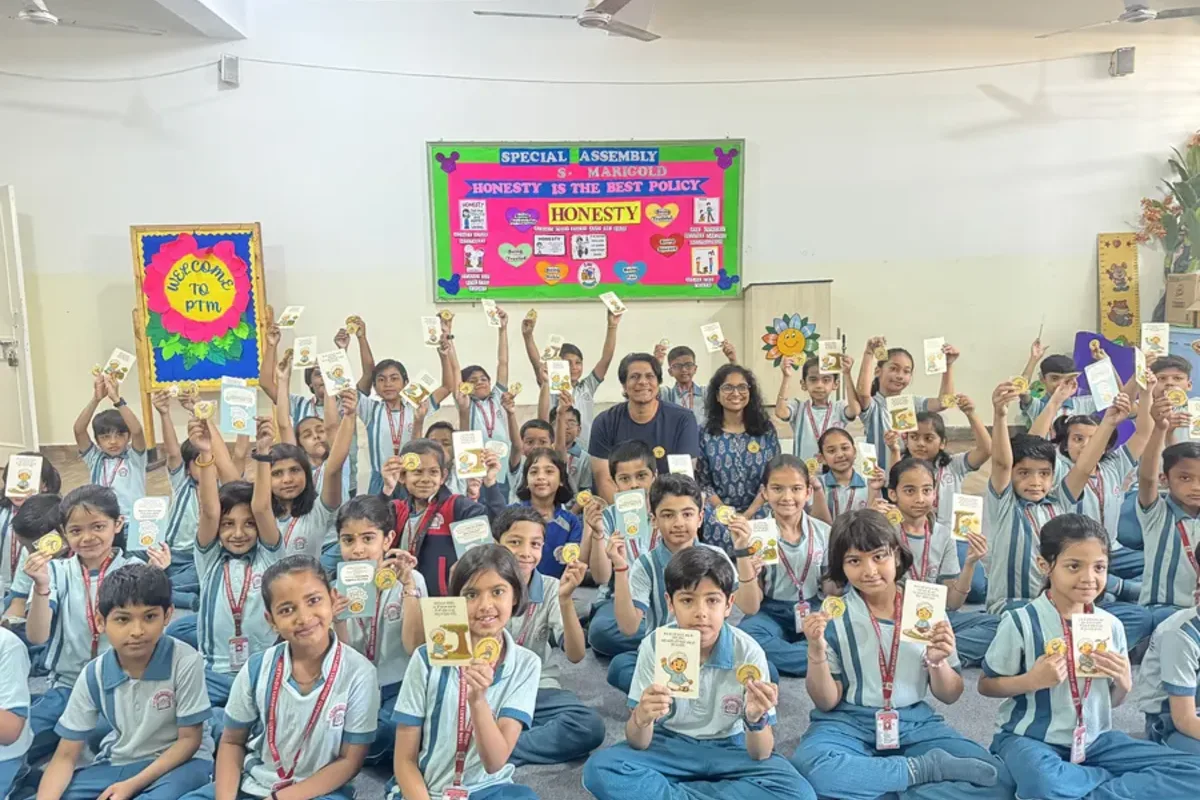
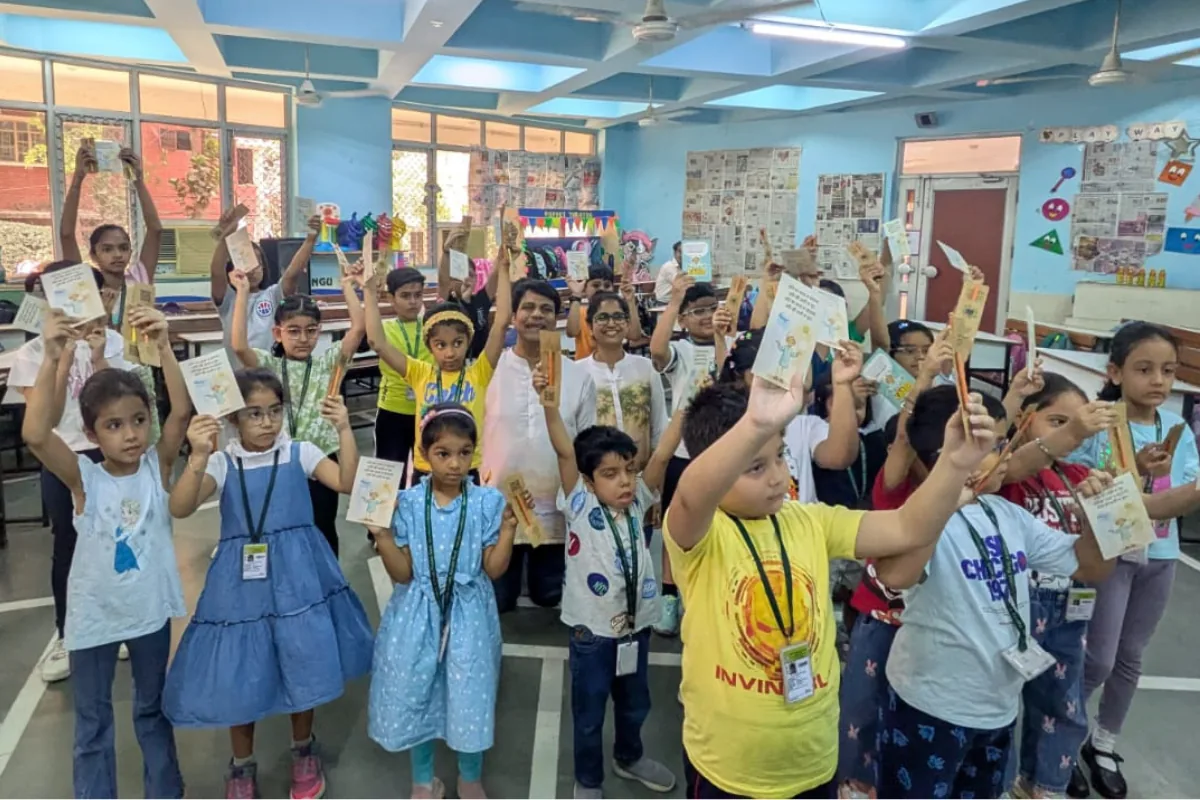
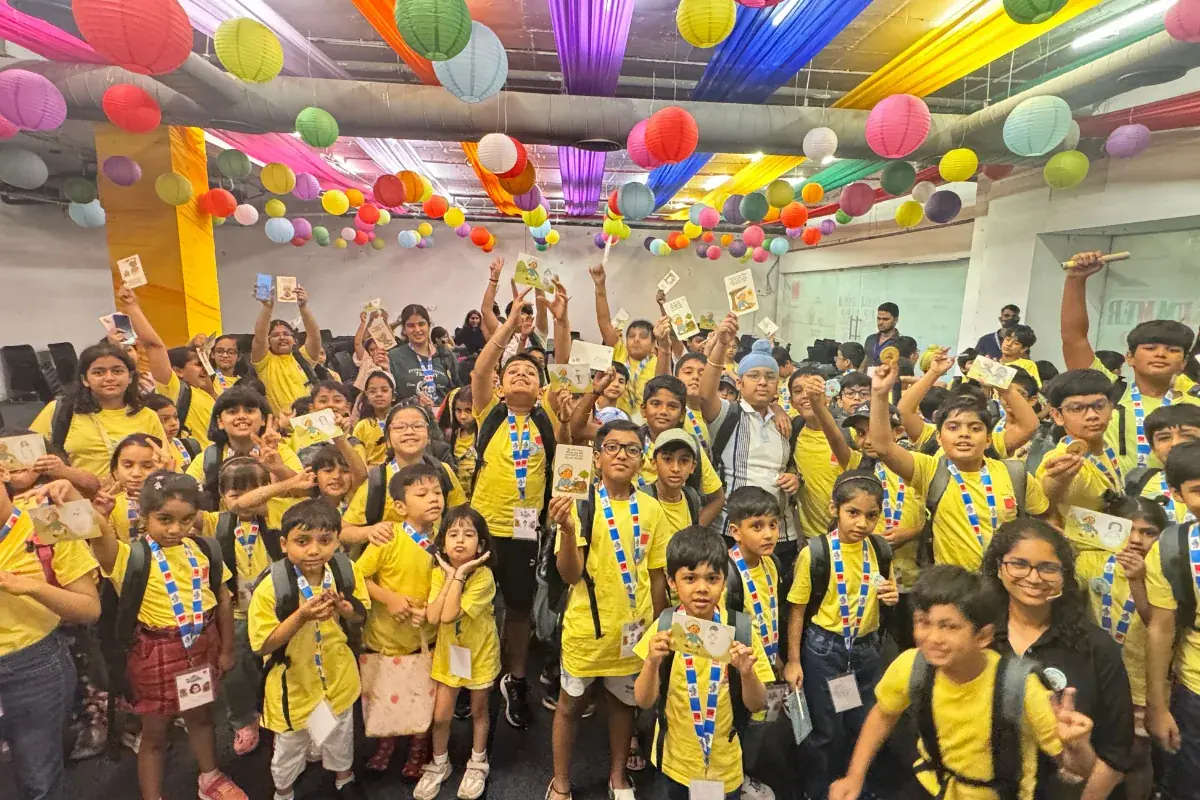
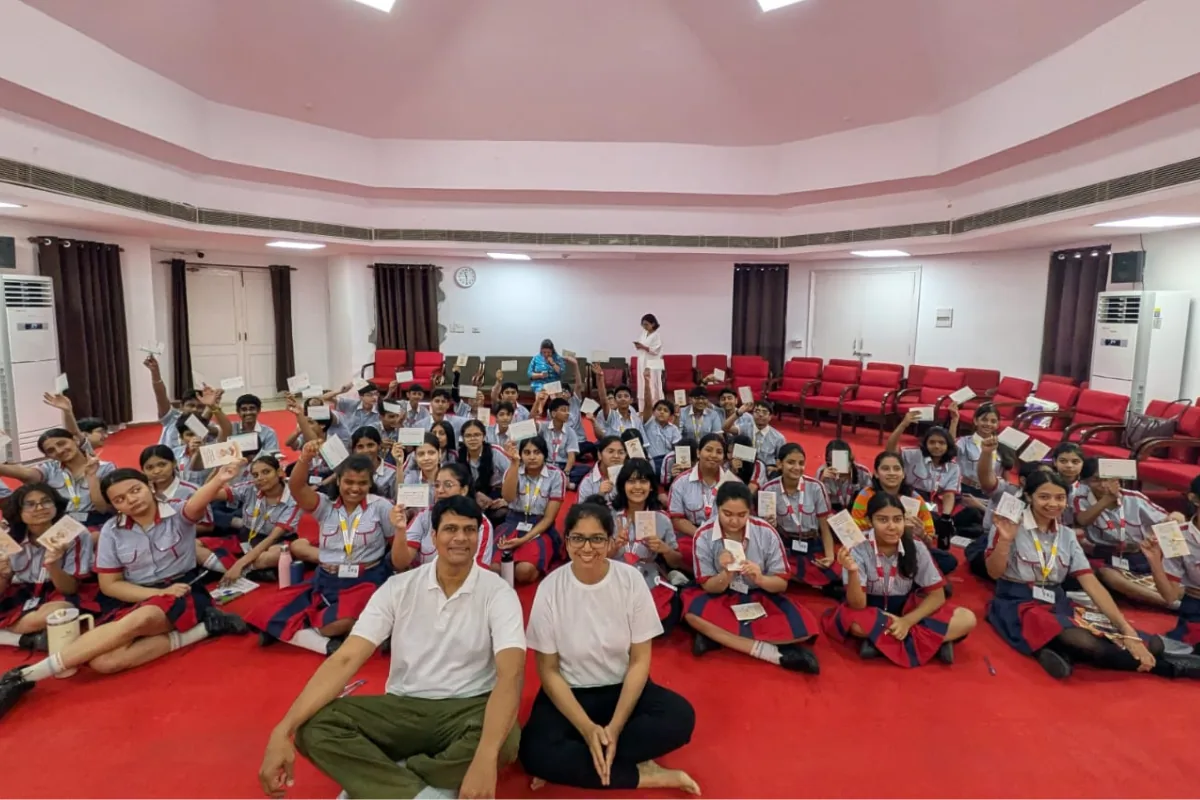
Children holding up Kabir's doha cards during a Kabir for Kids interactive session at Jain Bharati Mrigavati Vidyalaya, Delhi For Schools · Ages 5–9

The Interactive Session

Children meet Saint Kabir through story first, then carry the idea into a song, a movement, a drawing, and a question of their own. We keep the session joyful enough for children and structured enough for schools.

  • Two animated story performances from the K4K library
  • Doha singing and movement — kids participate throughout
  • Hands-on doha-card activity in small groups
  • Open Q&A — children leave asking, not just listening

Ages 5–9 (up to Class 8) 60–90 minutes 30–40 children Indoor venue

What children take home: a doha they can sing, a story they retell at dinner, and a small question that keeps working after the session ends. Explore the Little Kabir Songs and doha library before we visit.

Enquire on WhatsApp →
Why It Works

Why schools keep
calling us back.

Schools call us back when the session keeps living after the bell. Children hum the dohas, retell the stories, and bring Kabir into real playground moments without anyone turning the workshop into a lecture.

01

Builds genuine attention.

Children listen — not because they're told to, but because the stories are genuinely interesting. Even the back-row, low-attention kid leans in.

Even the loudest classroom goes quiet, and stays quiet.

02

Values through story, not lecture.

Kindness, patience, honesty — they land differently when a child discovers them inside a song, than when an adult names them on a slide.

By doha three, they're singing without prompt.

03

Music and movement stick.

Little Kabir Songs and movement routines are remembered weeks later. Children carry them home. Parents notice. That's the measure.

"He sang it again in the car the next morning."

04

Children ask questions.

Sessions are designed to prompt curiosity, not just participation. Children leave asking "but why did Kabir say that?" — which is exactly the point.

"But why did Kabir say that?"

Proof from real rooms

What schools can expect to see.

The strongest proof is not a big claim. It is what happens in the room: quiet attention, hands in the air, children making Kabir their own, and teachers seeing a format they can actually host.

Delhi Public School, Vasant Kunj
May 2026

Cards turned listening into participation.

Children held doha cards, compared meanings, and brought their own answers back into the room. The session became more than a performance because every child had something concrete to notice, hold, and respond to.

Doha-card activity School group Question-led room
NBT × Vasant Valley School
May 2026

Older children used Kabir as a thinking prompt.

With a hundred sixth-graders, the format moved beyond sing-along into authorship and discussion. One child wrote a verse in the room, and it was sung back for the first time there.

Class 6 100 students Original student verse
Jain Bharati Mrigavati Vidyalaya
March 2026

A small group made the room go quiet.

In a group of forty children, the doha-card work created a rare kind of focus: children listened closely, waited for the next question, and treated the cards as if they already belonged to them.

40 children Focused attention Hands-on format
Plan the session

Know the fit before you write.

For most schools, one student session is enough to begin. Tell us your city, class, group size and rough dates; we will suggest the simplest format.

Age group Best for ages 5–9, adaptable up to Class 8.
Room Indoor hall or classroom with basic sound.
Group size 30–40 children works best for questions.
Next step WhatsApp first; form if details are ready.
Our Reach & Impact

Where We've Been, What We've Built

Kabir for Kids workshops have travelled through school halls, auditoriums, book fairs, and summer camps across India. These featured sessions show the format in real rooms, with real children, across ages and settings.

Children holding up doha cards during a Kabir for Kids school workshop at Delhi Public School, Vasant Kunj, May 2026

Delhi Public School, Vasant Kunj

Delhi · May 2026

Cards in the air, questions in the room, and a school session that stayed fully alive.
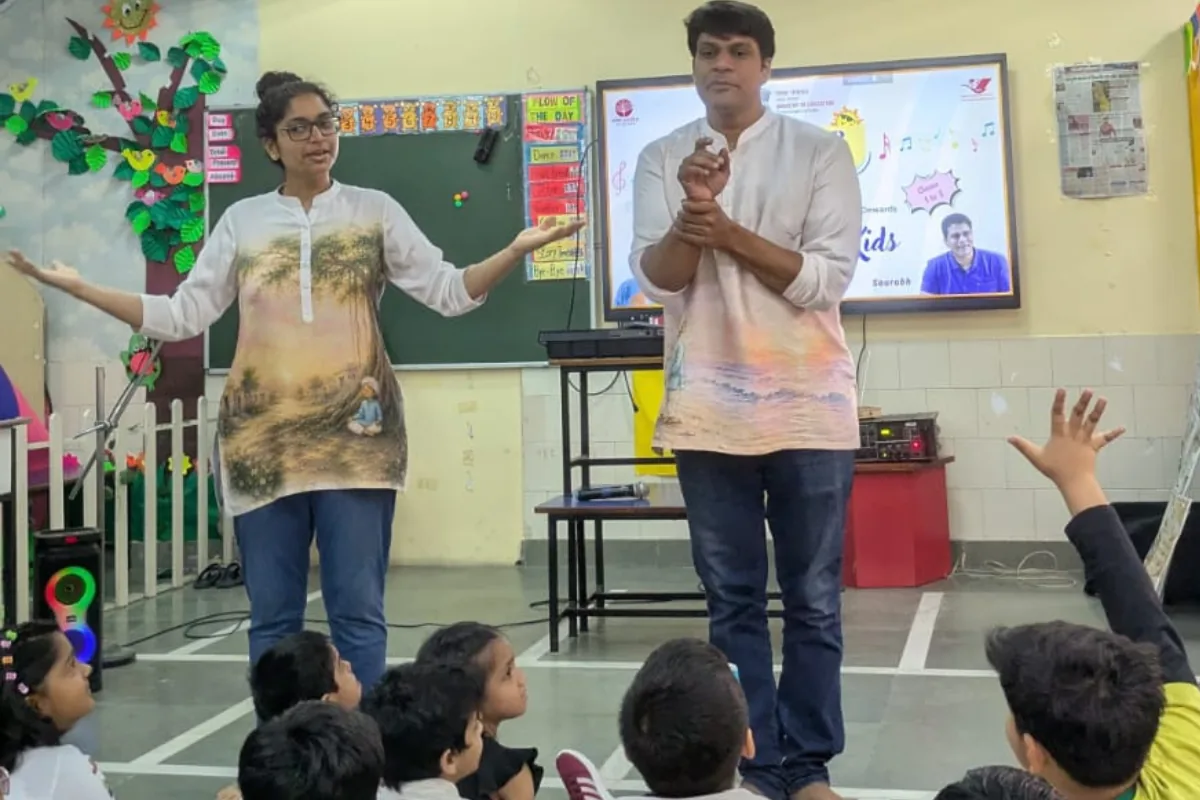
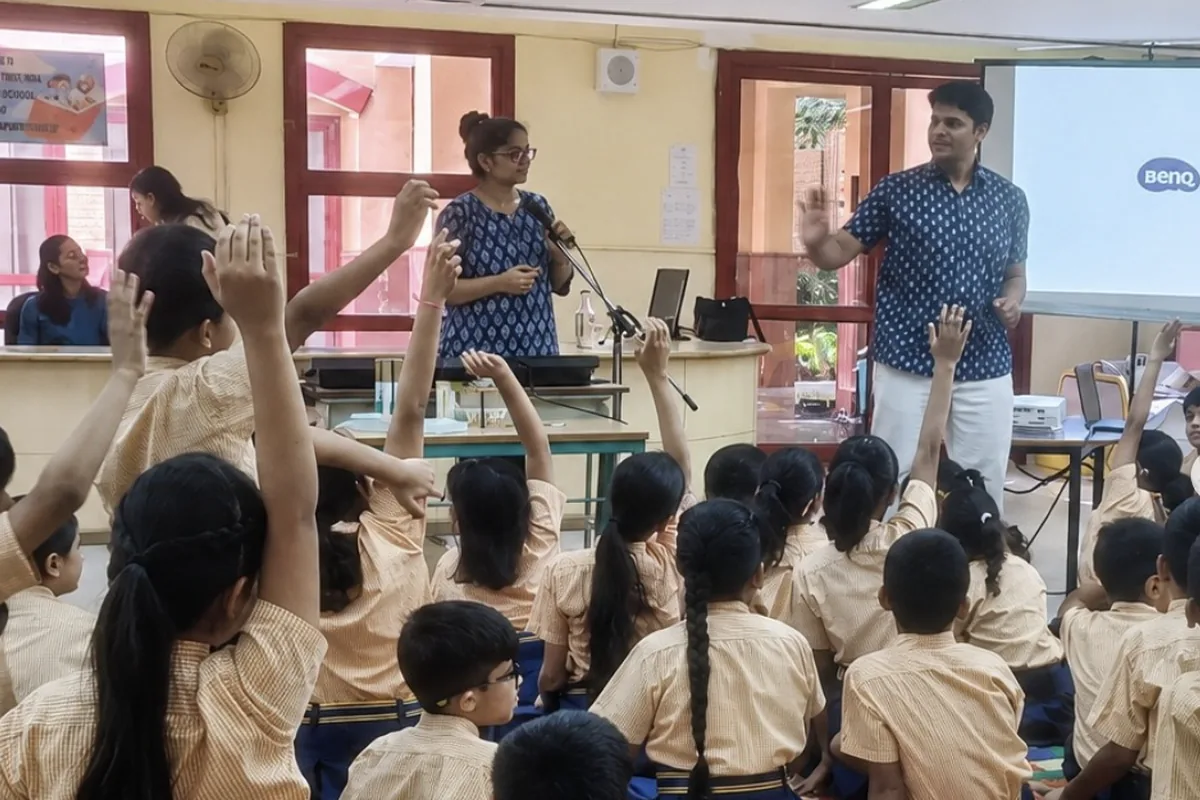
Children raising their hands during a Kabir for Kids school workshop at Sanskriti School, Delhi, May 2026

Sanskriti School

Delhi · May 2026

A school-room session with the core K4K rhythm: sing, notice, answer, wonder.
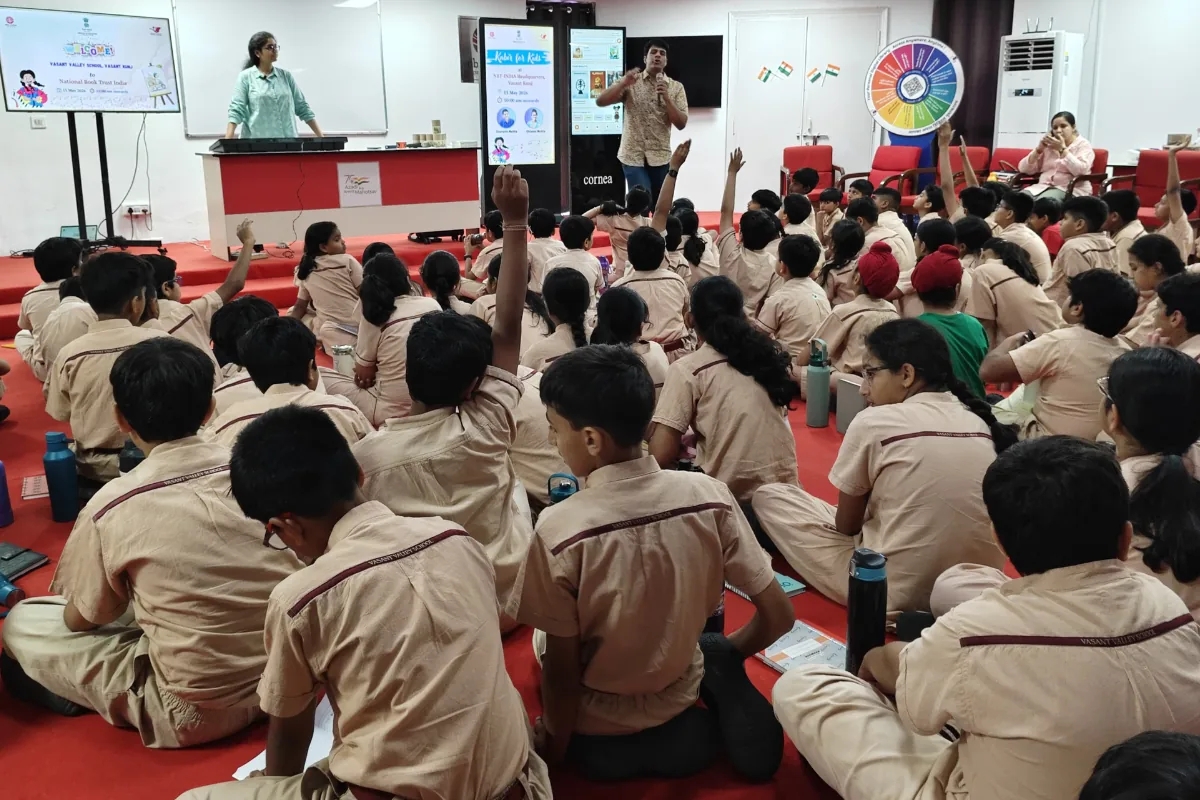
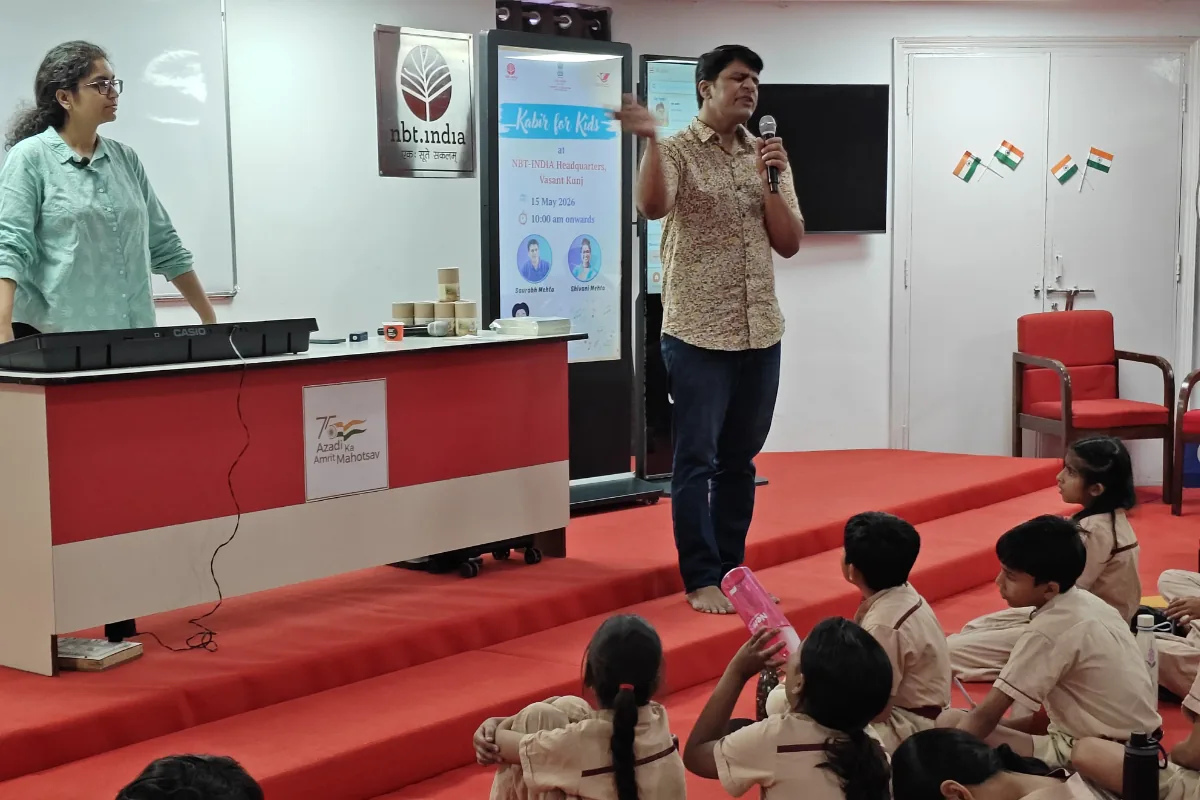
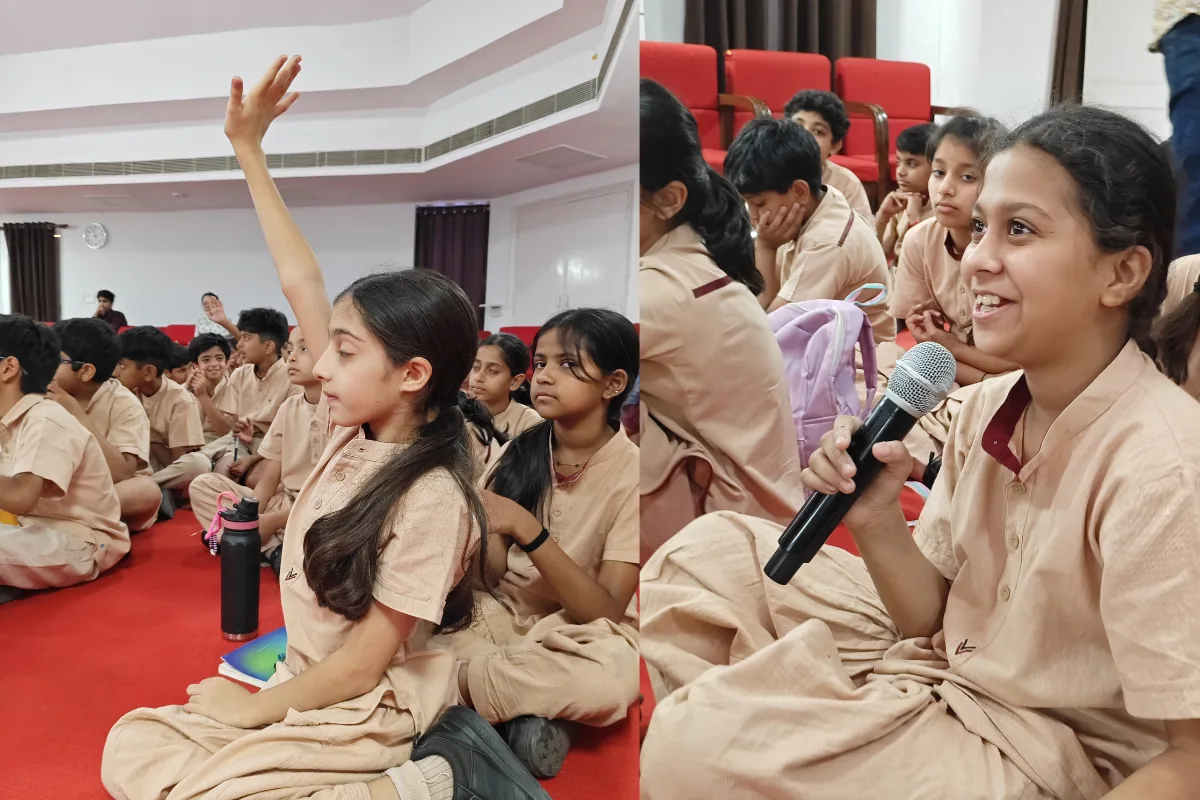
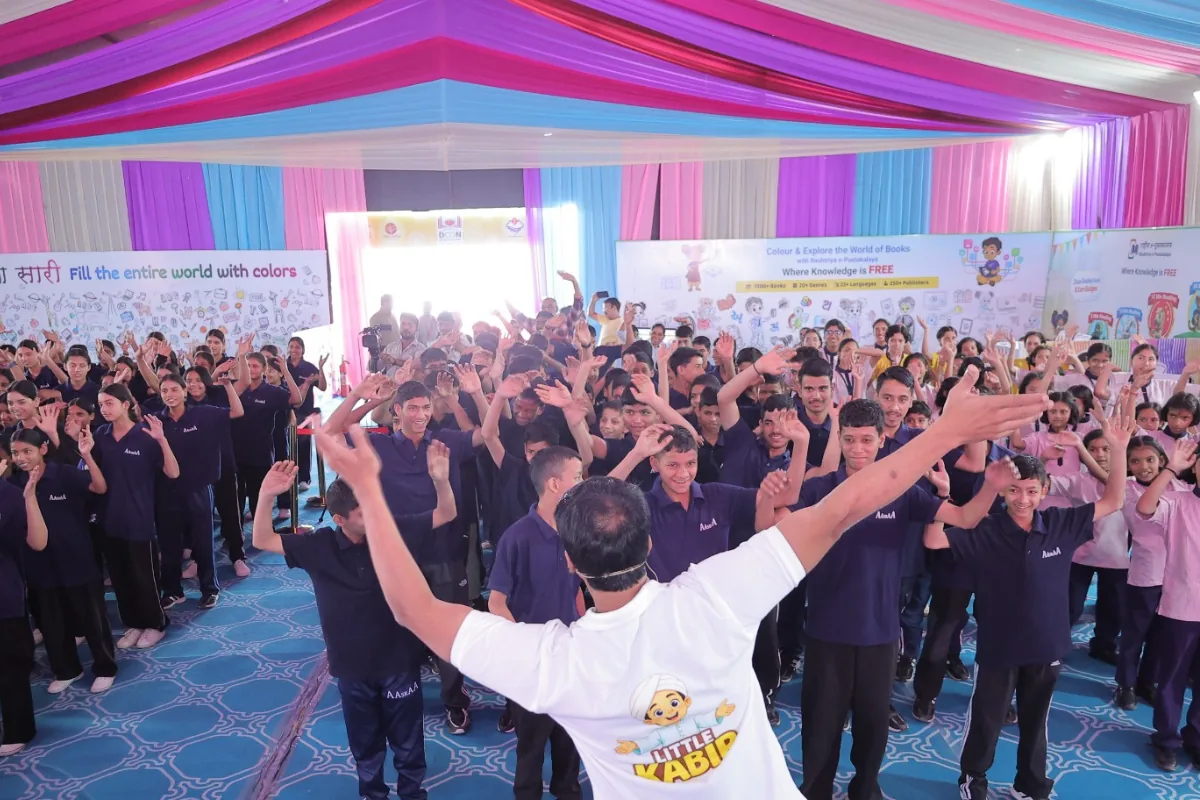
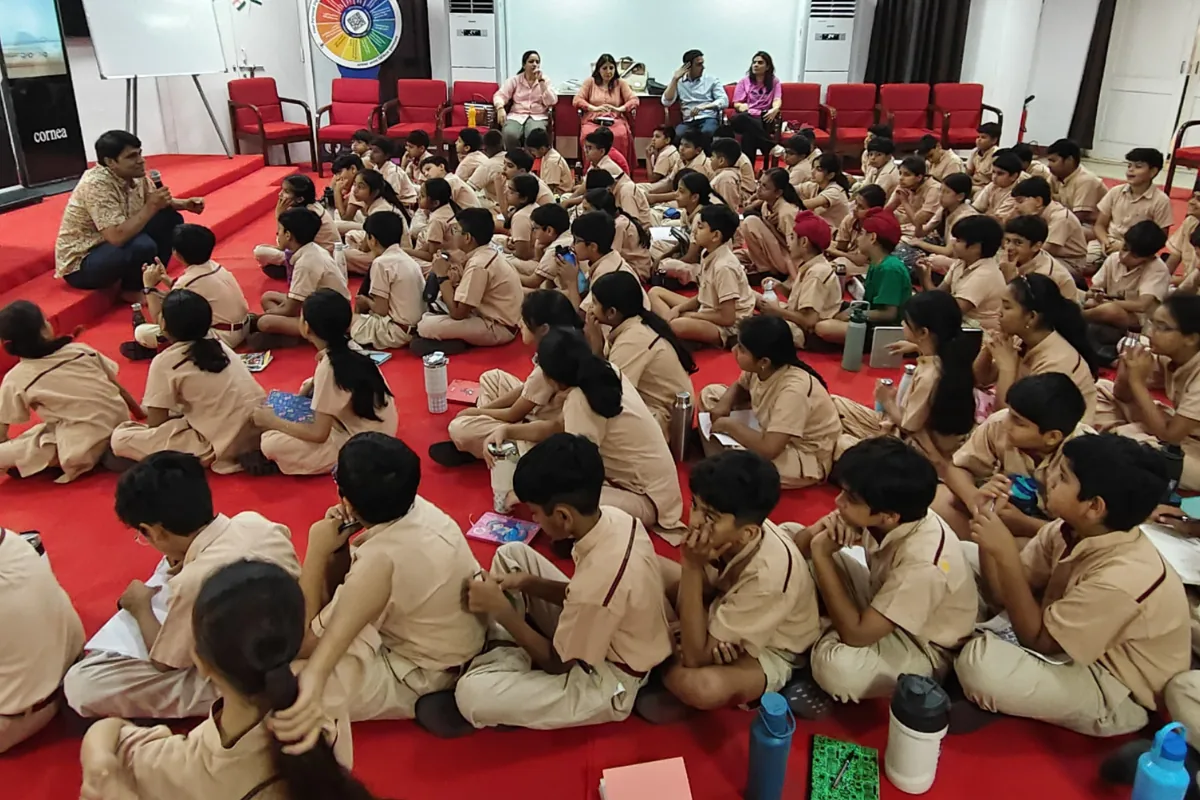
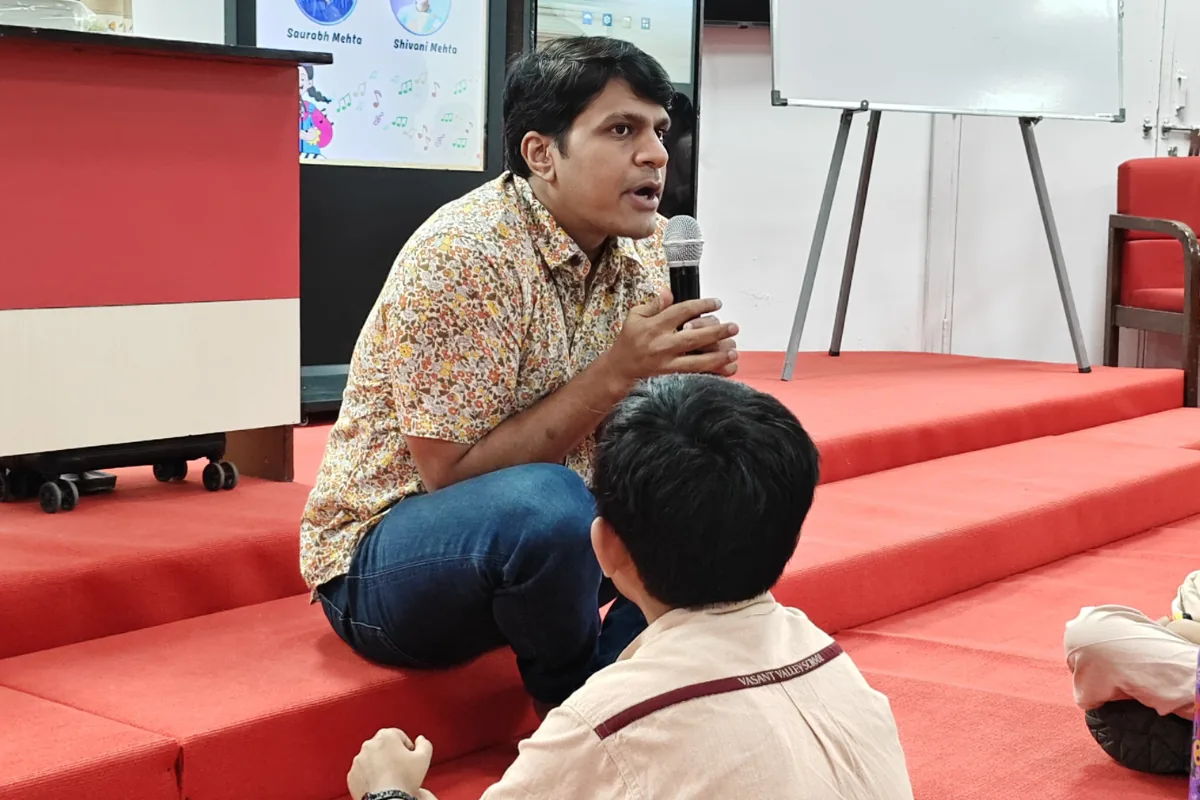
A hundred Class 6 students from Vasant Valley School, hands raised mid-doha at the NBT Vasant Kunj auditorium, May 2026

NBT × Vasant Valley School

Delhi · May 2026

A hundred sixth-graders. Five dohas. One verse, written by a child, sung for the first time anywhere.
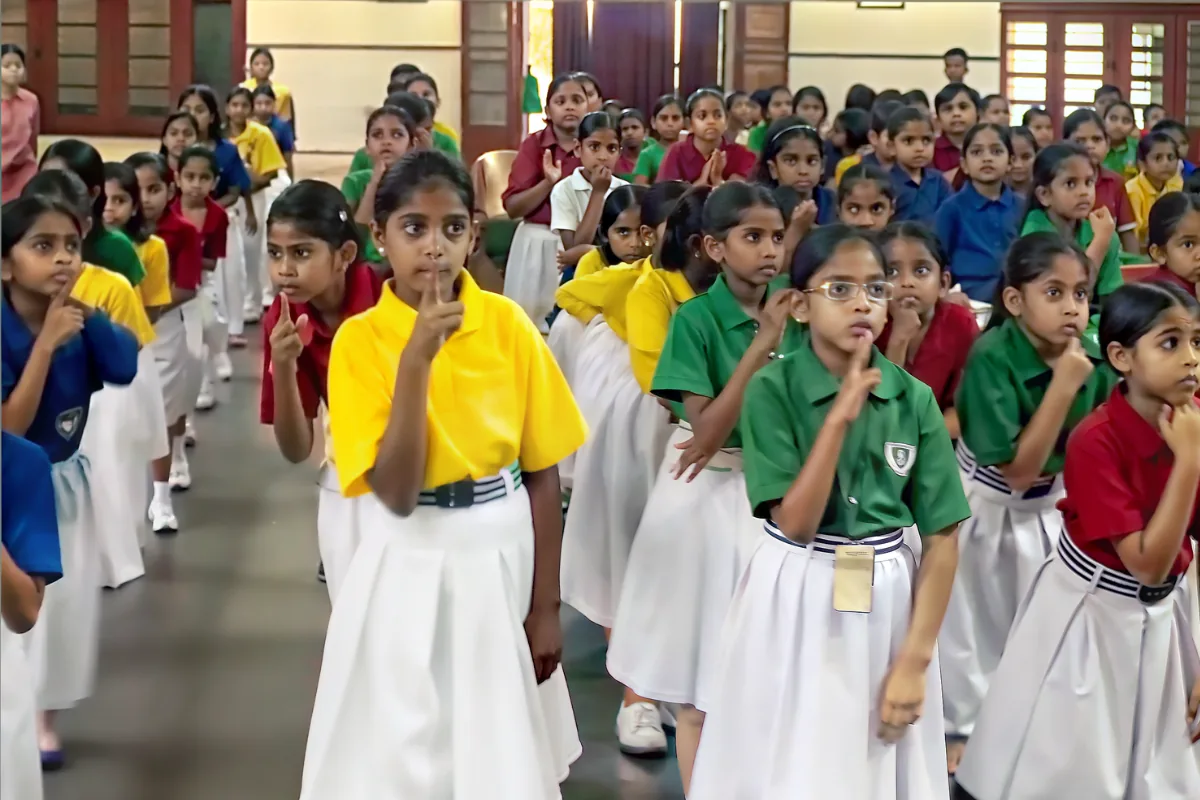
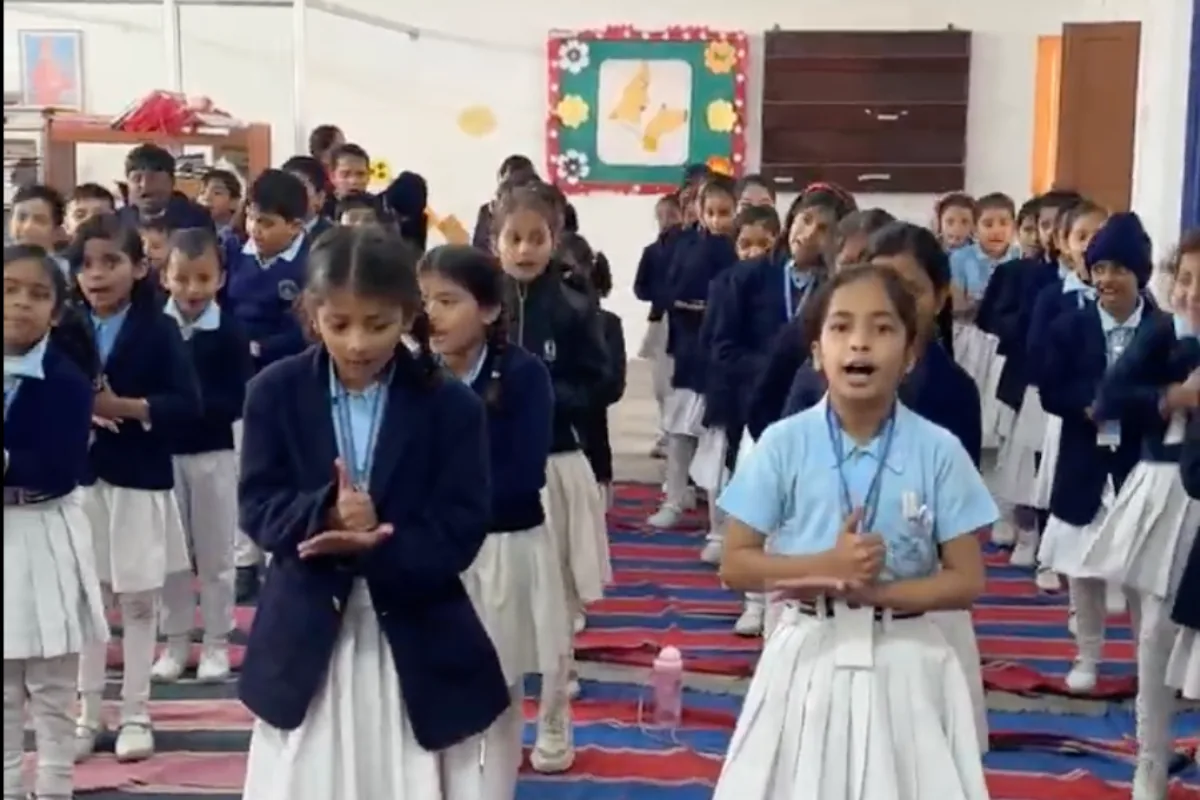
Children at St Mary's Convent, Allahabad, standing in formation with hands folded in namaste during a K4K session, April 2026

St Mary's Convent, Allahabad

Prayagraj · April 2026

Lines, namastes, and a doha they sang back the second time through.
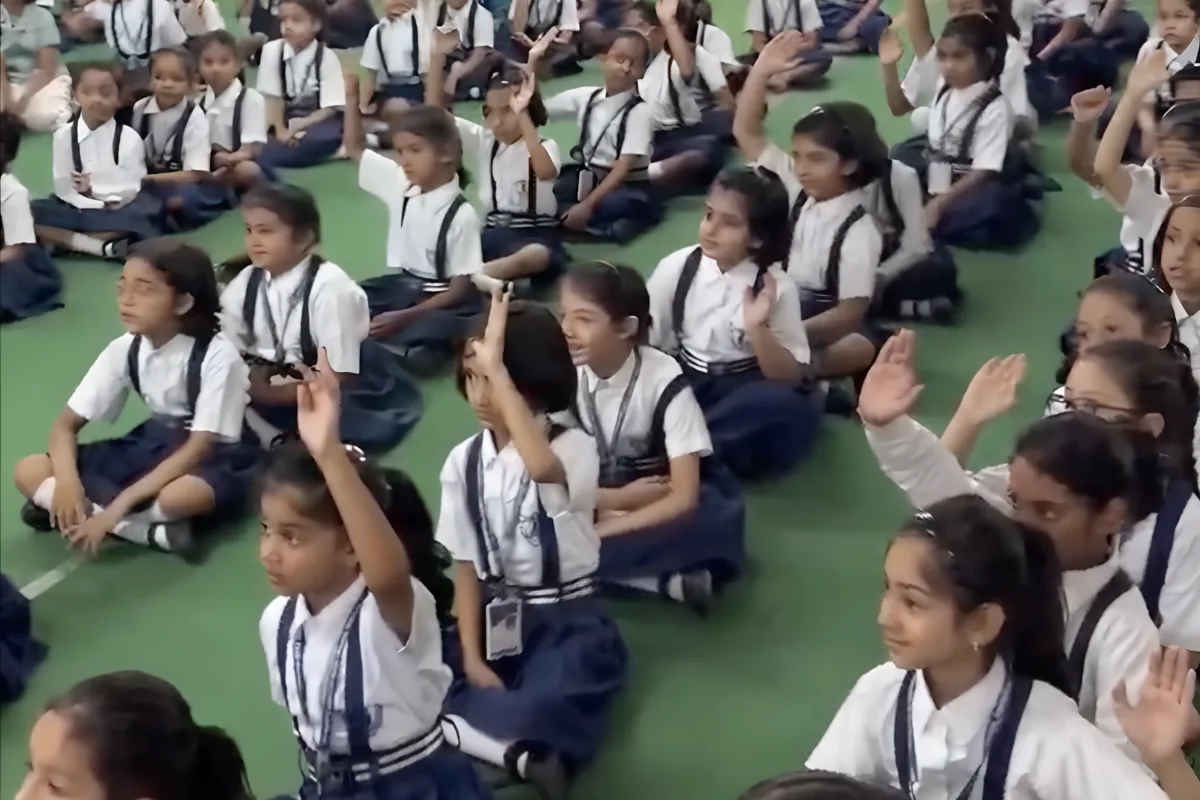
Young girls at St Mary's Convent Junior, Allahabad, seated on a green-floored hall with hands raised during a K4K session, April 2026

St Mary's Convent Junior, Allahabad

Prayagraj · April 2026

Hands raised in a green-floored hall — the youngest crowd of the week.
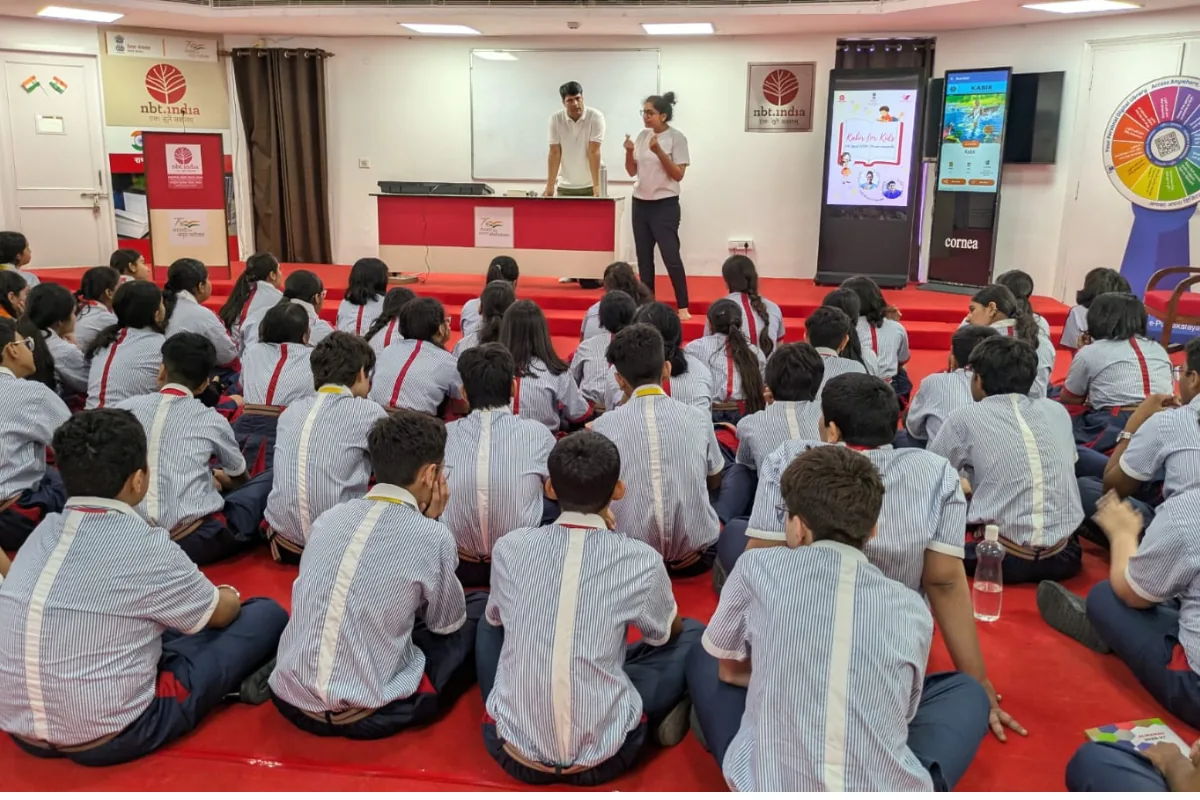
A hundred Class 9 students from GD Goenka School Noida seated in the NBT Vasant Kunj auditorium during a K4K session, April 2026

NBT × GD Goenka, Noida — Class 9

Delhi · April 2026

A hundred teenagers. Kabir as the original rebel poet — and the room went quiet.
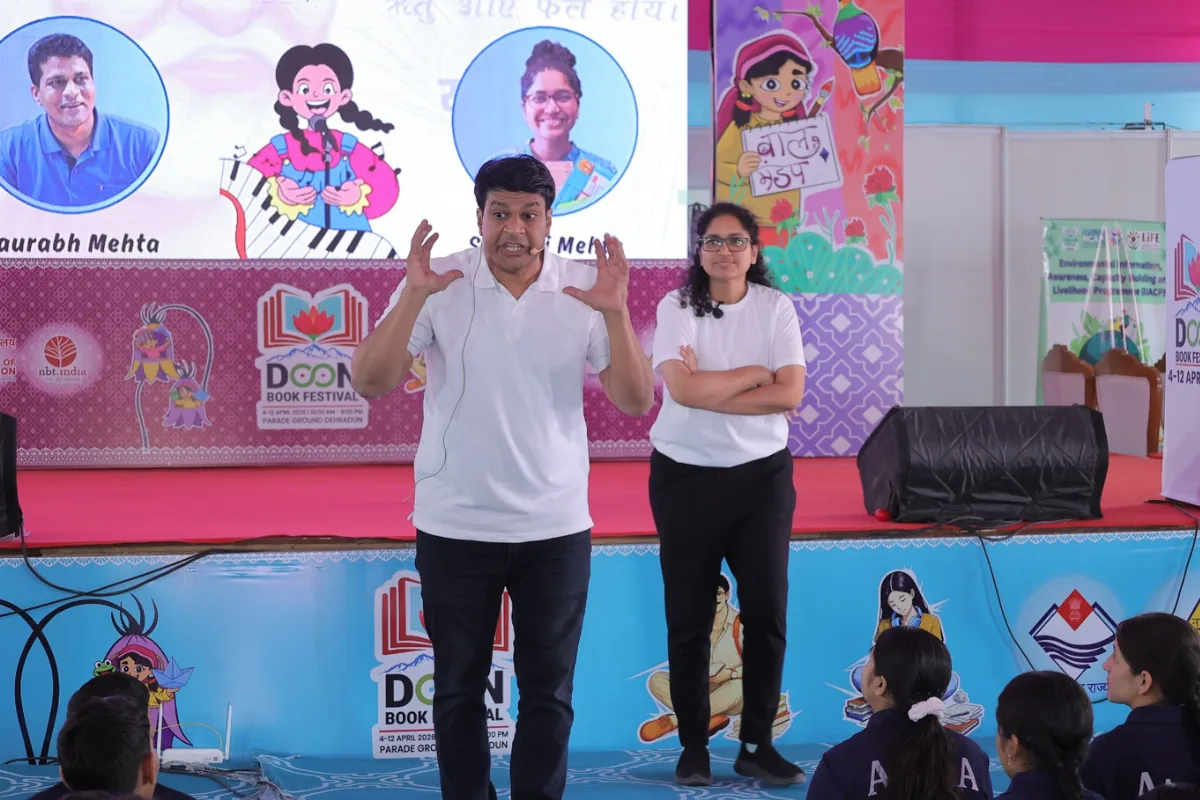
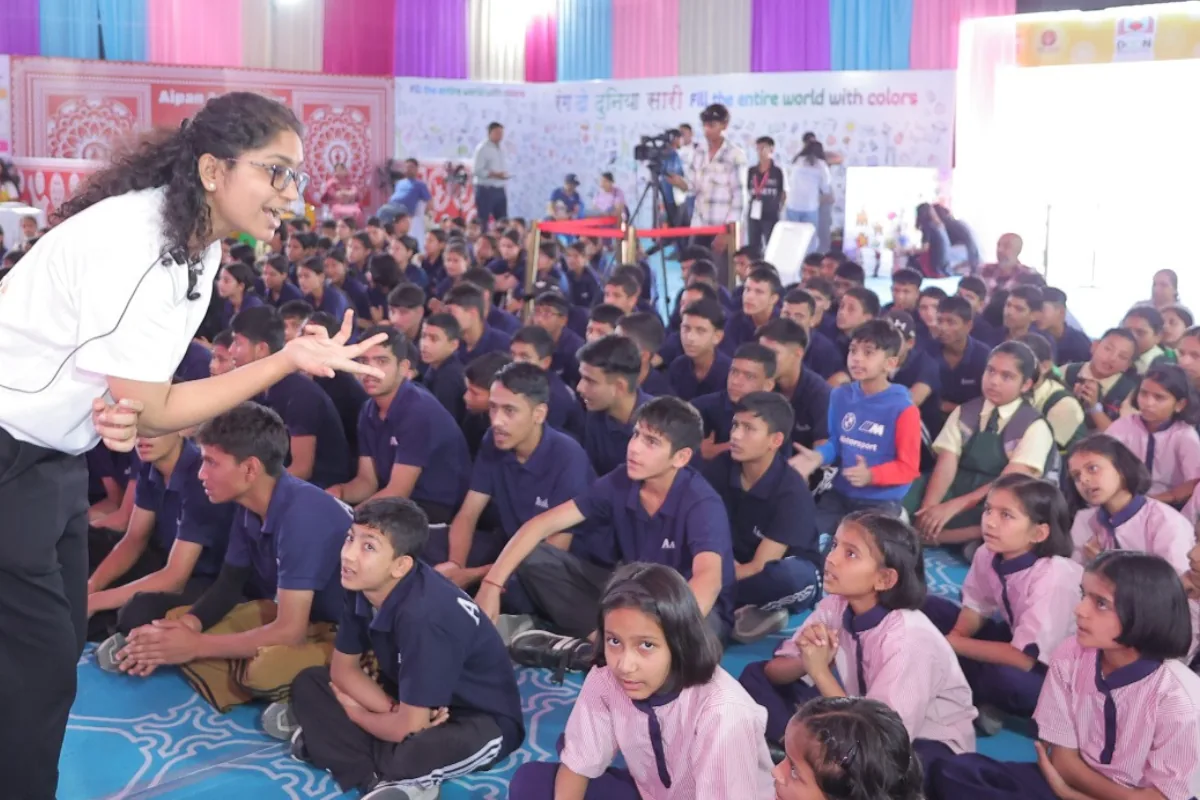
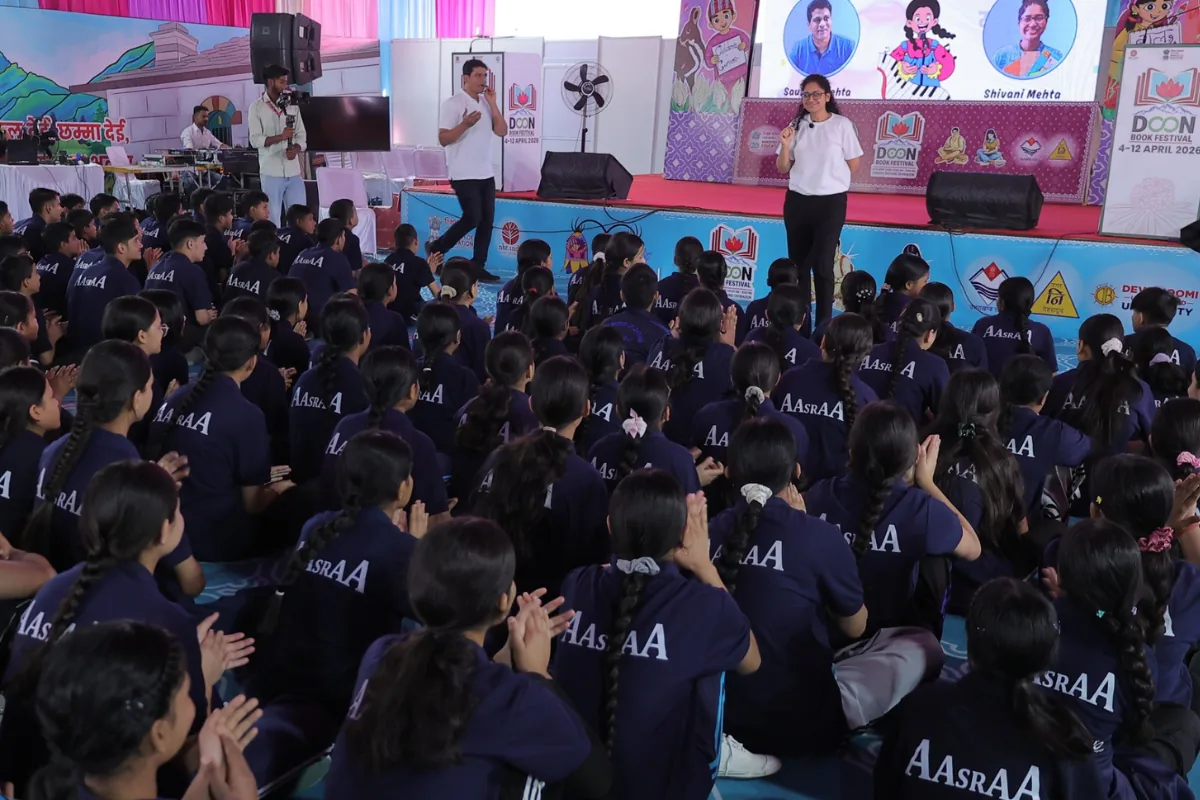
Children gathered at the K4K stall during NBT Doon Book Fair, Dehradun, April 2026

NBT Doon Book Fair

Dehradun · April 2026

A book fair. A stall. And children who didn't want to leave.
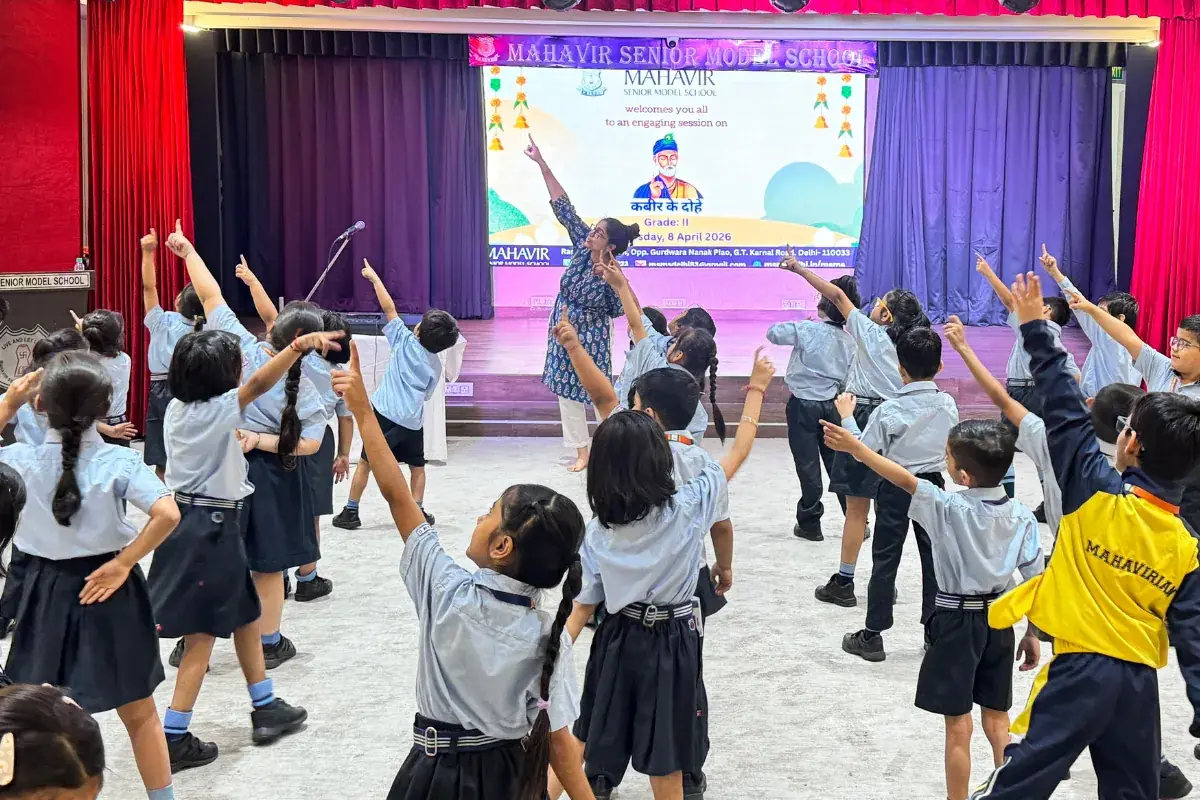
Children pointing skyward during interactive Kabir session at Mahavir Senior Model School, Delhi, April 2026

Mahavir Senior Model School

Delhi · April 2026

A hundred hands in the air. One doha did that.
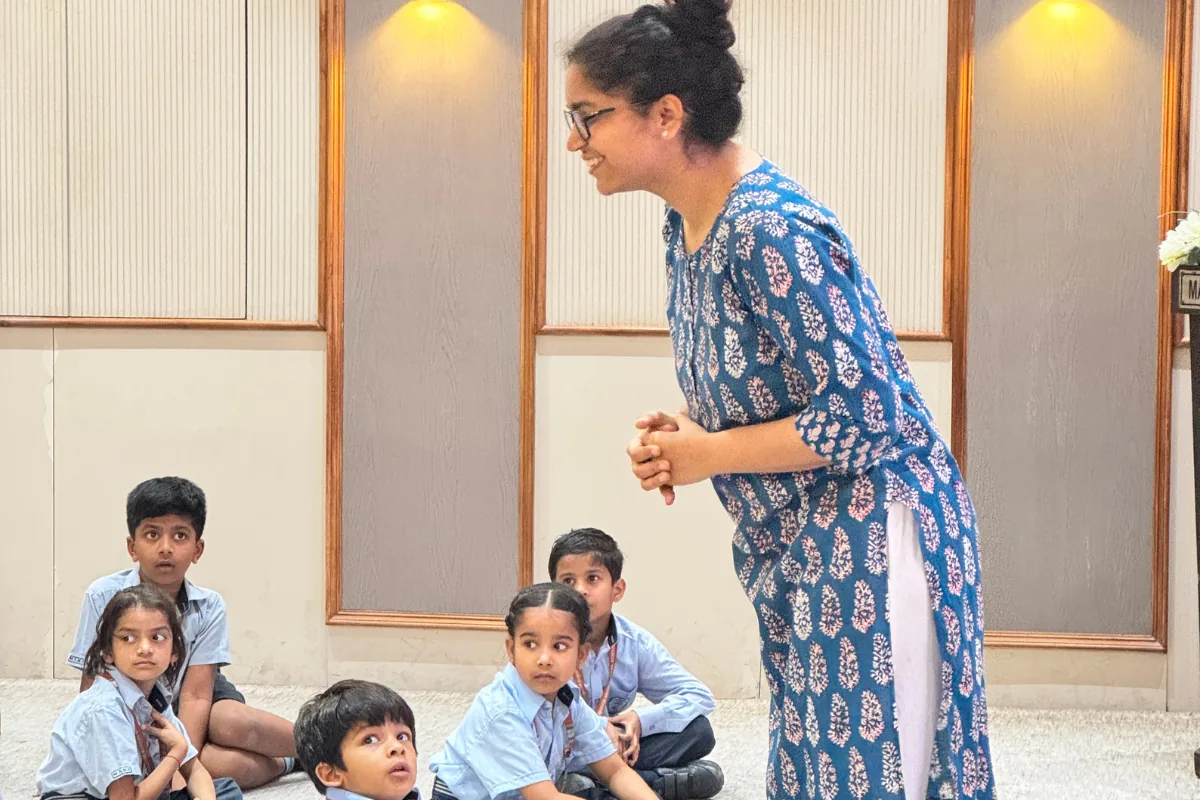
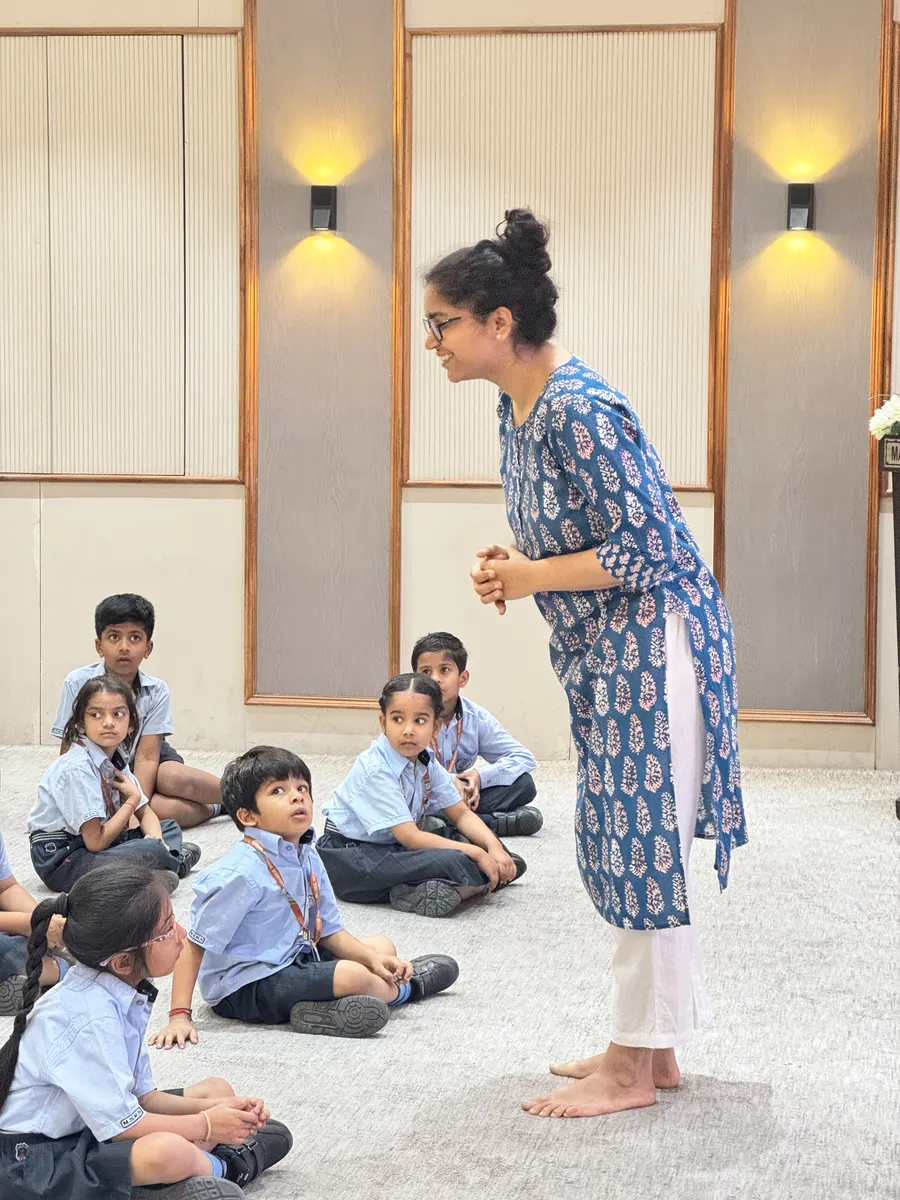
Children at Kabir for Kids student workshop, Jain Bharati Mrigavati Vidyalaya, Delhi, March 2026

Jain Bharati Mrigavati Vidyalaya

Delhi · March 2026

Kids held up Kabir's cards like they already belonged to them.
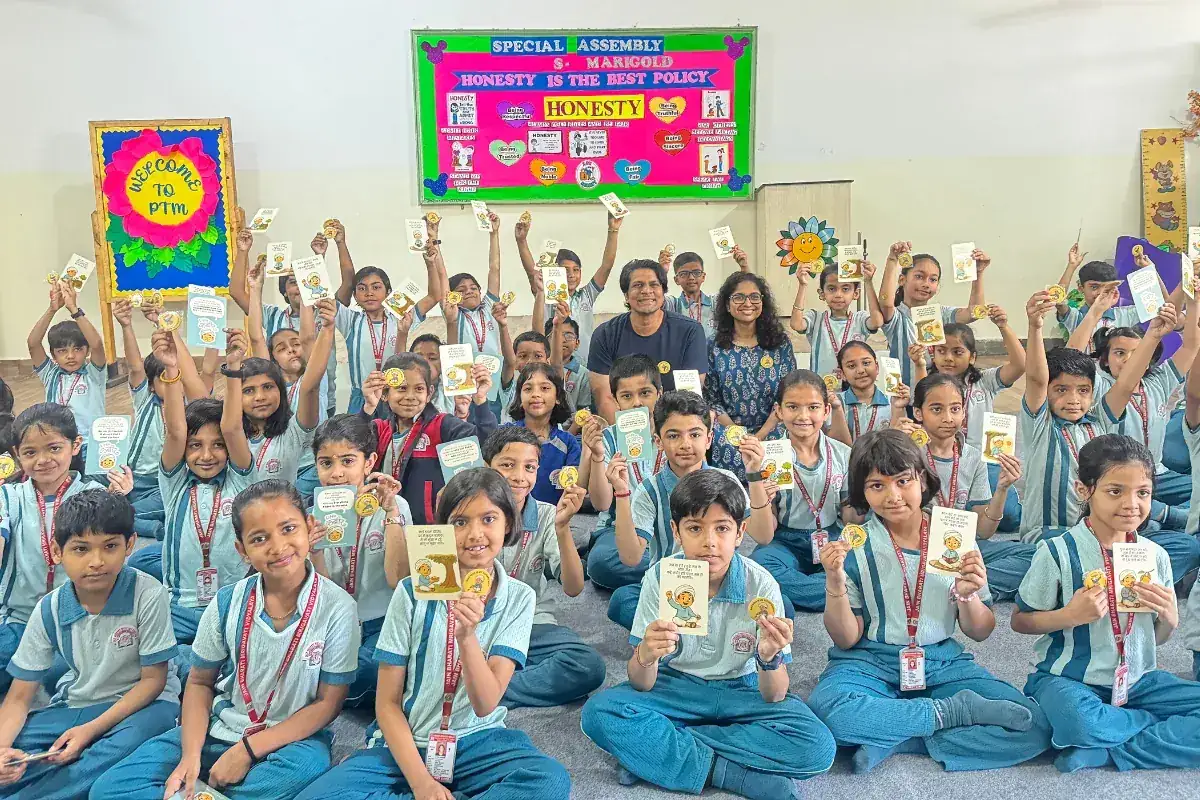
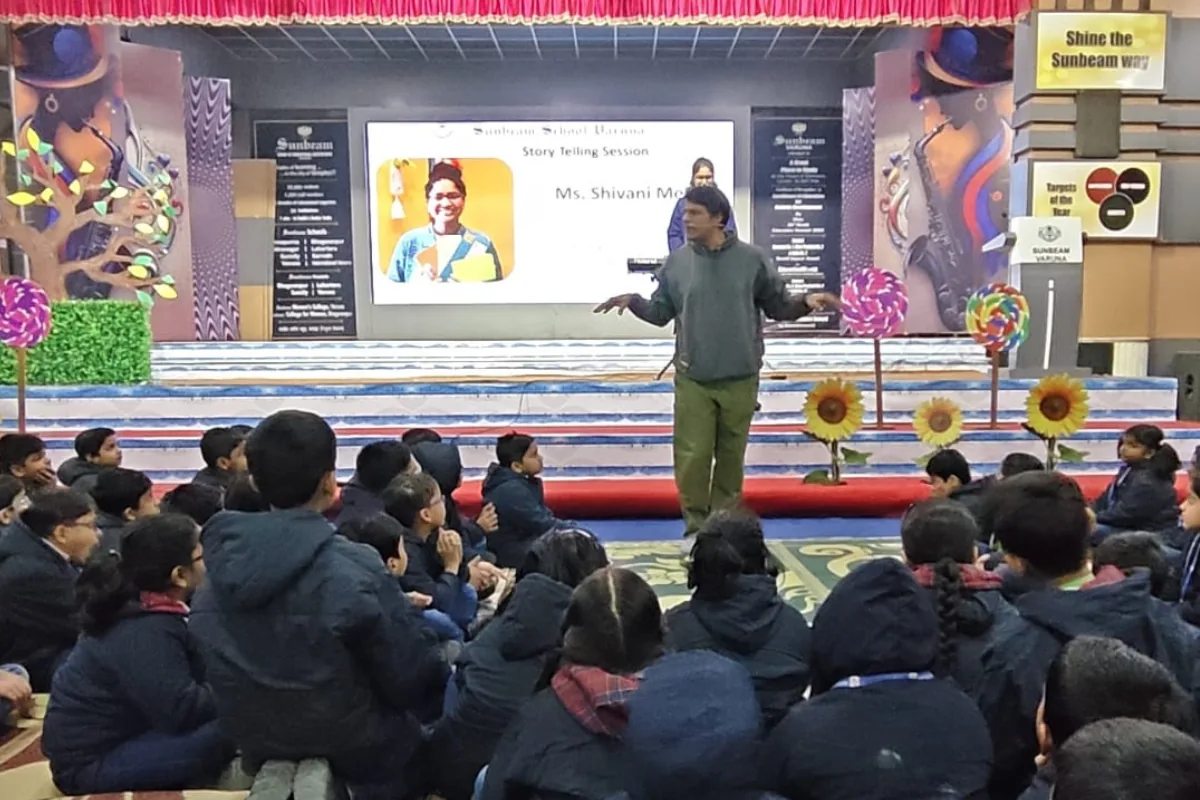
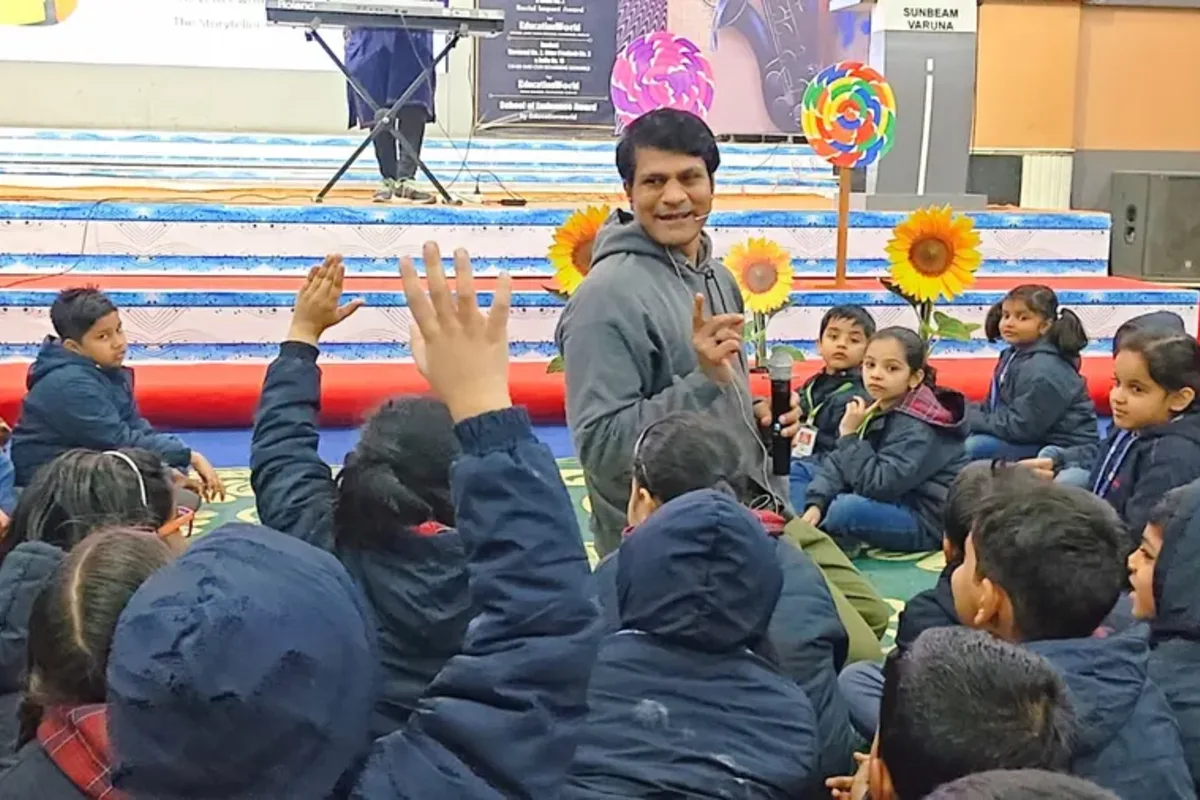
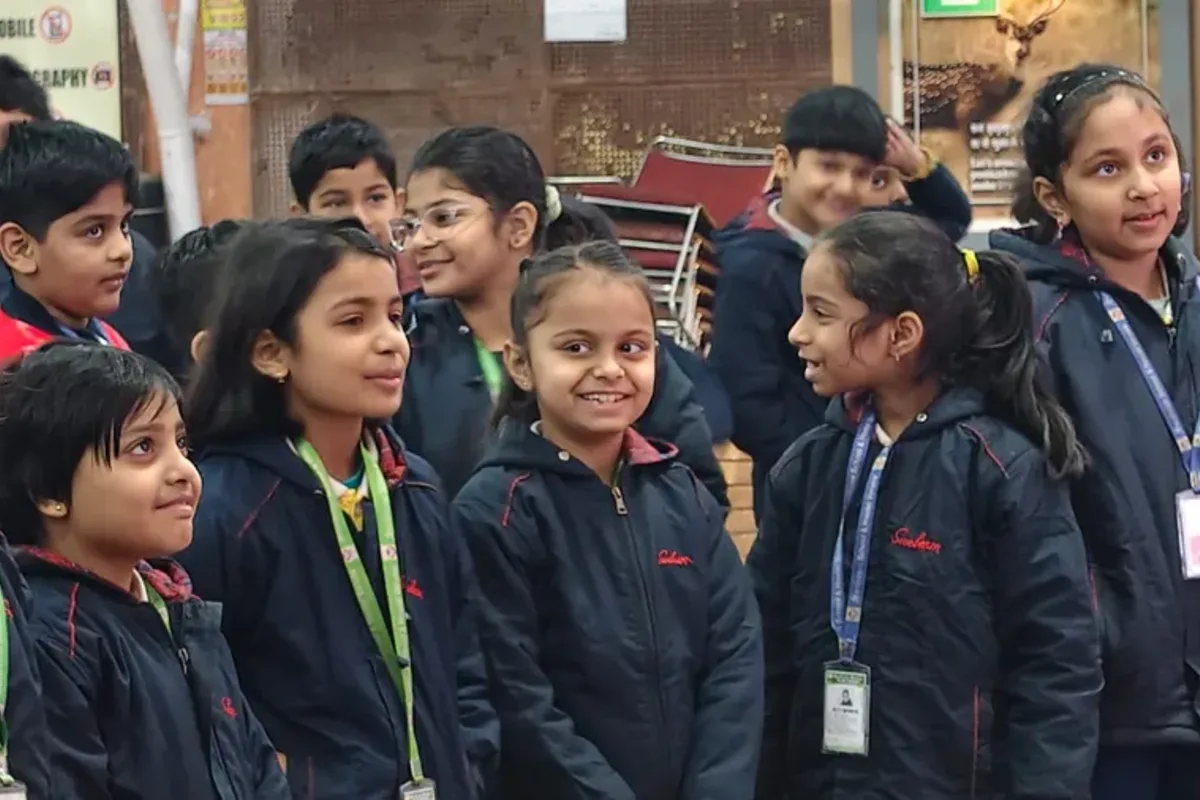
K4K workshop in progress at Sunbeam School Varuna, Banaras, December 2025

Sunbeam School

Banaras · December 2025

Stage lights, sunflower props, and one very loud doha.
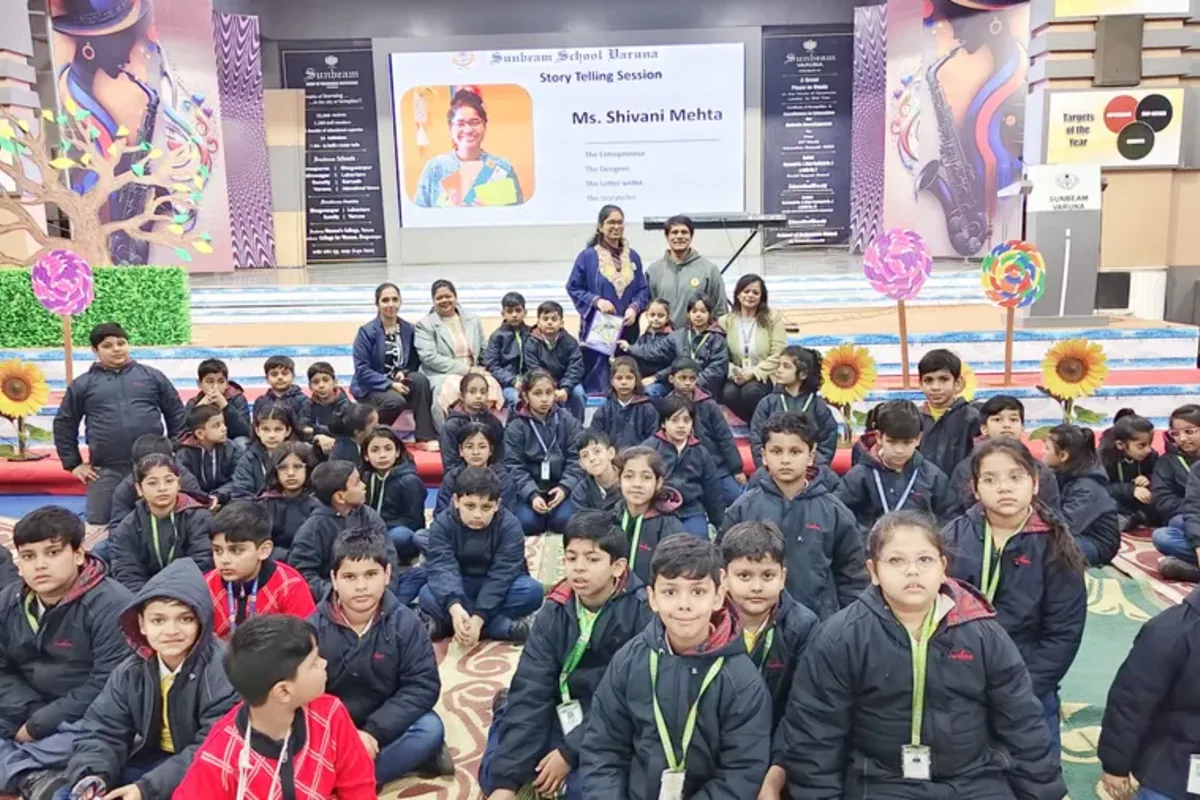
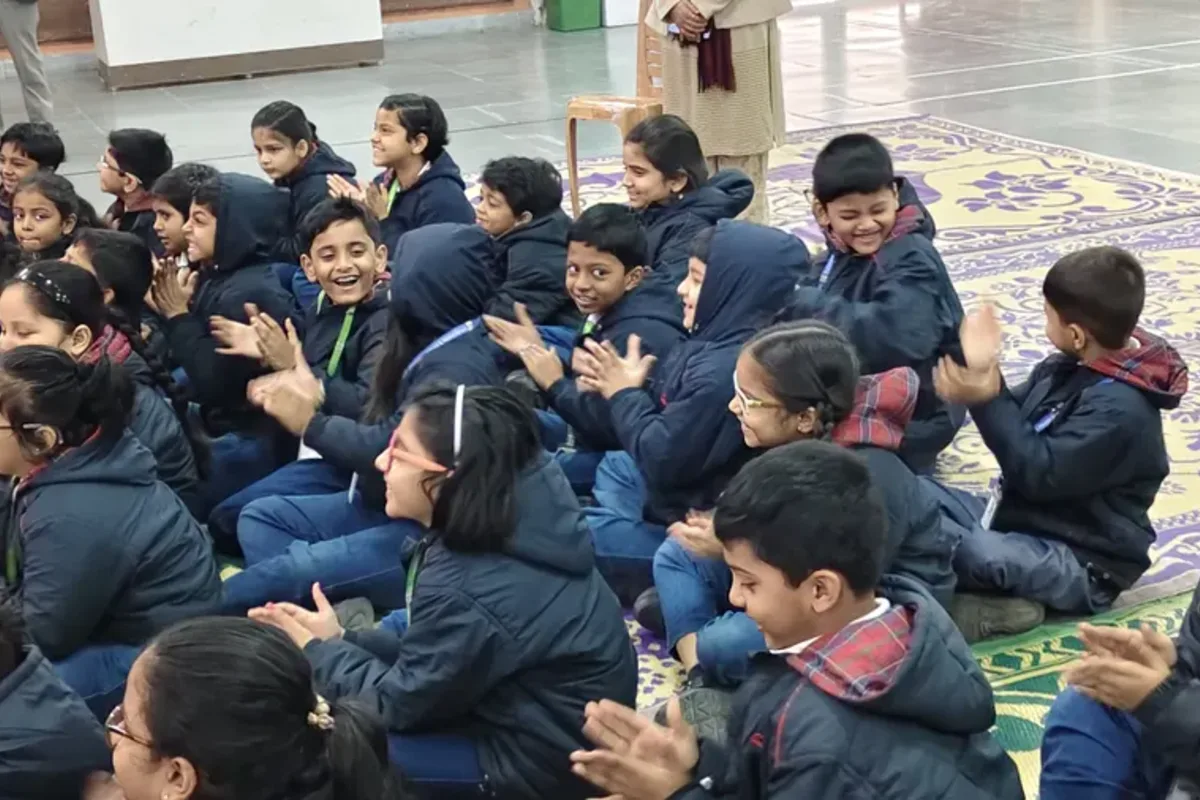
K4K storytelling session at St Mary's Convent School, Prayagraj, December 2025

St Mary's Convent School

Prayagraj · December 2025

Sangam city — where rivers meet, dohas land.
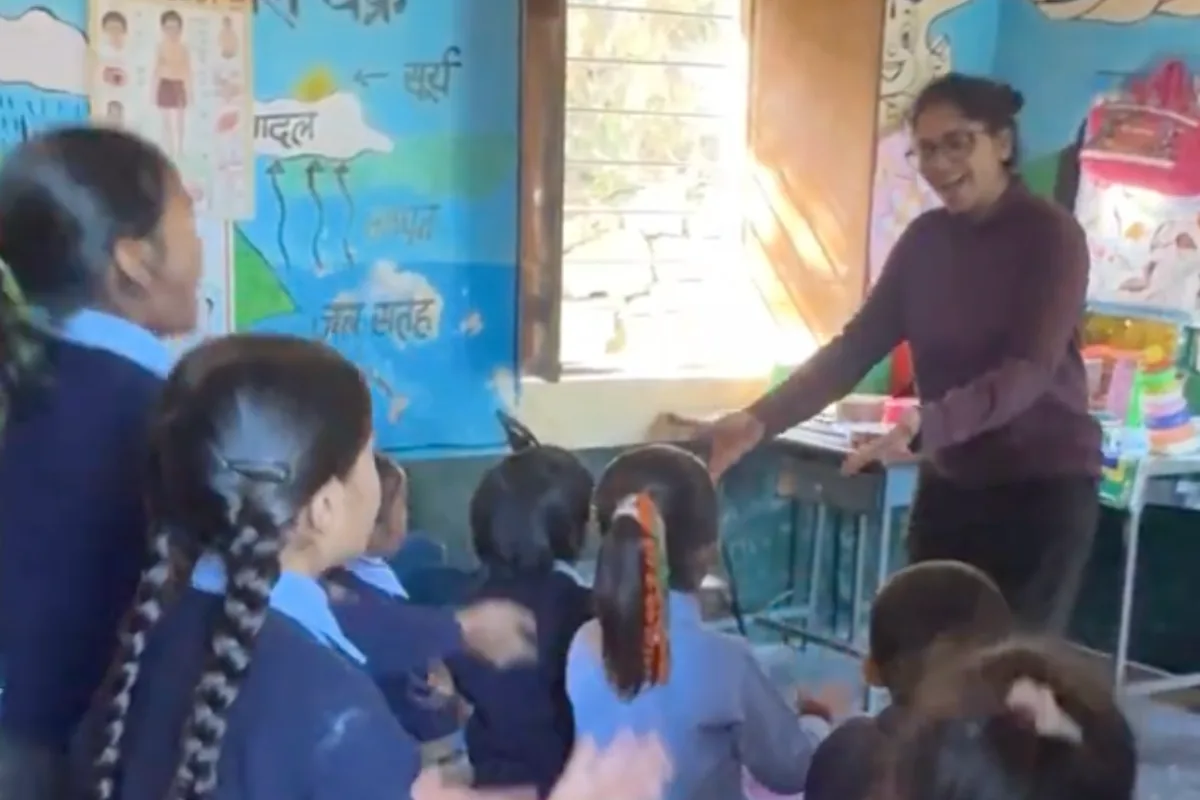
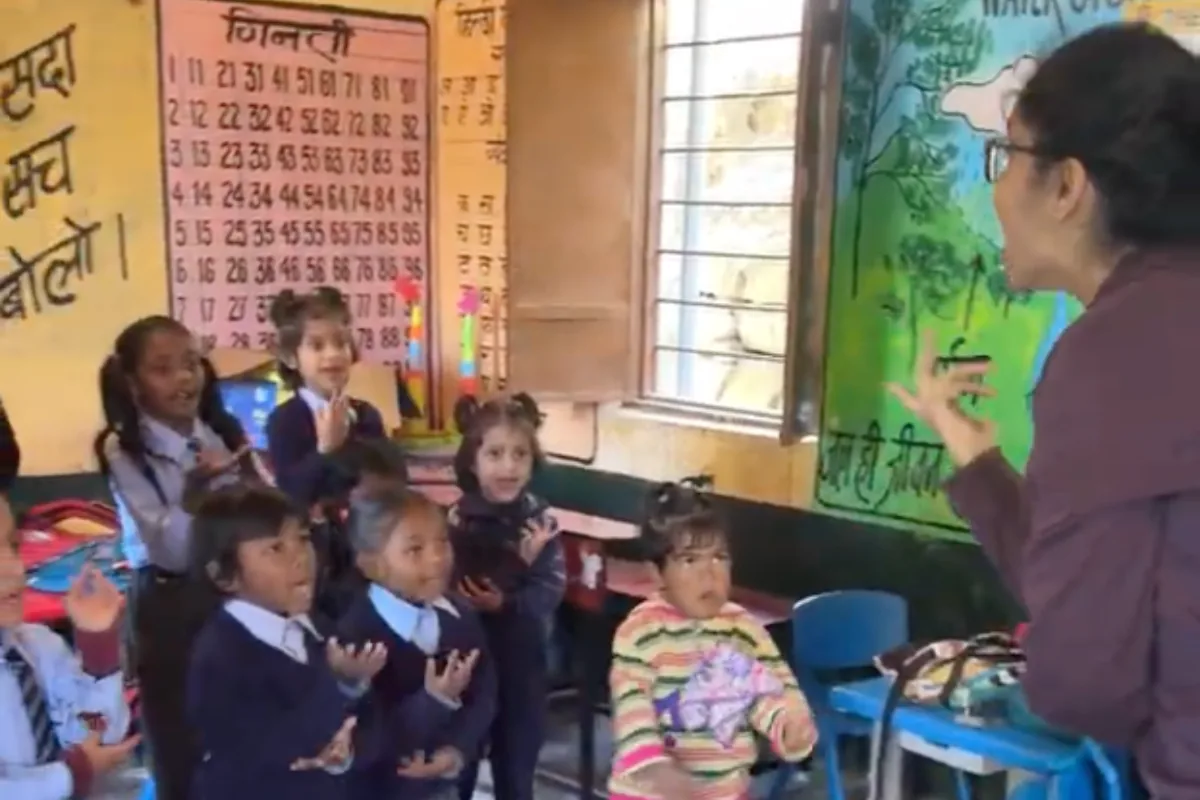
K4K session at Government School Nandoh, Himachal Pradesh, November 2025

Government School, Nandoh

Himachal Pradesh · November 2025

A mountain school, mid-monsoon — proof these dohas travel.
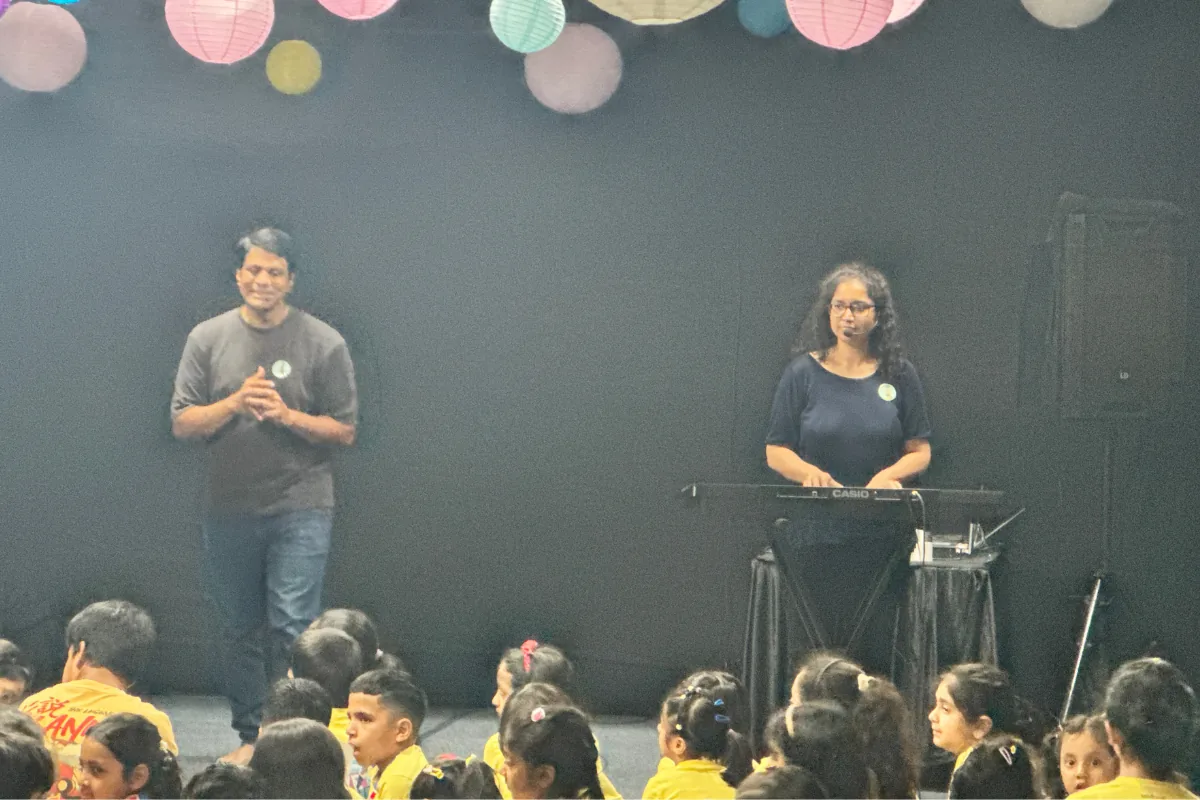
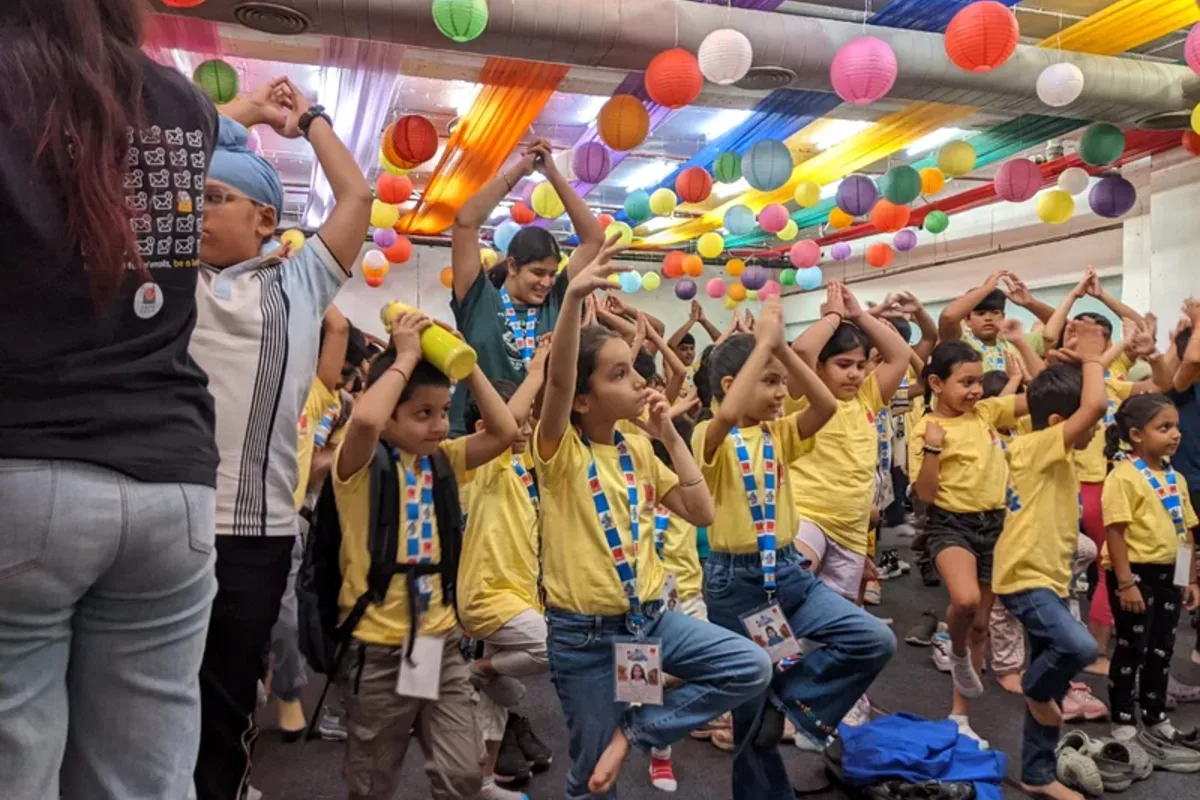
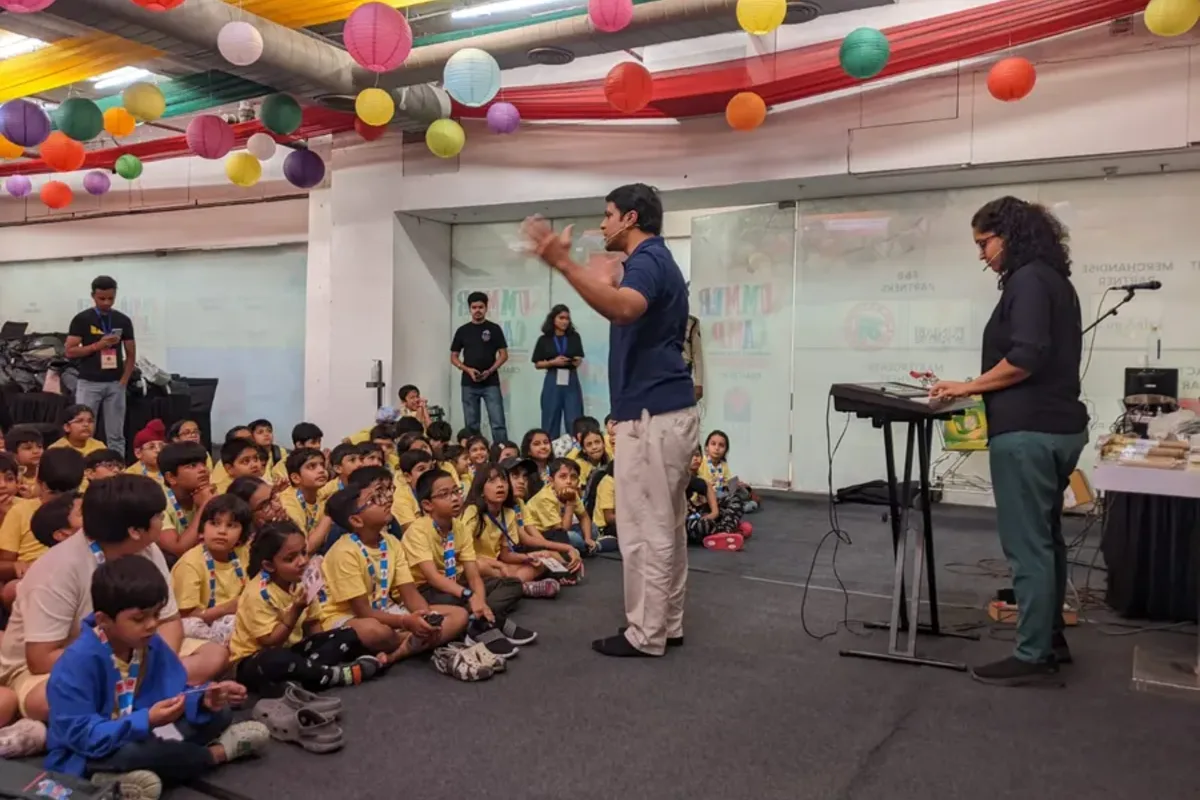
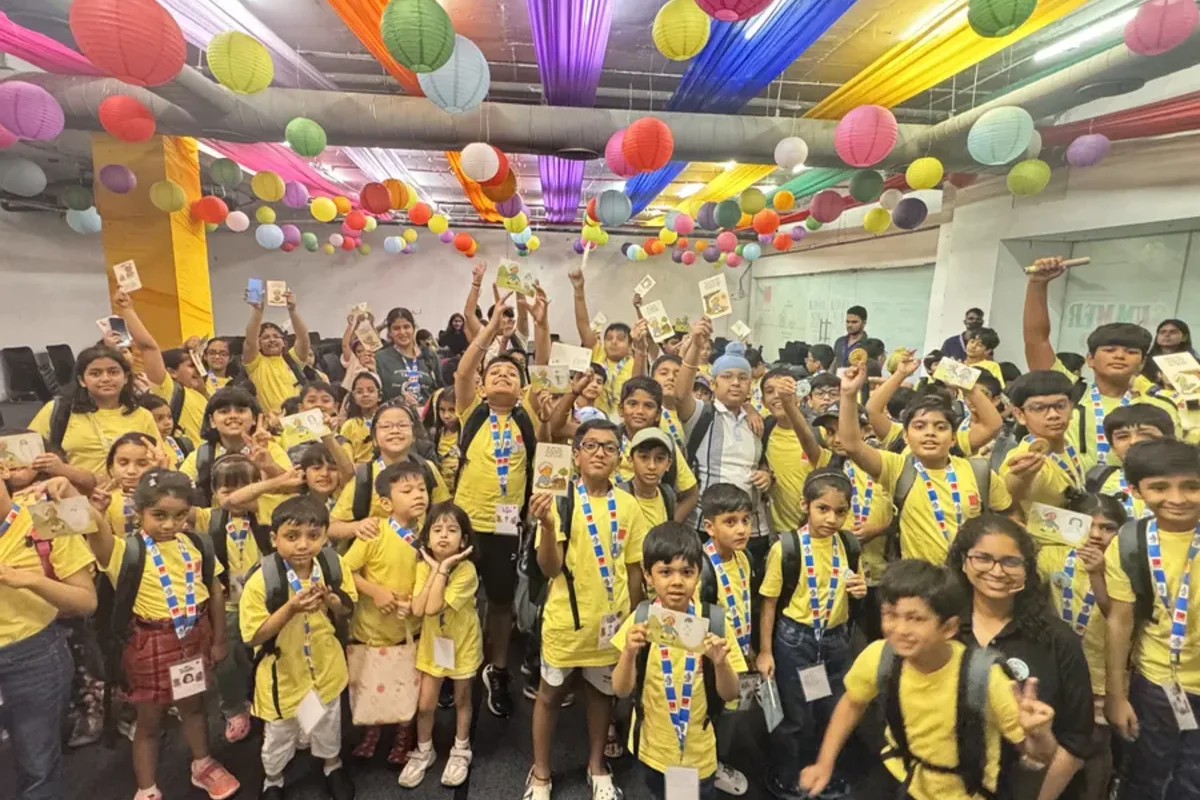
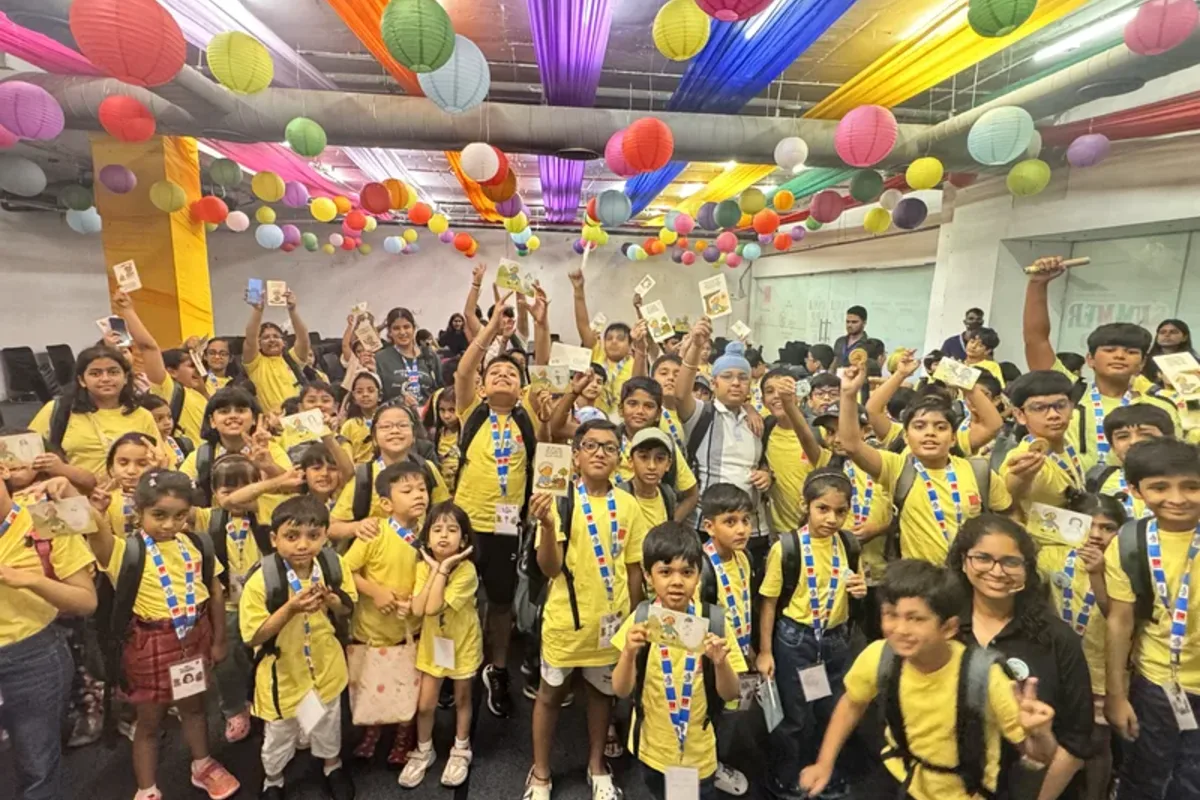
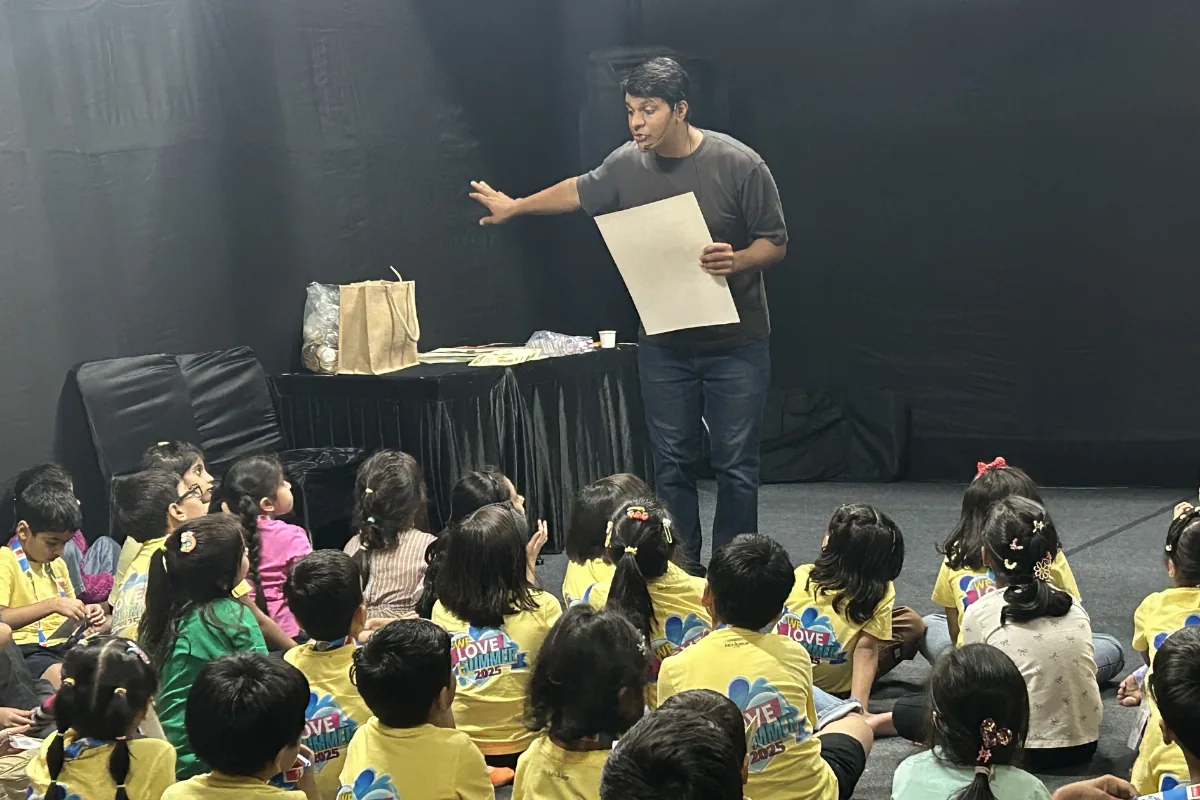
Children and families at Kabir for Kids summer camp session, Ambience Mall, Gurgaon, June 2025

Ambience Mall Summer Camp

Gurgaon · June 2025

Sixty kids in yellow. Zero quiet moments.
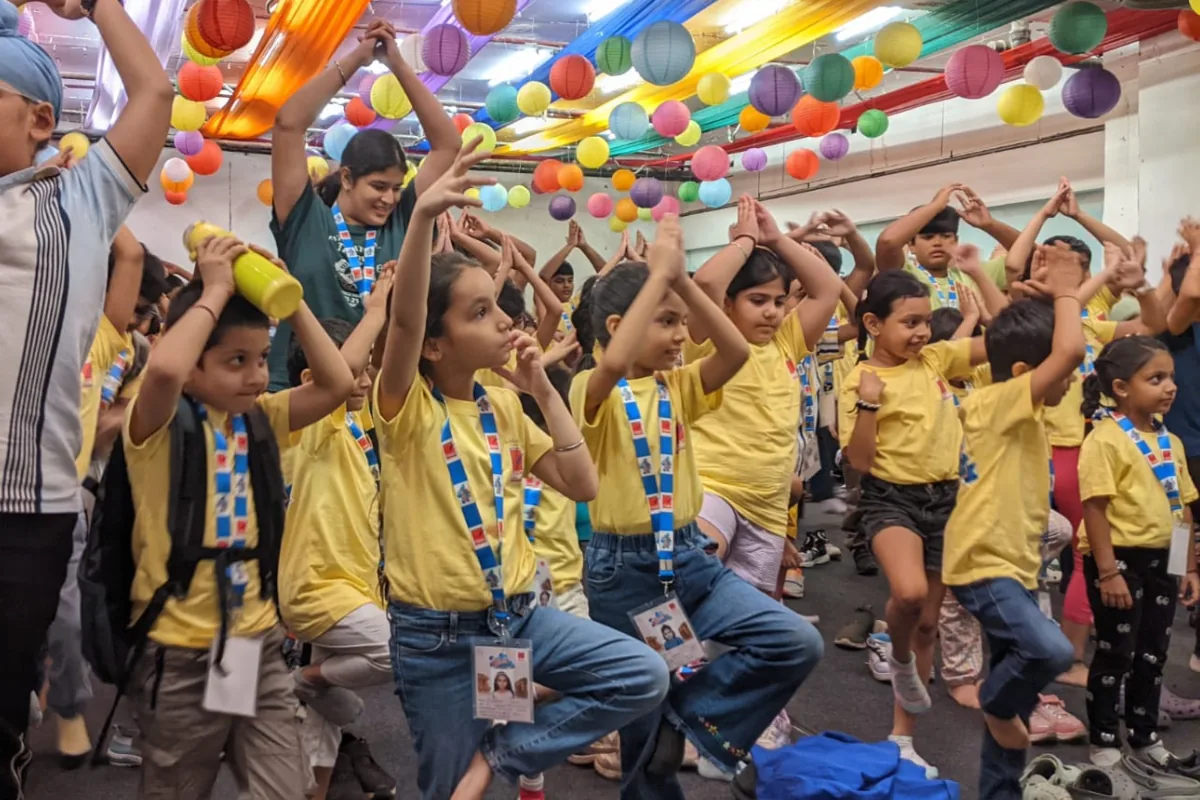
K4K summer camp at Ambience Mall Vasant Kunj, June 2025 — children gathered with doha cards

Ambience Mall Vasant Kunj

Delhi · June 2025

A second city, a second crowd, the same delighted noise.
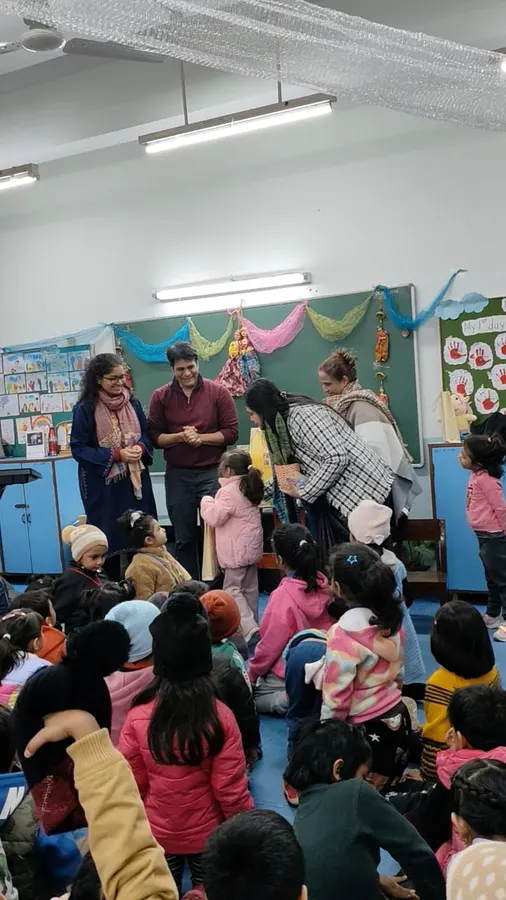
Children and teachers at the first Kabir for Kids session, Sardar Patel Vidyalaya, Delhi, December 2024

Sardar Patel Vidyalaya

Delhi · December 2024

Where it began. Our very first school session.
Bring Kabir for Kids to your school

The workshop is easy for schools to host: one room, basic sound, a clear age group, and a session plan that can sit inside assemblies, classroom blocks, special days, or a larger cultural programme.

Works inside the school day

A 60–90 minute session can fit into an assembly, classroom block, reading week, language week, special day, or summer camp without asking the school to redesign its timetable.

Low setup, high attention

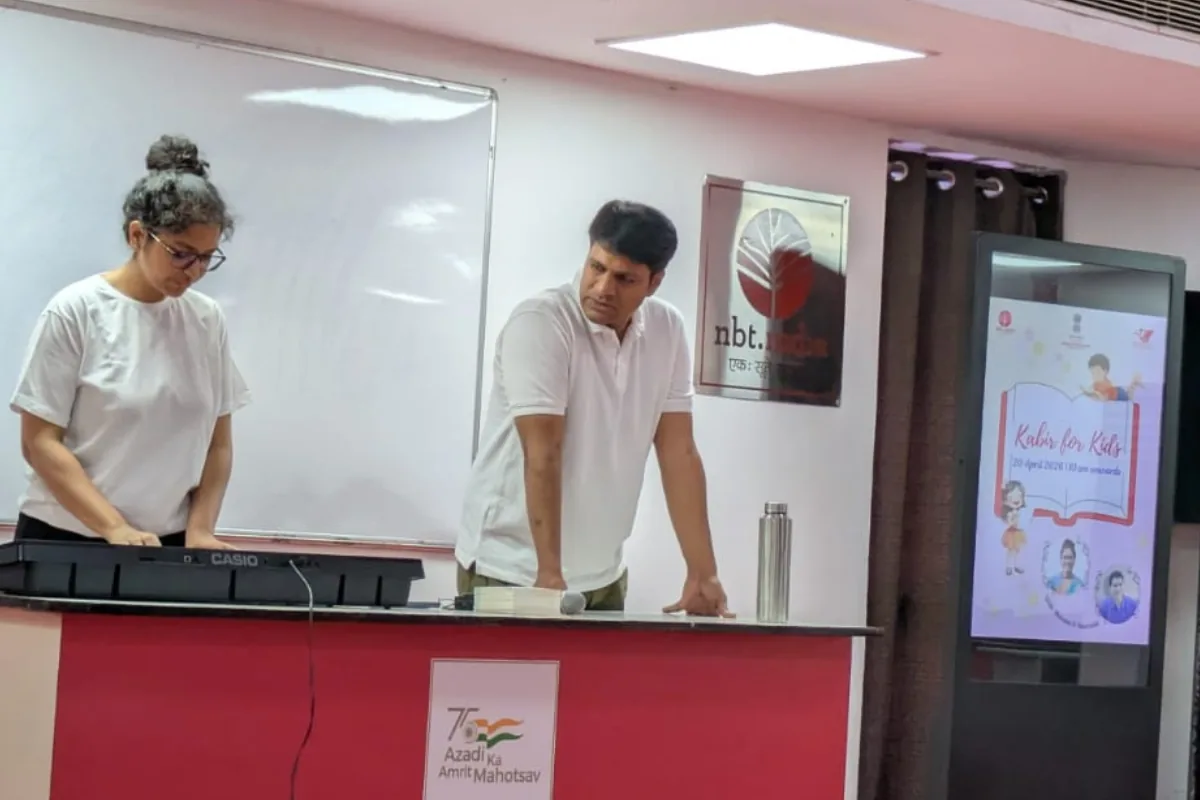
We bring the story flow, keyboard, doha cards, activities, and prizes. The school needs an indoor room, basic sound, and a group size that lets children answer and participate.

Can scale across branches

For multi-campus schools, we can plan a repeatable format across branches while keeping the room alive for each group of children.

Ready to bring this to your school?

Send us your city, age group, and rough dates. We'll reply within 2 working days with the best session format.

Request a proposal →
The Learning

What stays, long after the session ends

Children often carry the workshop home as a song, a question, or a small piece of behaviour. The aim is not to make them recite a lesson; it is to help them notice differently.

Students

What children carry home

  • How to listen with full attention — not just hear
  • Understanding emotions: their own and others'
  • Connecting a 600-year-old story to something that happened in school yesterday
  • That being kind is not weakness — it takes courage
  • A handful of Little Kabir Songs and Kabir ideas they'll remember for years
  • Hindi as a living, singing, joyful language
Parents Notice

What parents notice

  • Children mention the stories days later, unprompted
  • They start humming the songs at home
  • They ask questions about Indian culture and history
  • They reference Kabir when they see something unfair or unkind
  • A new curiosity about Hindi — not just as a school subject
Get in Touch

Bring Kabir into your school.

Message us on WhatsApp for the quickest first conversation, or send the form if you already have school details ready. We will reply within 2 working days.

School + city Class or age group Approx. children Preferred month
Sessions for students aged 5–9, adaptable up to Class 8.
60–90 minutes. Minimal equipment needed.
We travel across India — Delhi, NCR, and beyond.
Fastest route: WhatsApp us

We come to you. We bring everything.

We respond within 2 working days. WhatsApp is quickest for dates.

Questions from schools

Things schools ask us

What age group are Kabir for Kids workshops for?
The programme is designed for children aged 5–9. It can be adapted for older children up to Class 8 — speak to us about customisation.
How do I book a Kabir for Kids workshop for my school?
Message us on WhatsApp or fill in the enquiry form on this page. Share your school name, city, preferred dates, and approximate number of students. We respond within 2 working days.
What happens in a Kabir for Kids school session?
A typical session runs 60–90 minutes and includes story performances, doha singing, movement, drawing, doha-card activities, and open discussions connecting Kabir's stories to children's real-life situations. Fully interactive throughout.
What does the school need to provide?
An indoor venue (auditorium, hall, or classroom), a basic sound system, and 30–40 children per session for optimum interaction. We bring the keyboard, the stories, the doha cards, and the prizes.

Still curious? Write to us on WhatsApp ↗