Story
Two animated story performances from the Kabir for Kids library set the scene before the first doha.

Kabir for Kids runs live storytelling workshops for primary schools in Delhi, built around Sant Kabir's dohas: stories, songs, movement and questions children answer for themselves. Sessions are designed for ages 5–9 and adapt up to Class 8.
Children meet Kabir through story first, then carry the idea into a song, a movement, a drawing and a question of their own. Joyful enough for children, structured enough for schools.
Two animated story performances from the Kabir for Kids library set the scene before the first doha.
Doha singing and movement, with children taking part throughout rather than watching.
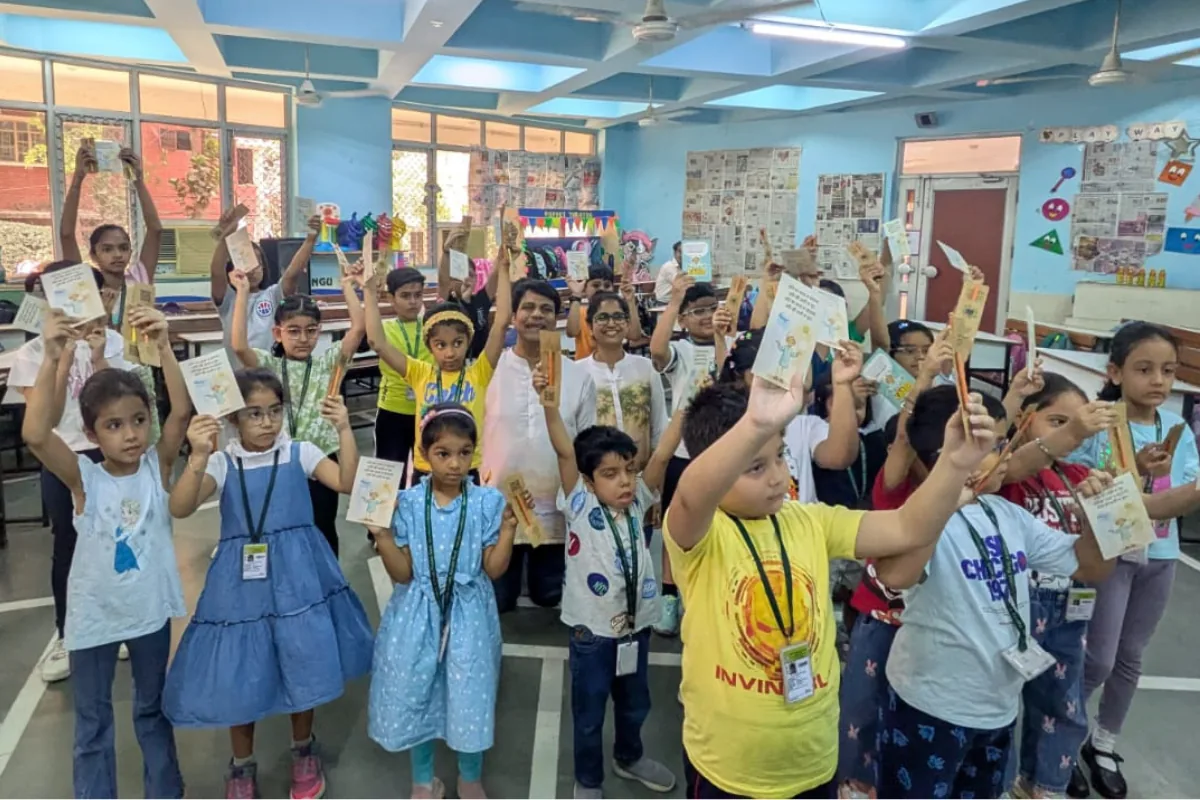
A hands-on doha-card activity in small groups: children hold a doha, compare meanings and bring answers back.
Open questions, so children leave asking "but why did Kabir say that?" — not just listening.
Most schools begin with one student session. It fits inside an assembly, a classroom block, reading week, language week or a special day.
We bring the story flow, keyboard, doha cards, activities and prizes. The school needs an indoor room, basic sound and a group size that lets children answer.
Kabir's dohas are two-line poems with one vivid picture inside: a gardener watering pots, a date palm with no shade, words weighed like something precious. Children remember the picture, then the meaning follows. Kindness, patience and honesty land differently when a child discovers them inside a song than when an adult names them on a slide.
Our first school session was in Delhi, in December 2024. These are some of the rooms since.
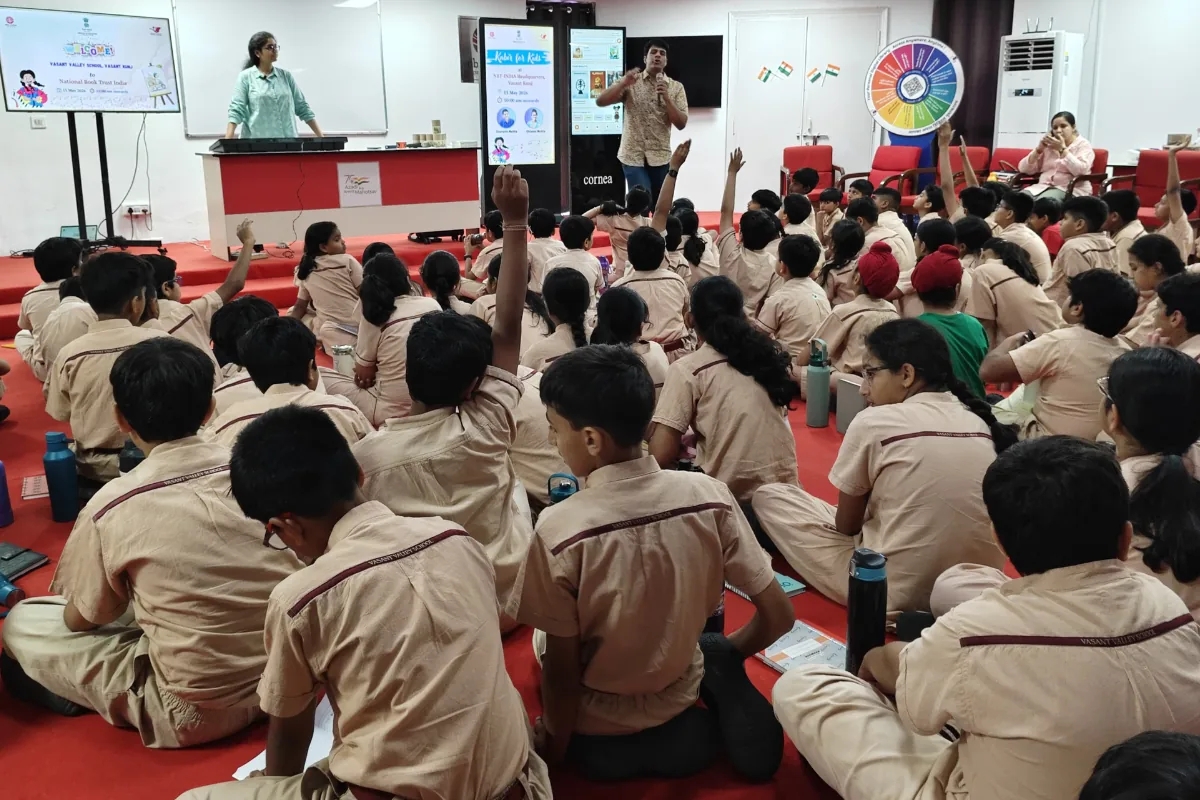
A hundred sixth-graders. Five dohas. One verse, written by a child in the room and sung for the first time there.
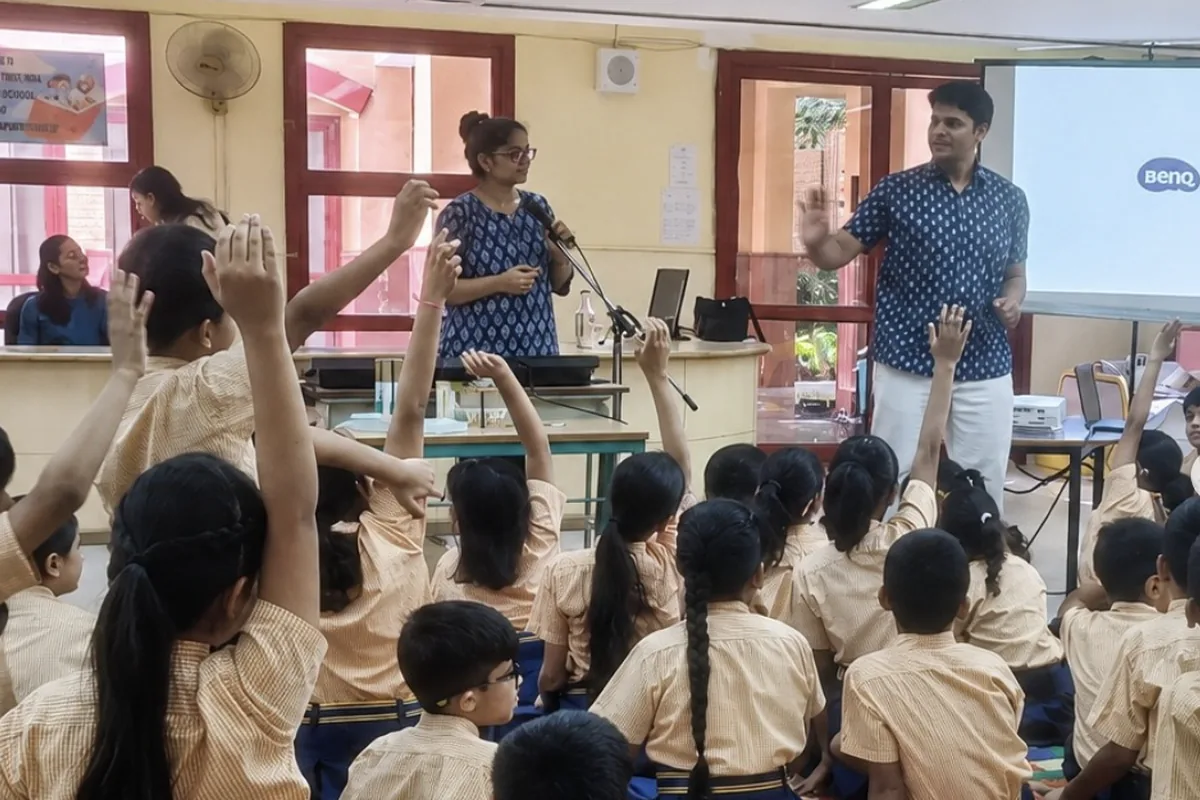
A school-room session with the core K4K rhythm: sing, notice, answer, wonder.
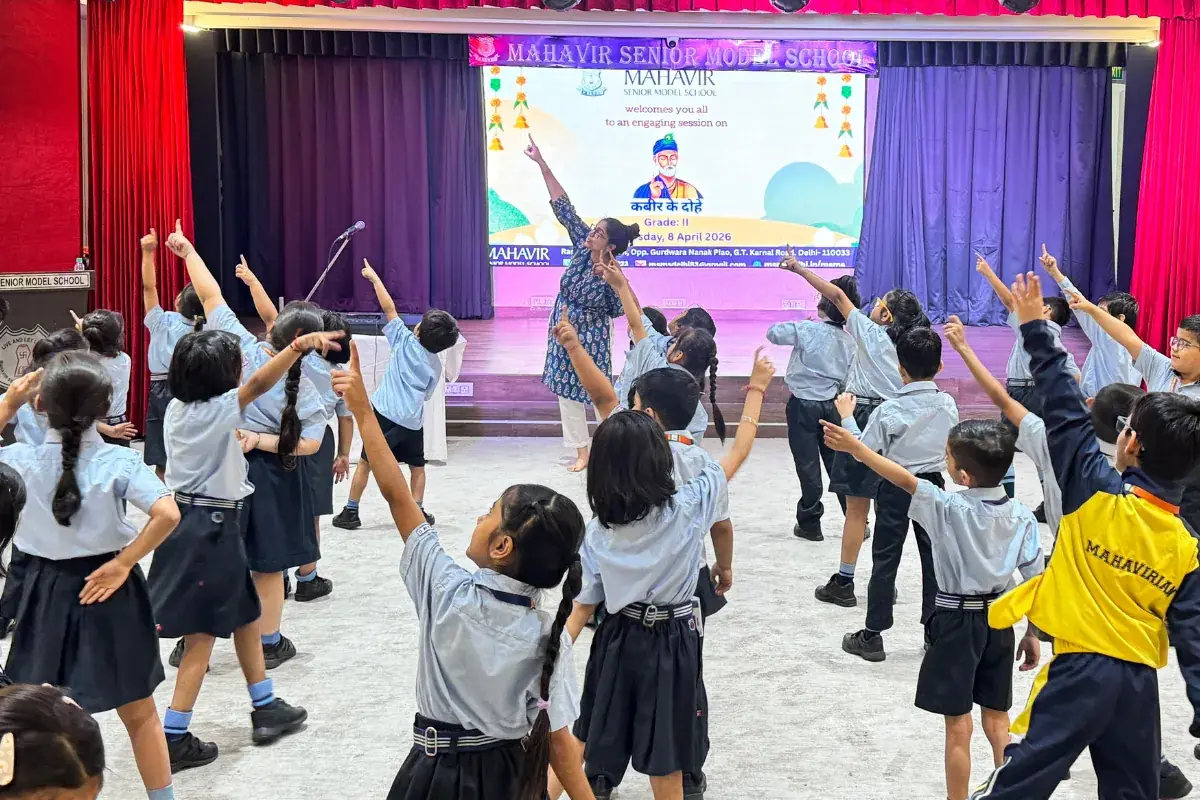
A hundred hands in the air. One doha did that.
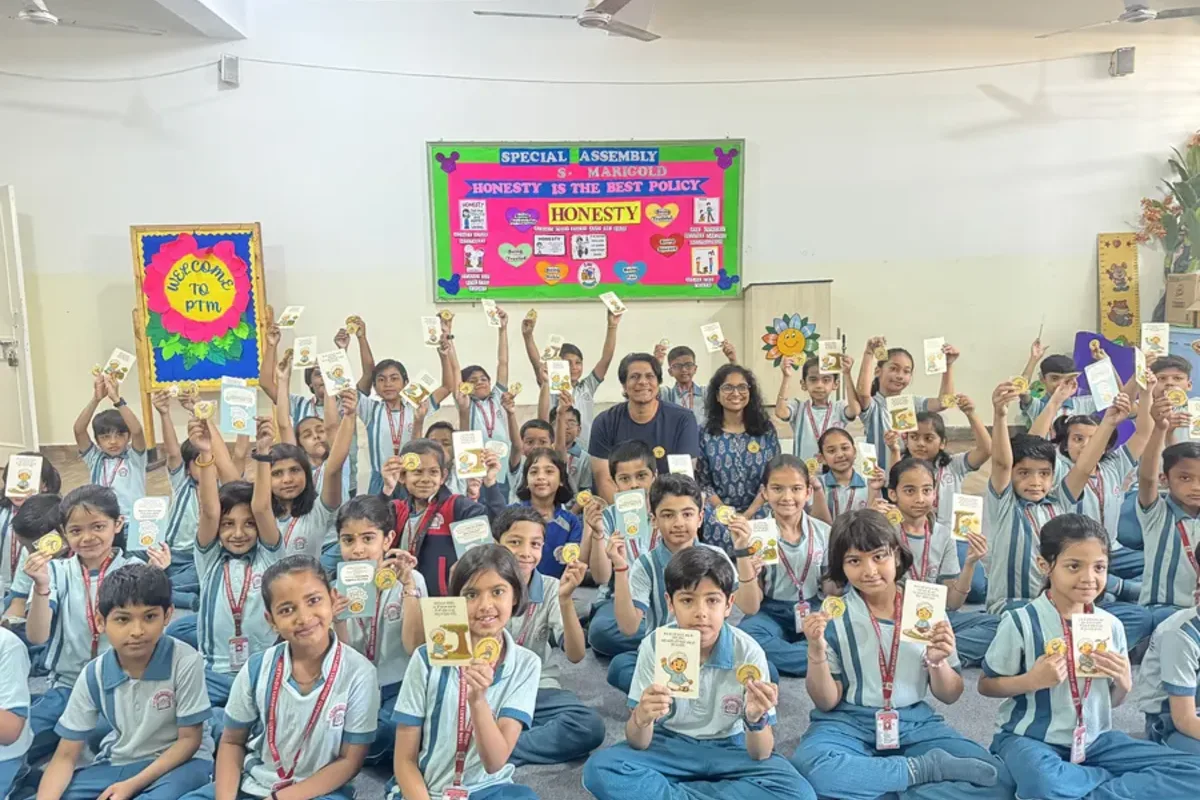
In a group of forty, the doha-card work created a rare kind of focus. Children held Kabir's cards like they already belonged to them.
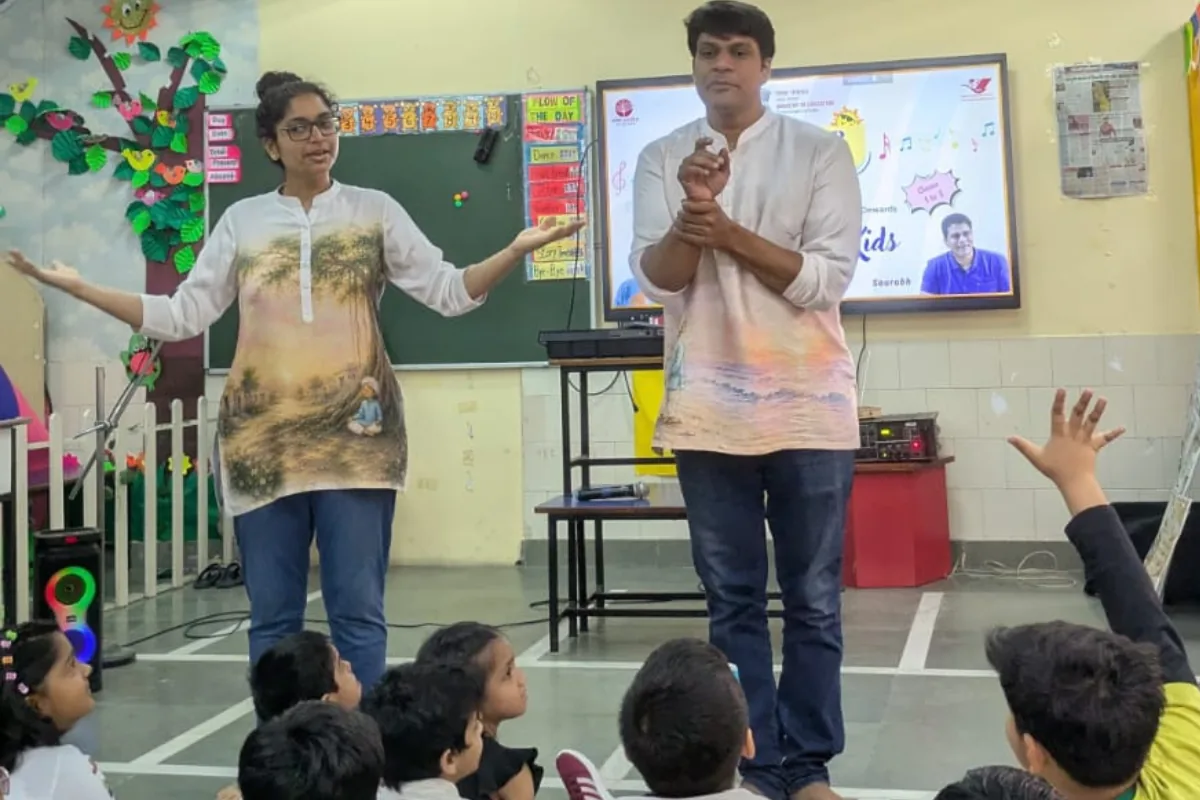
Children held doha cards, compared meanings and brought their own answers back into the room.
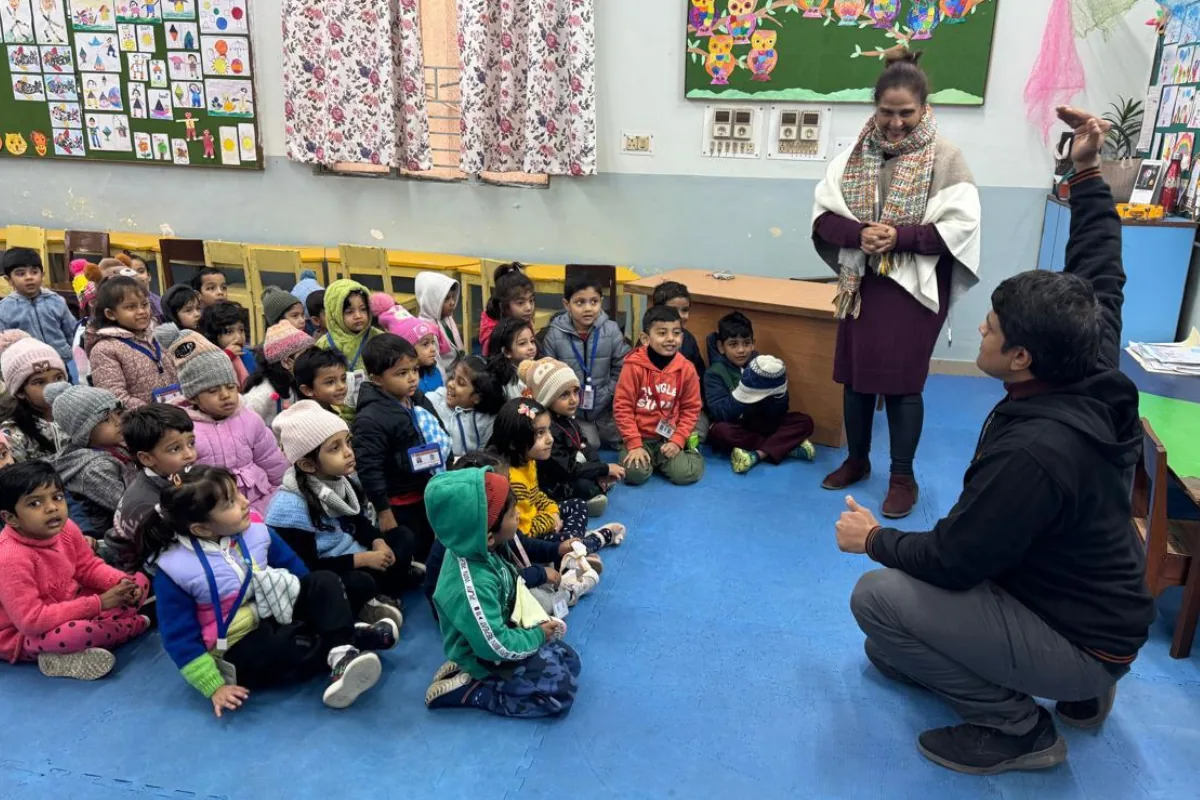
Where it began: our very first school session.
Also in Delhi-NCR: a hundred Class 9 students from GD Goenka School, Noida, at NBT Vasant Kunj (April 2026), and summer-camp sessions at Ambience Mall, Vasant Kunj and Gurgaon (June 2025). See every session on the workshops page.
The session is built for children aged 5–9 and can be adapted up to Class 8. In Delhi we have also run it with a hundred Class 6 students from Vasant Valley School and a hundred Class 9 students from GD Goenka School, Noida, at NBT sessions in Vasant Kunj.
A student session runs 60–90 minutes. It fits inside an assembly, a classroom block, reading week, language week, a special day or a summer camp, without redesigning the timetable.
30–40 children per session works best, because every child gets a chance to answer and take part. Larger auditorium groups are possible: several Delhi sessions have run with around a hundred students.
An indoor venue (auditorium, hall or classroom), a basic sound system and a clear age group. Kabir for Kids brings the stories, the keyboard, the doha cards, the activities and the prizes.
Kabir's dohas are sung in their original Hindi, and each one is explained simply for the age group in the room.
Yes. An optional 45–75 minute teacher orientation gives teachers and coordinators doha prompts, songs and follow-up classroom ideas to carry the work forward after our visit.
Message us on WhatsApp with your school name, area, class or age group, approximate number of children and preferred month. We reply within 2 working days with the simplest format. You can also write to hello@kabirforkids.com.
Send your school name, area, class and rough dates. We reply within 2 working days with the simplest format.
Or write to hello@kabirforkids.com